
BRUSSELS — The statement lasted less than a minute at the podium, but it carried the full weight of what the European Union cannot do. Anouar El Anouni, the European Commission’s foreign affairs spokesperson, urged Yemen’s Ansar Allah movement Tuesday to avoid any action that would “further jeopardize the chances to reestablish regional peace” — a formulation so carefully hedged it bordered on self-parody, delivered the morning after the Houthis formally entered the Iran war and threatened to seal the Bab al-Mandab Strait.
Brussels has watched this moment arrive for months. Since late April, Houthi officials have issued graduated warnings that the narrow passage between Houthi-held Yemen and Djibouti — through which roughly 12 percent of the world’s seaborne oil transits before reaching the Suez Canal — could be shut to American, Israeli, and allied shipping. On Monday, Brigadier General Yahya al-Saree, the movement’s military spokesman, formalized that threat into a declaration of war: a ban on Israeli vessels in the Red Sea, a claimed ballistic missile strike on Israeli territory, and a promise to coordinate operations with Iran and Hezbollah. The Houthis have not attacked a commercial vessel since the Gaza ceasefire in October 2025. That pause now appears to be over.
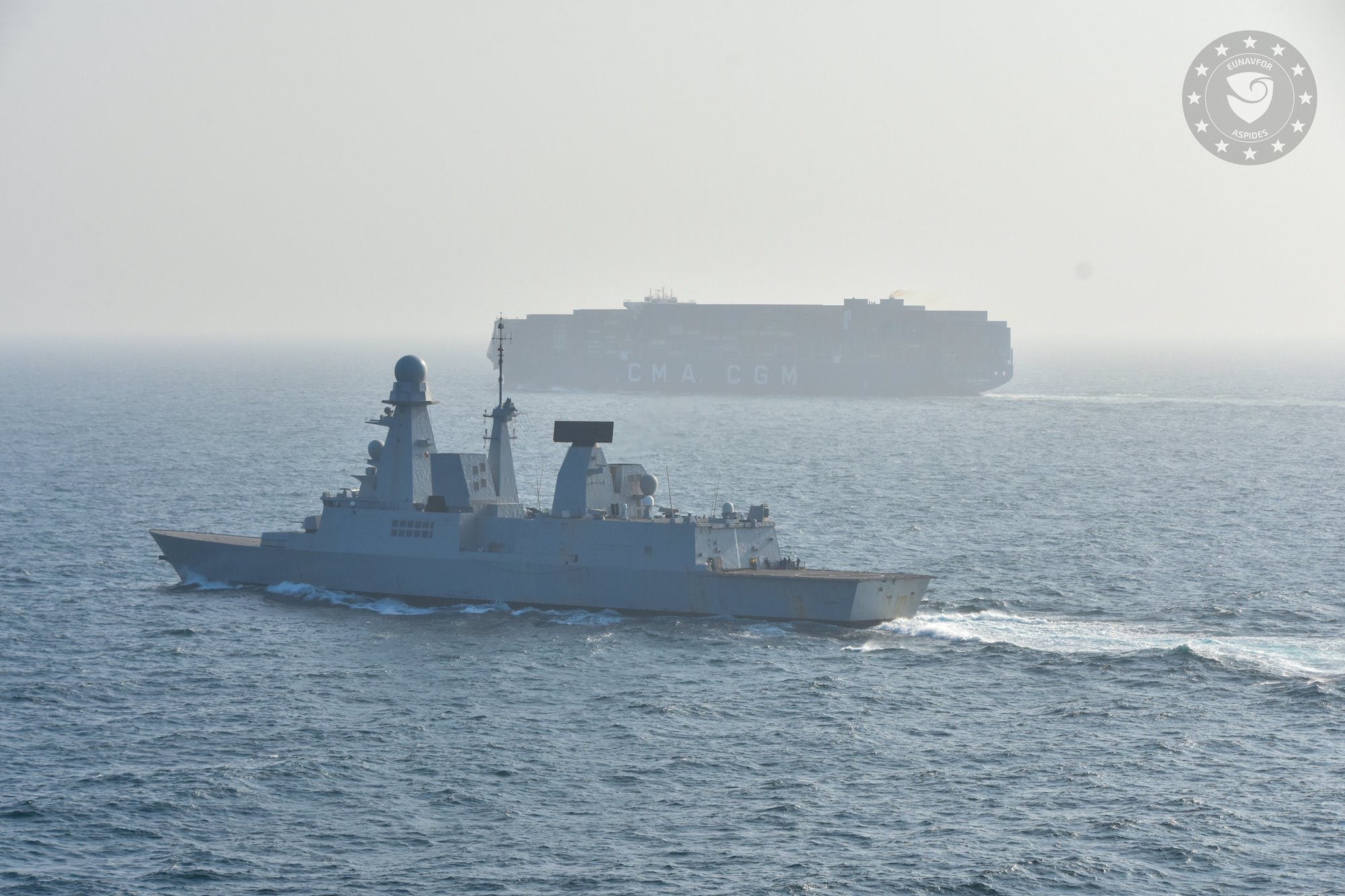
What El Anouni did not say at the briefing matters as much as what he did. There was no mention of Operation Aspides, the EU naval mission running in the Red Sea since February 2024. There was no threat of renewed sanctions, no coordination signaled with the United States Navy, and no invocation of whatever leverage Brussels believes it retains over a movement that rejected its naval presence two years ago as an act of hostile militarization. In February 2024, a senior Houthi official told the EU to “not play with fire” over Aspides. On Tuesday, the EU responded to a far graver provocation with a call to “avoid any action.” The rhetorical distance between those two moments is not trivial.
The timing compounds the problem for European policymakers. Iran has simultaneously blockaded the Strait of Hormuz as part of the ongoing war that began February 28, when the United States and Israel launched coordinated strikes on Iranian targets. The two chokepoints, taken together, account for roughly a third of the world’s seaborne oil and gas, according to Euronews. Saudi Arabia rerouted millions of barrels per day through its East-West pipeline and the Red Sea port of Yanbu once Hormuz closed — which means a Houthi closure of the Bab al-Mandab would not merely inconvenience European markets. It would sever the only viable alternative to the Persian Gulf route entirely.
Oil flows through the Bab al-Mandab dropped from roughly 8.8 million barrels per day before the Houthi campaign of 2023-2025 to around 4 million during it, according to Euronews. The Saudi ramp-up since the Iran war began had pushed those figures back toward the higher end. A renewed closure would reverse that recovery at the worst possible moment — while Hormuz remains blocked and global energy markets are already absorbing the shock of the broader conflict.
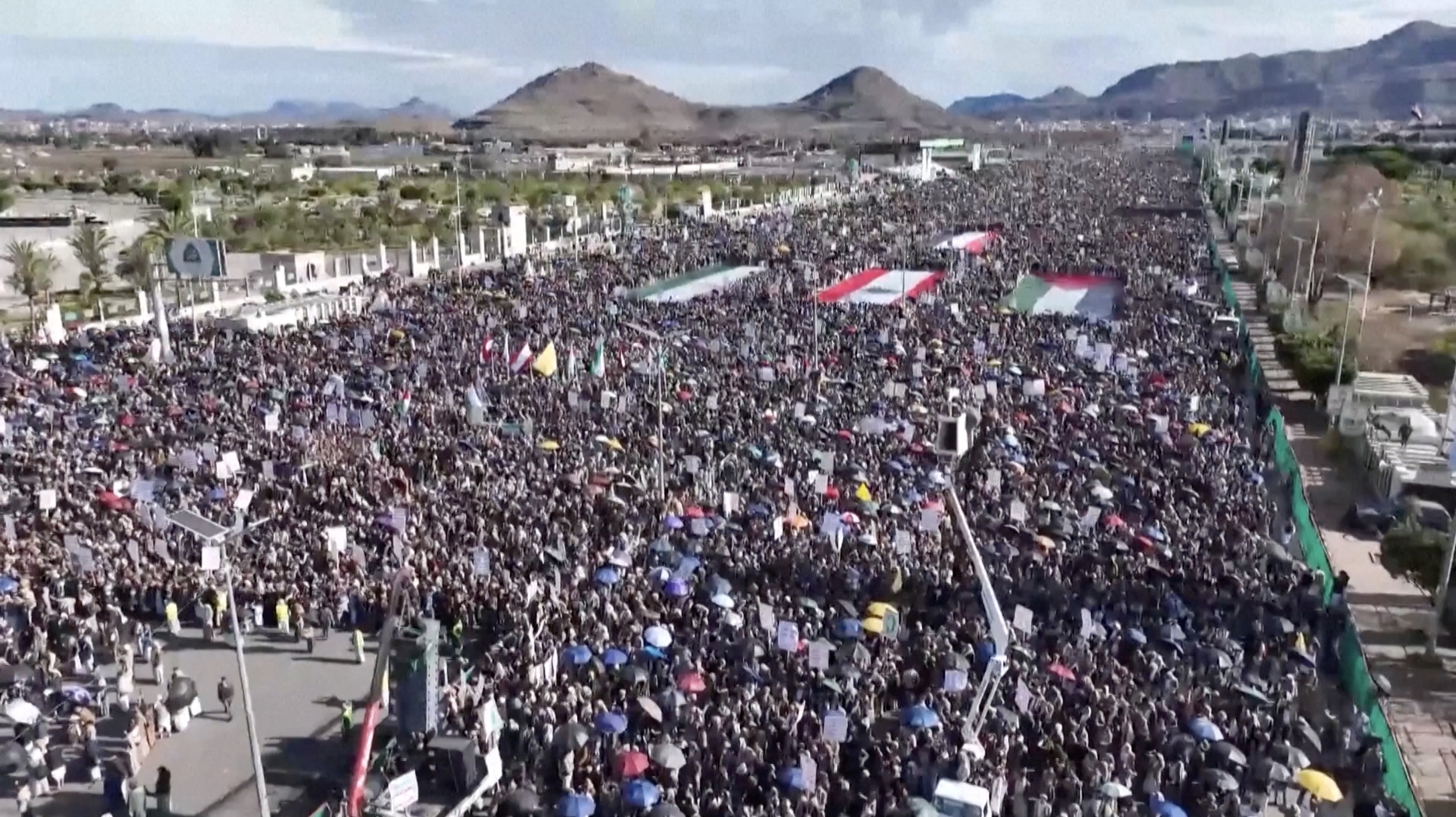
Whether the Houthis will follow through is a genuinely open question. The American Security Project, analyzing the group’s posture in May, noted that Houthi rhetoric has consistently outpaced its operations since the Iran ceasefire took partial effect on April 7, and that a renewed anti-shipping campaign would dramatically escalate a conflict the United States is seeking to de-escalate through ongoing negotiations. The US and Iran have been in a fragile ceasefire since April 8, though subsequent talks in Islamabad ended without a breakthrough, and the American blockade of Iranian ports continues. Iran, for its part, has reportedly pressed the Houthis to prepare a renewed Red Sea campaign contingent on further US escalation, according to Bloomberg, which cited European officials familiar with the discussions — the same European officials whose government issued Tuesday’s careful, consequence-free statement.
The EU has not publicly disclosed what conversations, if any, are happening with Sana’a through back channels. The Houthis control large parts of northern Yemen and have functioned as an autonomous military actor, as the American Security Project noted, benefiting from Iranian support while retaining their own strategic calculus. They did not halt Red Sea attacks in 2023 because of European diplomacy. They halted them because the Gaza ceasefire removed the stated pretext. With the Iran war providing a new and arguably more compelling one, the movement of cargo through one of the world’s most critical shipping lanes may now depend on the trajectory of a conflict that neither Brussels nor Sana’a controls.
What El Anouni’s statement establishes, in the end, is a European record: that Brussels went on record asking the Houthis to stand down. What it does not establish is any reason why they would.
Asked whether the EU had any further measures planned, the spokesperson did not elaborate.