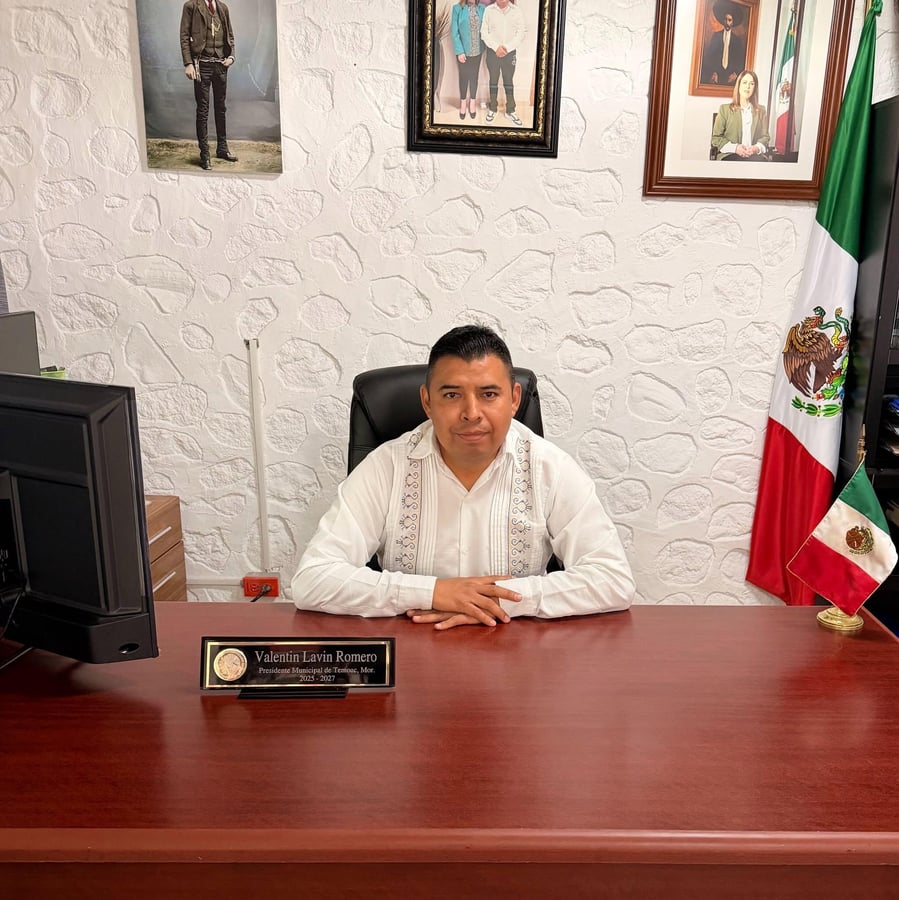

MEXICO CITY – He had already survived once. In January, gunmen came for Valentin Lavin Romero, the mayor of Temoac, a small municipality in the state of Morelos roughly 80 kilometers southeast of Mexico City. He lived. On Wednesday, they came again; this time to his own town hall. And he did not.
Lavin Romero, who was politically aligned with President Claudia Sheinbaum’s leftist Morena movement, was shot dead inside his municipal government building on July 22. Forensic experts and police confirmed the killing. No arrests had been made as of Thursday morning, and authorities had not publicly identified a motive or a responsible criminal organization.
The killing was the third time in 2026 that a sitting Mexican mayor has been murdered. Since Sheinbaum took office in October 2024, fourteen mayors have been killed across the country, a number that has landed with particular force given her government’s insistence that its security strategy is working. CBS News, which first reported the killing, noted that nearly 100 Mexican mayors have been murdered since 2006, when the federal government first committed the military to a sustained counternarcotics campaign and the death toll in political violence began its long, unbroken climb.
Morelos is not peripheral territory in Mexico’s cartel geography. The state, which borders the southern edge of the Valley of Mexico, has long been contested by multiple criminal organizations, with the Guerreros Unidos and factions connected to the Beltran Leyva Organization historically operating in the region. Temoac is a municipality of scattered villages and agricultural land in the Morelos highlands, the kind of local government that sits directly in the path of organized crime: a small budget, limited police capacity, and an elected official whose decisions about land, contracts, and local enforcement carry disproportionate significance to whichever group controls the surrounding territory.
The January attack had already placed Lavin Romero in a category that most Mexican security analysts treat as a reliable predictor: a local official who had been explicitly targeted and survived. Whether he requested additional protection in the months that followed, and whether any such request was addressed, is not yet known. The Sheinbaum government and Morelos state authorities had not addressed that question publicly as of this writing.
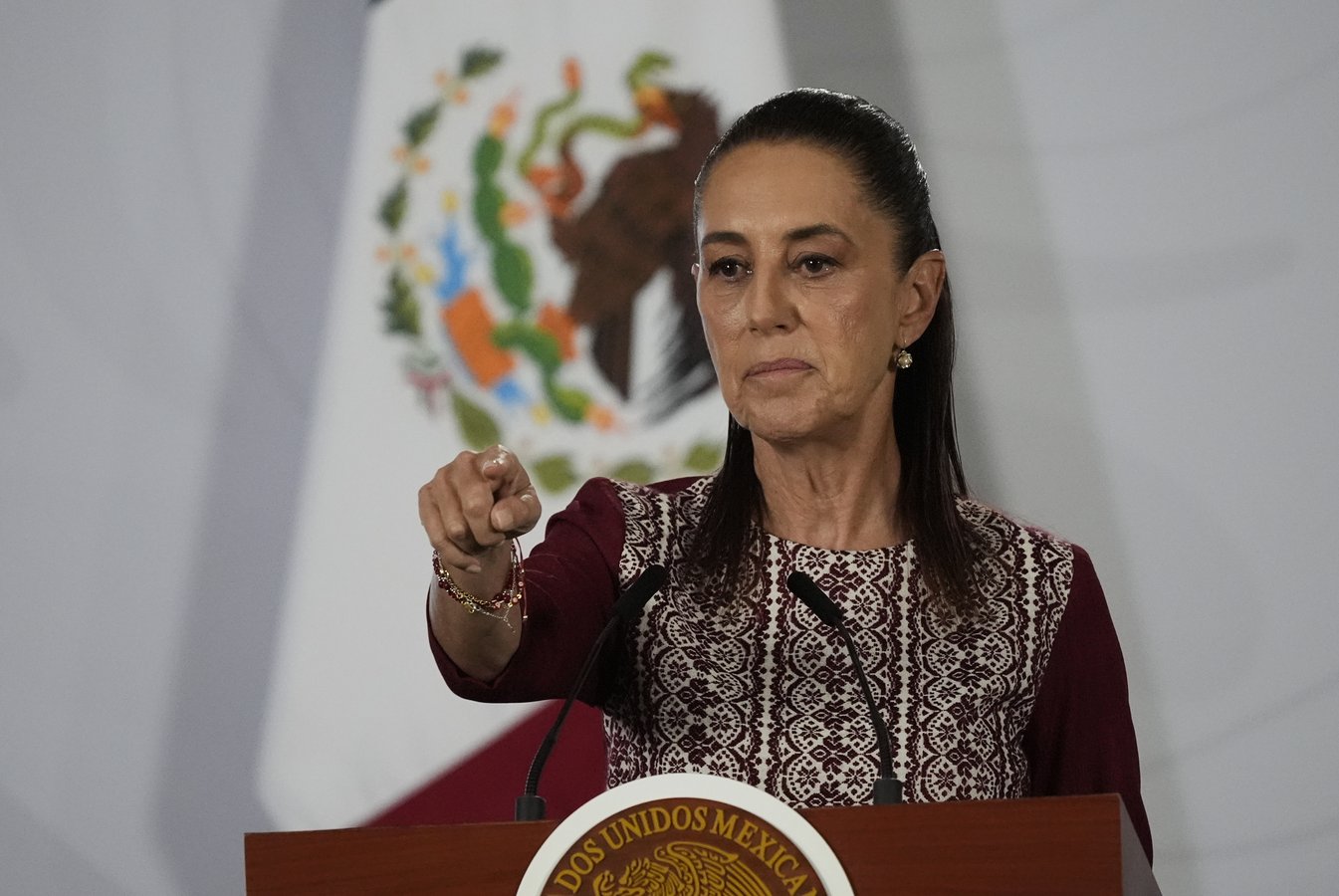
Sheinbaum has repeatedly cited declining homicide statistics as evidence that her administration’s approach, relying on intelligence-led operations, military deployment, and coordination with state police forces, is producing results. She claimed earlier this year that homicides in Mexico had fallen by nearly half since September 2024, a figure her critics have contested on methodological grounds and that has grown harder to sustain with each fresh killing of a municipal official.
The pattern matters in a way that individual incidents can obscure. In June, Joel Ángel Bravo Martínez, the mayor of San Miguel Amatitlan in Oaxaca, was shot dead inside his home after requesting state protection that never came. That case remained unsolved as of this writing. What connects these cases is not only the act of killing but the persistence of conditions in which local officials can be targeted and a state security apparatus that has repeatedly failed to prevent it, even in cases where threats were known in advance.
The United States has maintained its own pressure on the Mexican government’s security record. Washington’s designation of the Juárez Cartel and Los Viagras as Foreign Terrorist Organizations earlier this month brought the total number of Mexican criminal groups carrying that designation to eight. The Trump administration has argued the designations give it legal tools to pursue cartel financing and personnel across borders; Sheinbaum’s government has rejected the framing, insisting that it implies a collaboration between Mexican institutions and organized crime that the government denies.
For Lavin Romero’s constituents in Temoac, those diplomatic arguments are distant. What is immediate is that their municipal government now operates without its elected head, that the man who held that office was killed in the building where he worked, and that no one has yet explained how that became possible seven months after the same man survived an armed attack and presumably knew his life remained at risk.
Morelos state authorities confirmed the homicide and said an investigation had been opened. The federal Security Cabinet had not issued a statement as of Thursday morning. The Morena party, to which Lavin Romero was aligned, had also not spoken publicly about the killing.
The silence of political allies in the immediate aftermath of a municipal killing is not unusual in Mexico. What typically follows is a combination of condolences, announcements of reinforced security deployments, and pledges that those responsible will be identified and prosecuted. What is less common is an accounting of the institutional decisions about protection requests, threat assessments, and security deployments that preceded the moment the gunfire began. That accounting, if it comes at all, rarely arrives quickly, and rarely arrives in a form that answers the question most directly posed by a killing like Lavin Romero’s: what the state knew, when it knew it, and what it chose to do with that knowledge.
Investigators have not named a suspect, identified a criminal group, or explained how the attack was carried out in what should have been a government facility. The January incident, which Lavin Romero survived, has also not been publicly attributed to a specific organization. For now, what is certain is that a mayor in central Mexico is dead, that he had already been attacked once before, and that the institutions nominally responsible for preventing exactly this outcome were not, in the end, sufficient to do so.