
MEXICO CITY – He had told the state government he feared for his life. He had asked for protection. Weeks later, armed men came to his house and killed him anyway.
Joel Ángel Bravo Martínez, the 53-year-old mayor of San Miguel Amatitlan, a municipality of roughly 7,000 people in the Mixteca region of Oaxaca, was shot dead Saturday morning by a group of gunmen who broke into his home. He died at the scene. By afternoon, the Oaxaca state governor, the federal Security Cabinet, and his political party had all issued condemnations. Nobody had named a suspect. Nobody explained why the protection he requested never arrived.
That silence is the story.
Bravo Martínez had alerted the state government in recent weeks that he believed his life was in danger and formally requested a security detail, according to a statement from his party, the Partido Acción Nacional, released hours after his death. The statement did not specify what response, if any, he received. The Oaxaca state prosecutor’s office confirmed the homicide and said investigators had “immediately activated the protocols for the investigation of crimes of high impact.” The Mexican Security Cabinet, in a post on social media platform X, said it had sent additional forces to the area and would work alongside state authorities to identify those responsible. “There will not be impunity,” the Cabinet wrote – a phrase that has accompanied the aftermath of nearly every political murder in Mexico for two decades.
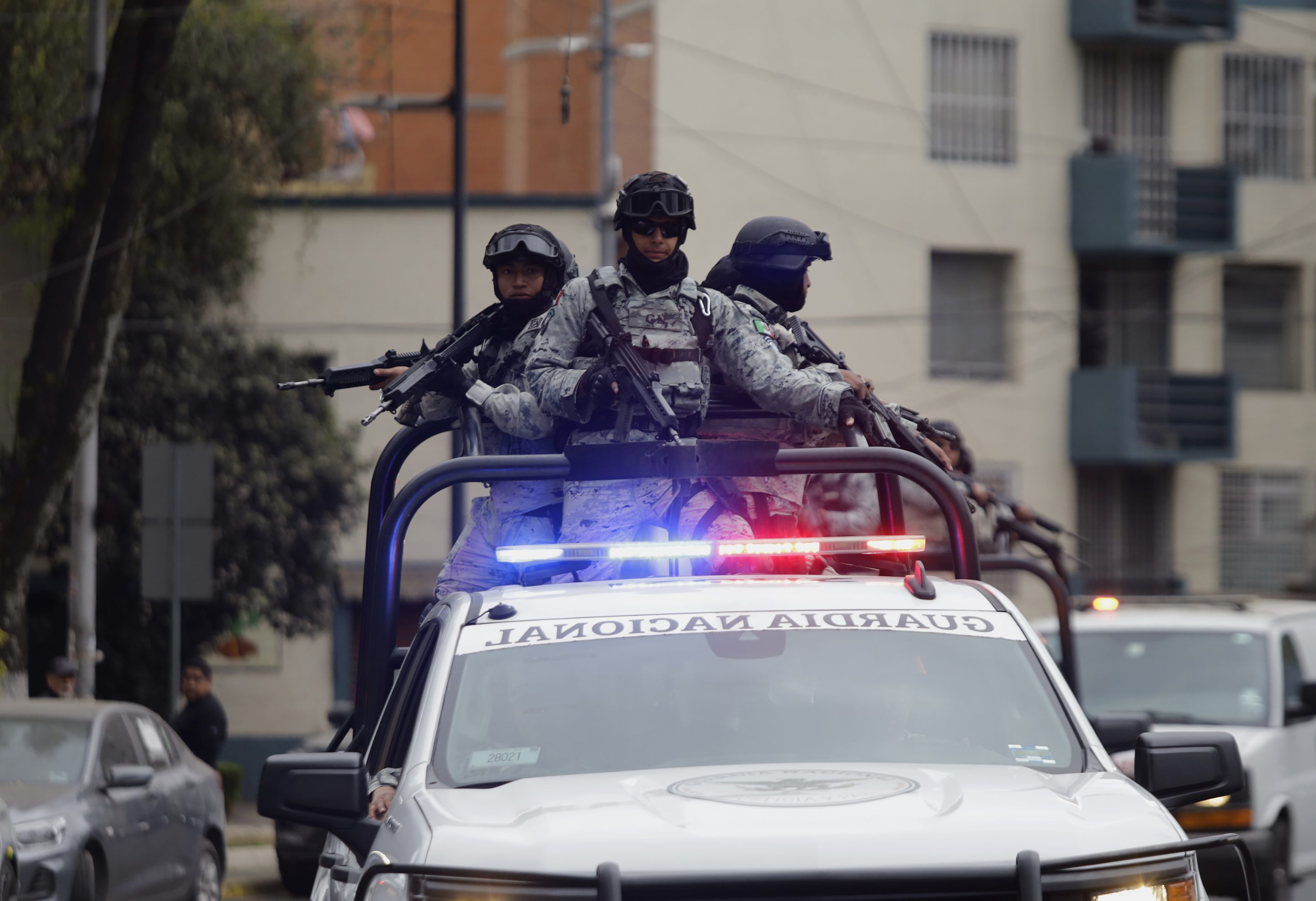
The assassination lands at a moment of acute symbolic pressure. Mexico is co-hosting the 2026 FIFA World Cup alongside the United States and Canada, and President Claudia Sheinbaum has spent months reassuring international visitors that the country is safe – deploying specialized security training, early warning systems, and reinforced presence around stadiums, airports, and major roads. The murder of a sitting mayor inside his own home, in a state where another mayor, Mario Hernández García of Santiago Amoltepec, was killed just last month, is not a quiet contradiction. It is a loud one.
Oaxaca, a Pacific coast state in Mexico’s south, has seen both the Jalisco Nueva Generación Cartel and the Sinaloa Cartel consolidate competing territorial footholds over recent years. The Mixteca region, where San Miguel Amatitlan sits, is remote and mountainous – exactly the kind of geography where criminal groups move freely and municipal governments are the first and often only state presence in a community. That proximity is not incidental. Across Mexico, analysts who track political violence note that cartels increasingly target mayors not for what they have done but for what they control: local budgets, public works contracts, and the limited police forces that function at the municipal level.
The numbers behind Saturday’s killing are not abstractions. According to figures released by the non-governmental organization Causa en Común, at least 60 politicians or lawmakers were targeted in killings last year alone. The country has recorded nearly 100 assassinations of mayors since 2006, when the government first deployed the military against the cartels and the violence entered its modern, sustained phase. That figure – produced by tracking groups, not by any official government tally – is almost certainly an undercount. Small-municipality killings in states like Oaxaca often take days to surface in national reporting.
Bravo Martínez had reached his position under an opposition coalition that combined PAN with the PRI and PRD – a political arrangement that in the post-2018 Mexican landscape signals alignment against the ruling Morena movement rather than any coherent ideological program. His party was quick to emphasize that he had sought protection. Alejandro Moreno, the president of the PRI, went further, criticizing the Sheinbaum administration for a systematic failure to shield local officials from organized crime. The administration had not responded to that specific charge as of Saturday evening.
The Oaxaca governor, Salomón Jara Cruz, who aligned himself with President Sheinbaum’s government, condemned the killing and said state security forces would assist the prosecution. “In Oaxaca, we will not allow violence to prevail over the law or over the will of our communities,” he said in a statement. He had said something similar after the killing of Mayor Hernández García last month. The case remains unsolved.
What remains unknown is almost as important as what is confirmed. Investigators have not publicly identified a motive, named a criminal group, or arrested anyone in connection with Saturday’s attack. The prosecution said it had “hardened” security force presence in the Mixteca region, without specifying what that means in practice for a municipality that already had insufficient protection to keep its elected leader alive. The PAN statement did not say how Bravo Martínez’s request for protection was handled or why – and neither the state government nor the federal Security Cabinet has addressed that gap directly.
That gap is what the World Cup framing obscures and what the condolence statements leave unasked: not whether impunity will persist in this case, but how a country with an active, ongoing campaign to project security managed to leave a mayor who had specifically reported a threat to his life without the protection he asked for.
The Trump administration, which has pressed Mexico to designate cartels as foreign terrorist organizations and threatened formal charges against Mexican security officials over cartel ties, has not commented on Saturday’s killing. The broader U.S.-Mexico security relationship – strained by those threats and by disputes over cross-border enforcement – shapes the political context in which Sheinbaum’s government must respond, or decline to respond, to each new instance of local political violence.
Inside the country, the Sheinbaum administration has been managing a series of internal pressures within the ruling Morena coalition. A security failure at the municipal level in Oaxaca does not, by itself, threaten the government. But the accumulation of mayoral killings – Hernández García last month, Bravo Martínez this Saturday, a pattern stretching back through the World Cup preparation period – is the kind of evidence that critics of the government’s security strategy have been quietly cataloguing.
What happens to those critics’ arguments may depend on whether the investigation in San Miguel Amatitlan produces a named suspect and a credible prosecution before the tournament’s cameras leave and the world stops watching Mexico quite so closely.
Related Posts