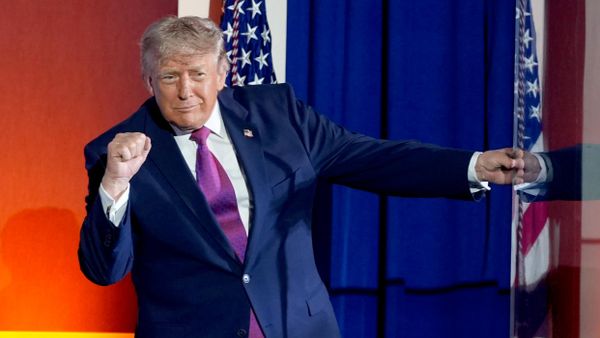

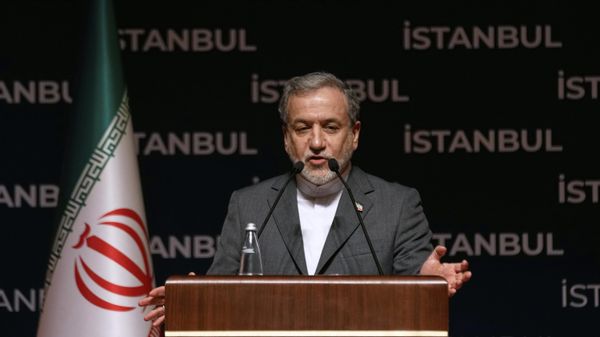
TEHRAN – Abbas Araghchi did not waste words. When Donald Trump proposed on Thursday that Iran’s frozen assets – more than $100 billion held by the United States since 1979 – could be redirected to compensate shipping companies for losses in the Strait of Hormuz, the Iranian foreign minister called the idea “incendiary” and offered a precise warning about where it would lead. “Once governments normalize confiscation,” Araghchi said, “no one’s assets are safe.”
Trump made the statement on Truth Social, describing the use of Iranian-held funds as “the fair and equitable thing to do” to compensate for maritime losses in the Hormuz corridor. Al Jazeera reported that the proposal elevates the financial dimension of a confrontation that was already full-scale. American airstrikes on Iranian territory entered their thirteenth consecutive night on Thursday. Iran’s drone attacks on US installations across the region continued in parallel. What Trump added to that ledger was the suggestion that the war’s costs could be settled in advance, from Iran’s own coffers, before any agreement has been reached.
Araghchi’s warning pointed beyond the bilateral dispute. He did not simply characterize the threat as a violation of international law – though Tehran has long maintained that the original asset freeze contradicts the Algiers Accords that ended the 1979 hostage crisis. He argued that the precedent would destabilize sovereign wealth globally: if one government can redirect another’s frozen funds as a wartime offset, no national reserve held abroad is secure. The statement was calibrated as much for non-aligned governments watching the conflict as for Washington.
Hormuz has already imposed its own financial costs. War-risk insurance premiums on tankers transiting the Strait have reached between 7.5 and 10 percent of hull value, and a single voyage now costs some operators $21 million in insurance and freight above their five-year baseline. Maritime traffic has dropped sharply since Iran moved to restrict passage. The shipping losses Trump cited as justification for the asset transfer are real – but they are also a direct product of military escalation that has now extended through almost two weeks of American strikes.
The frozen assets were, until recently, part of a negotiating framework. The two governments signed a memorandum of understanding in June – the terms of which have not been fully disclosed – that addressed elements of the asset question alongside de-escalation conditions. That agreement is no longer in effect. What precise sequence of events ended it has not been confirmed by either side.
The military picture has also not clarified. Military analysts examining Iran’s retaliatory strikes on US bases warned as recently as Wednesday that Iran’s precision has not degraded after twelve nights of sustained American attacks – 18 US service members had died and 500 had been wounded through that assessment. Neither government has published a reliable damage assessment of the other’s infrastructure. Iran says its defensive systems have intercepted the majority of incoming missiles; the United States has not publicly confirmed what it has destroyed.
The $100 billion figure requires examination. Iranian frozen assets have been subject to litigation and diplomatic dispute for more than four decades. The exact amount accessible to any US transfer order depends on which accounts are included, what portion has already been disbursed through prior legal settlements, and whether the funds are held directly by the US Treasury or through intermediaries in third countries. Trump’s Truth Social statement did not specify the legal mechanism he would invoke, nor has the White House indicated whether existing statutes permit such a transfer without congressional authorization.
Araghchi’s warning about global precedent carries weight in certain diplomatic quarters. Countries that hold sovereign wealth in US-denominated instruments – including several Gulf states whose reserves far exceed Iran’s frozen funds – have reason to monitor the legal reasoning closely. The implicit question in Tehran’s statement is whether Washington would apply the same logic to other disputes, or whether the mechanism is reserved for designated adversaries. No major financial center had publicly endorsed Trump’s proposal by Thursday evening.
Tehran has not closed the door on negotiation, but it has given no indication it would accept asset confiscation as a precondition for any talks. Araghchi’s statement was a public rejection, not a backchannel signal. Iran’s pattern in this confrontation has been to communicate red lines through official statements rather than through quiet concession, and Thursday’s response followed that pattern. He was not negotiating. He was placing a marker.
Whether any court would rule on the legality of a unilateral transfer, whether Congress must authorize it, and what Iran’s practical leverage would be against any such order remain unanswered. Iran holds no equivalent amount of US government assets abroad. Its leverage is physical: the Strait of Hormuz, drone capacity, and the ability to escalate attacks on US-affiliated targets across the region. The asset dispute, if it moves from statement to action, would add a legal and financial front to a confrontation that is already military and diplomatic.
Thirteen nights have produced a military stalemate with financial dimensions that neither side has fully priced. Trump’s proposal adds a new instrument to a confrontation that is running short of diplomatic exits. Iran has answered it in the language that makes non-aligned governments pay attention: whose money is safe, and under what conditions. That question has no answer yet.