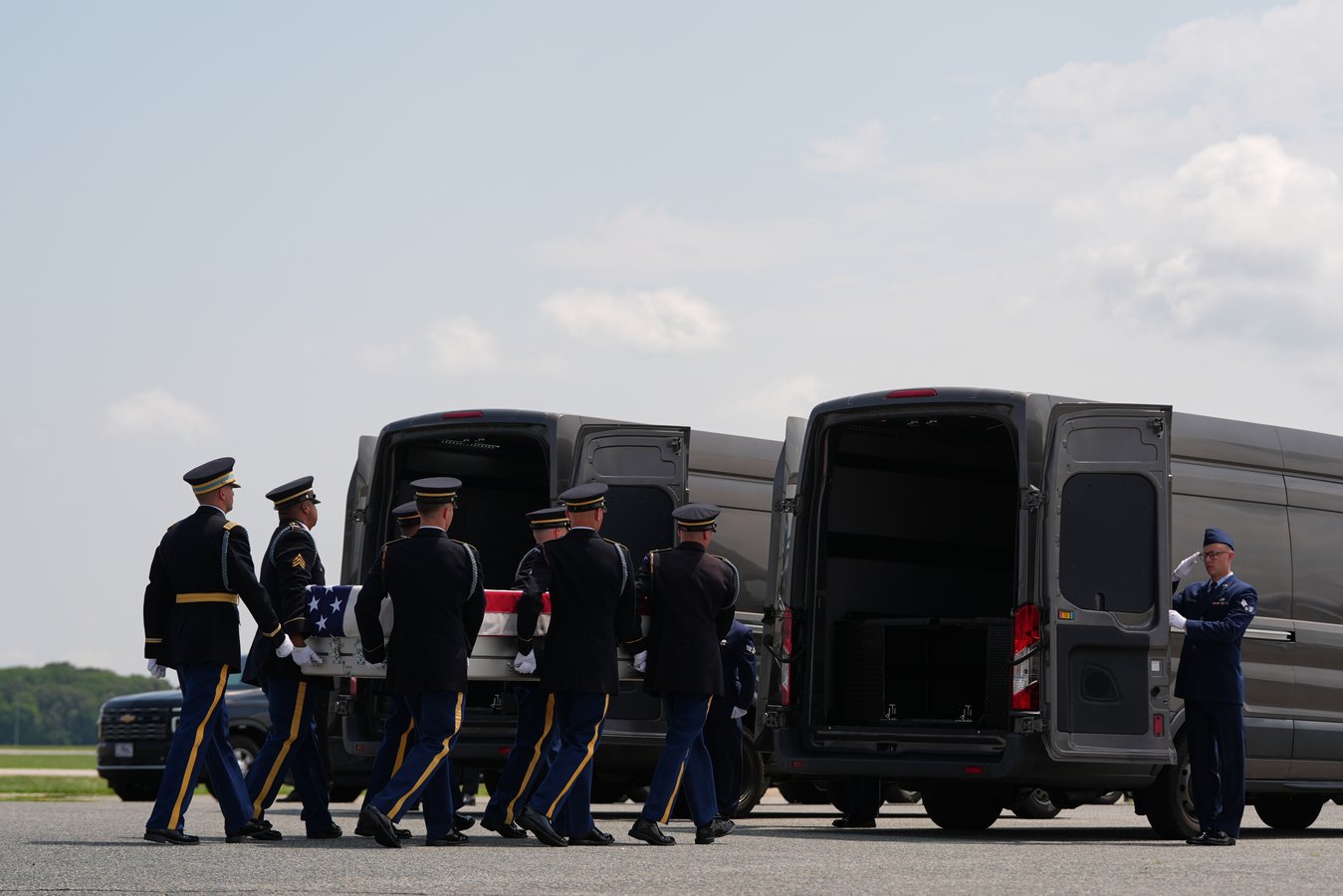

TEHRAN — The military transport landed at Dover Air Force Base, Delaware, before dawn last week, carrying the remains of First Lieutenant Tyler James Feehan of Ewa Beach, Hawaii, one of three American service members killed in an Iranian strike on a base in Jordan. He was 26. By the time the ceremony ended, the war that claimed him had entered its seventh consecutive day of US airstrikes on Iranian territory.
Twelve nights later, the bombing continues. And so does Iran’s capacity to strike back.
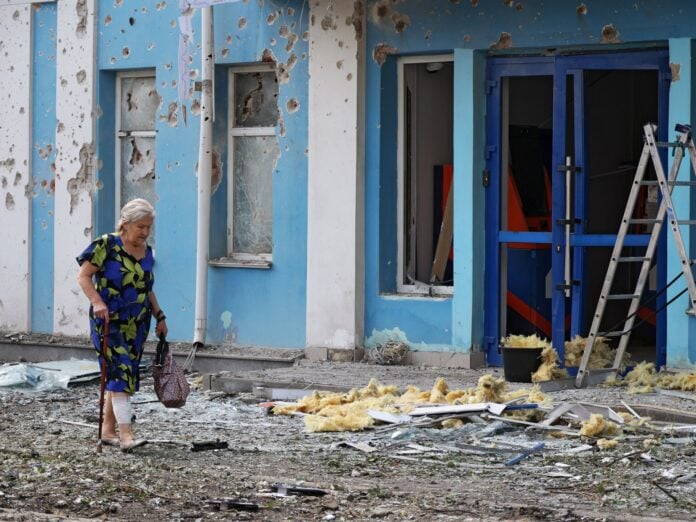
The United States military’s official death toll in the conflict stands at 18, with approximately 500 service members wounded and roughly 220 structures damaged or destroyed across American facilities in the Gulf region since the ceasefire breakdown on July 8. By the count that matters most to military planners, the precision of Iranian strikes has not declined. According to analysts who spoke to Al Jazeera, that is not a surprise: Iran has spent years building an asymmetric military capability specifically designed to survive exactly this kind of sustained American bombing campaign.
“Iran’s military capabilities remain formidable,” said Jennifer Kavanagh of the defense think tank Defense Priorities. “It has reconstituted faster than expected, likely with Russian and Chinese intelligence support.” That support appears to have included satellite imagery and signals intelligence that has given Tehran an increasingly accurate picture of where American troops are stationed and how American air defense systems are deployed.
The structural problem is straightforward, even if no solution to it is. Approximately 50,000 US service members are deployed across Gulf-region bases that were built to withstand rocket and mortar fire, not precision ballistic missiles. The facilities are fixed and their coordinates are known. Iran’s military intelligence, supplemented by Russian and Chinese support, has tracked them for years. Moving bases further from Iranian range would reduce exposure but also degrade the operational reach that makes the forward deployment strategically valuable in the first place.
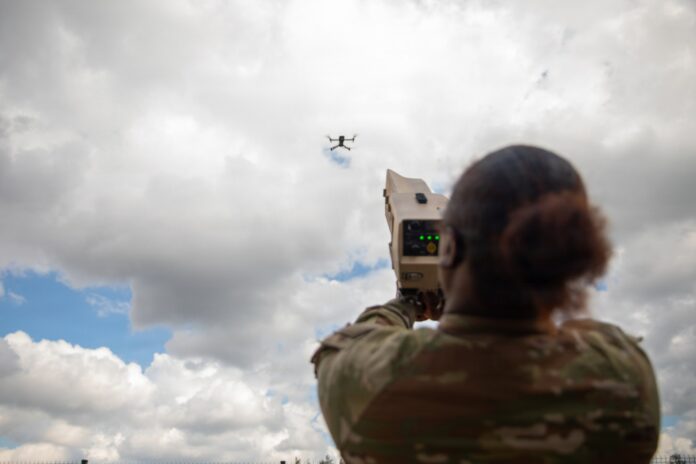
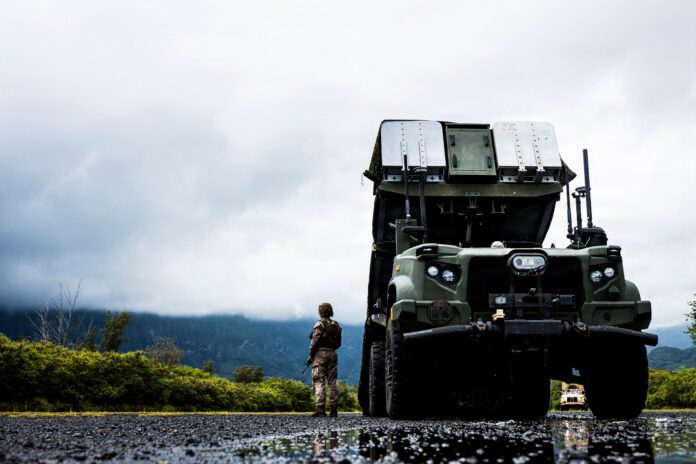
Iran exploits this vulnerability through a layered attack doctrine that combines ballistic missiles, cruise missiles, and armed drones launched along different flight paths and at different speeds. The approach is calibrated to overwhelm US air defense systems, particularly Patriot missile batteries and THAAD interceptors, which perform well against single-vector attacks but struggle against simultaneous multi-directional strikes. Iran has incorporated decoy drones into its attack packages to further complicate intercept calculations.
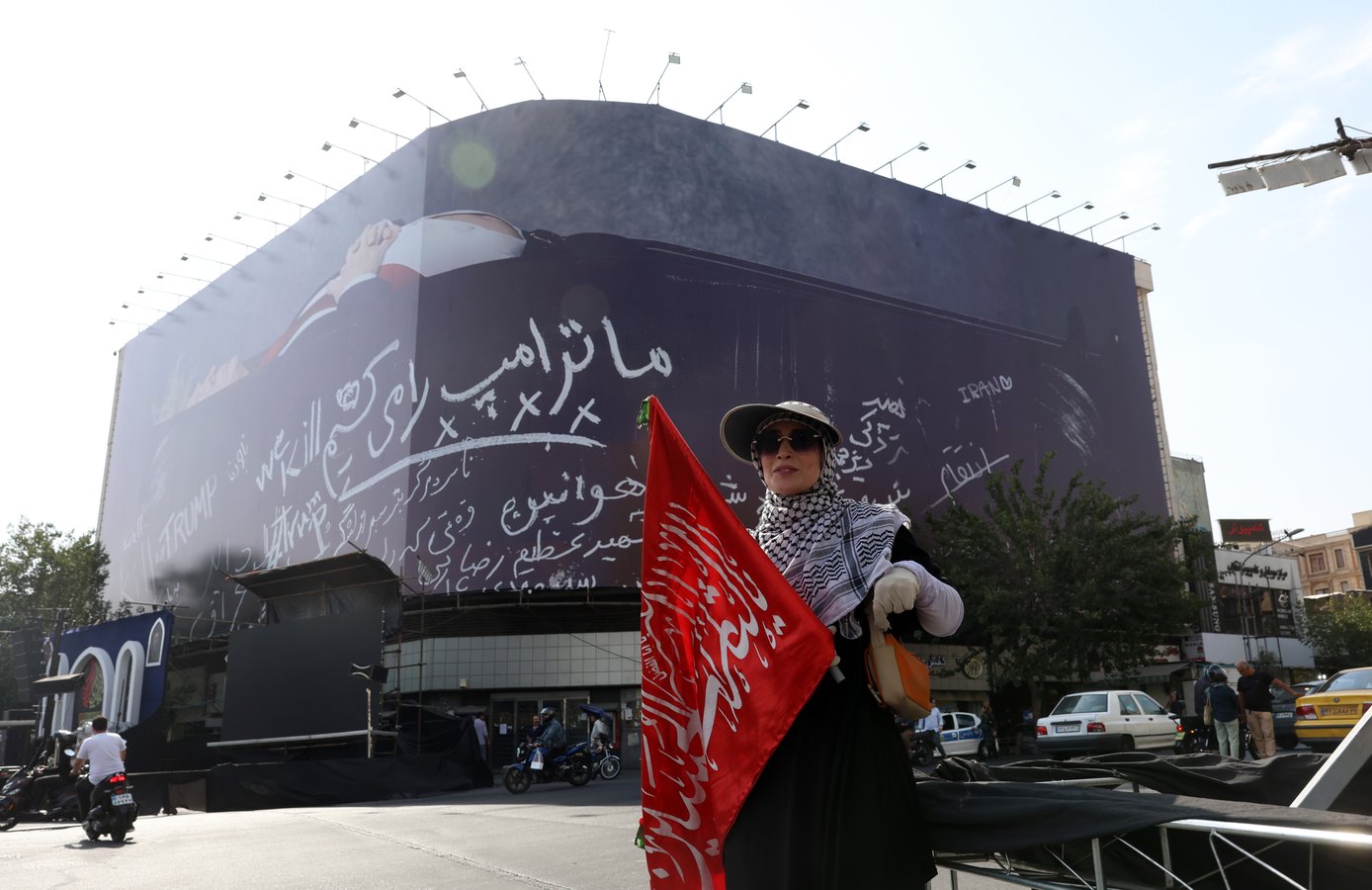
“Iran does not need to defeat the United States militarily,” said Andreas Krieg, a senior lecturer at King’s College London and a specialist in Gulf security. “It needs only to penetrate its defences often enough to impose human, operational and political costs.” That formulation explains why Iran’s objectives in this conflict are achievable without anything approaching a conventional military victory: each American soldier killed and each base damaged raises the domestic cost of the war and prolongs pressure on Washington to reach a settlement on terms Tehran can accept.
The cost asymmetry reinforces the calculation. Iranian ballistic missiles and military-grade drones are substantially cheaper to produce and fire than the interceptors required to stop them, according to Patrick Bury of the University of Bath. That imbalance means Iran can sustain a prolonged exchange without facing the same financial pressure on its military budget that the United States does in deploying and replacing high-end interception systems. The math does not get easier for the American side as the conflict extends.
The human costs have not been abstract. When Iranian strikes killed US troops at an American base in Jordan earlier this month, the losses triggered the sharpest escalatory pressure the administration has faced, prompting Trump to expand his target list and raise the rhetorical stakes. His subsequent threat to bomb Iranian bridges or power plants for each attack on Hormuz shipping drew a direct response from Iranian Foreign Minister Abbas Araghchi, who reaffirmed Iran’s long-standing doctrine: “eye for an eye.”
The threat exchange illuminates the political bind on both sides. The United States cannot easily absorb mounting casualties without a public accounting of what the bombing campaign is achieving. Iran cannot publicly accept an American-defined ceasefire framework without appearing to capitulate under military pressure. Both governments are, for now, locked into escalation cycles that neither seems prepared to break unilaterally.
What remains genuinely unclear is the timeline for any meaningful degradation of Iran’s capabilities. Iran has dispersed its stockpiles, including missiles and drones, into hardened and underground facilities that have proved resistant to American airpower. Several targeted sites have been rebuilt or substituted faster than US intelligence anticipated. The Pickaxe Mountain facility, believed to house nuclear centrifuge equipment, has survived repeated strikes and remains a symbol of the limits of conventional bombing.
After twelve nights of bombing, the United States has achieved measurable results: significant infrastructure damage, degraded refinery capacity, and documented disruption of some missile storage sites. What it has not achieved is a ceiling on Iran’s ability to strike back. For the 500 Americans wounded in this war, and the families of the eighteen who did not come home, the gap between those two things is not a strategic abstraction.