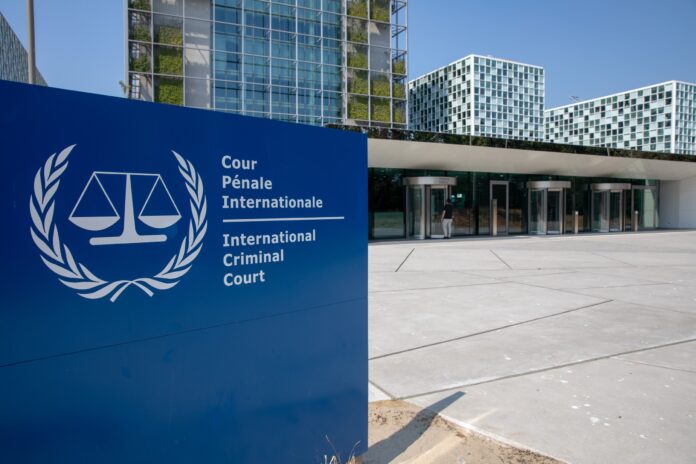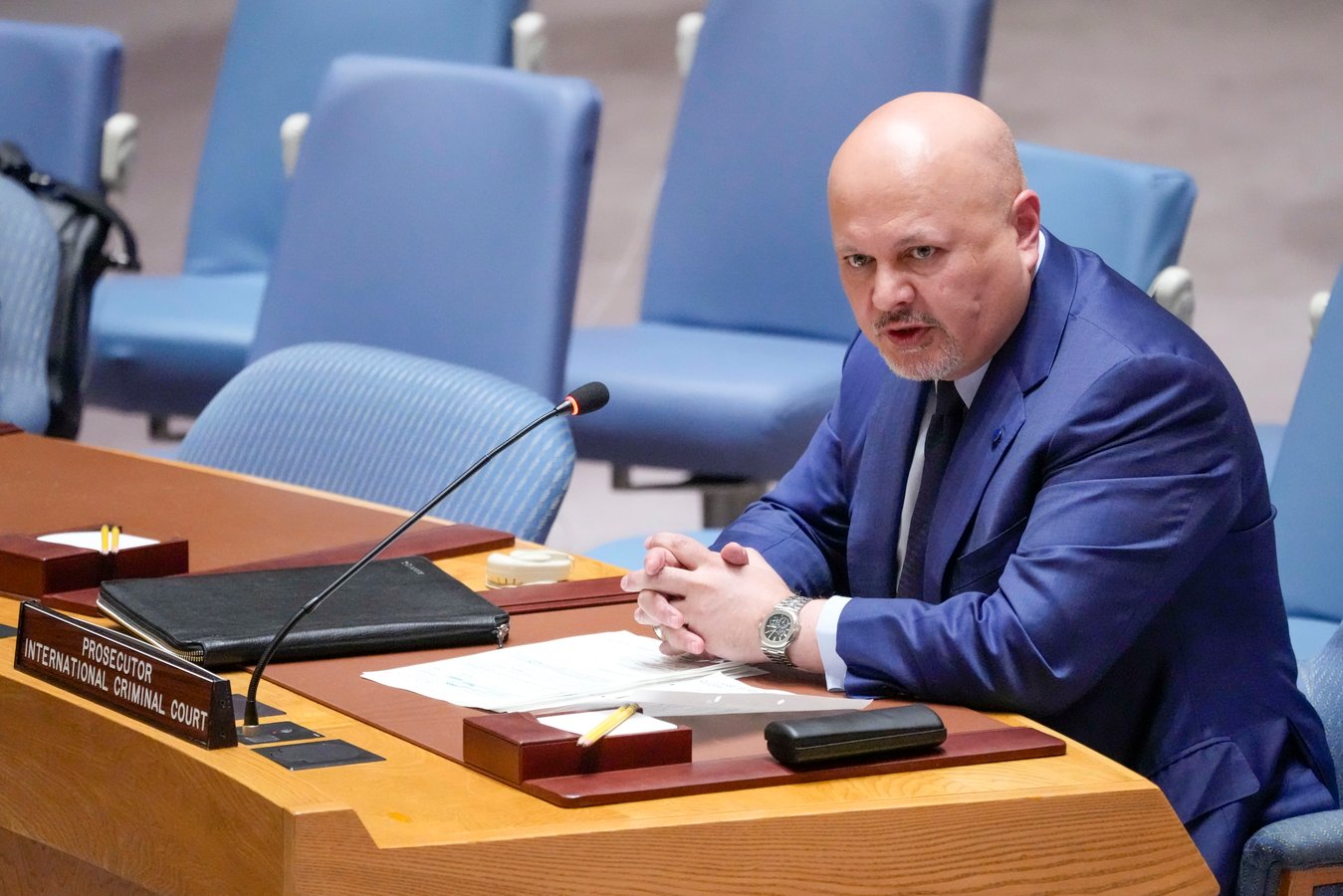

THE HAGUE – The 125 member states of the International Criminal Court gathered in The Hague on Friday to cast ballots on whether Karim Khan should become the first prosecutor in the court’s 23-year history to be removed from office. The vote came not at a moment of ICC stability but at a point of maximum institutional pressure: the court operates under US sanctions, its active dossier includes arrest warrants for Israeli Prime Minister Benjamin Netanyahu, and the woman at the center of the misconduct allegations that triggered today’s proceedings is known publicly only as Sarah.
The threshold for removal is 63 votes, an absolute majority of the court’s membership. France and the Netherlands, which hosts the ICC in The Hague, announced before Friday’s session that they would vote to remove Khan. Whether enough member states follow to cross that threshold is unknown. As Al Jazeera reported, the outcome of this vote will shape how the court handles cases already opened, including the warrant for Netanyahu that Khan’s office sought and ICC judges issued in 2024.
Khan, a 56-year-old British barrister who has led the Office of the Prosecutor since June 2021, has denied all allegations. His accuser, identified only as Sarah, told CNN of “escalating behaviour of touching and groping,” including contact she described as occurring while she was pretending to be asleep. A second woman separately described “a constant onslaught” of unwanted advances to The Guardian. The UN Office of Internal Oversight Services, commissioned by the court’s governing bureau to investigate, found evidence of nonconsensual contact at multiple locations on the record. Three judges independently tasked with evaluating that evidence reached the opposite conclusion, finding unanimously that it did not establish misconduct under the court’s legal framework.
The bureau chose to proceed to the full Assembly of States Parties despite the judicial panel’s clearing verdict, a decision Khan’s lawyers described as procedurally unlawful. The brief submitted to member states before Friday’s vote characterizes the entire proceedings as tainted. Those lawyers have not softened that position in the weeks since the bureau formally suspended Khan on June 9 and referred his fate to the 125-nation assembly.
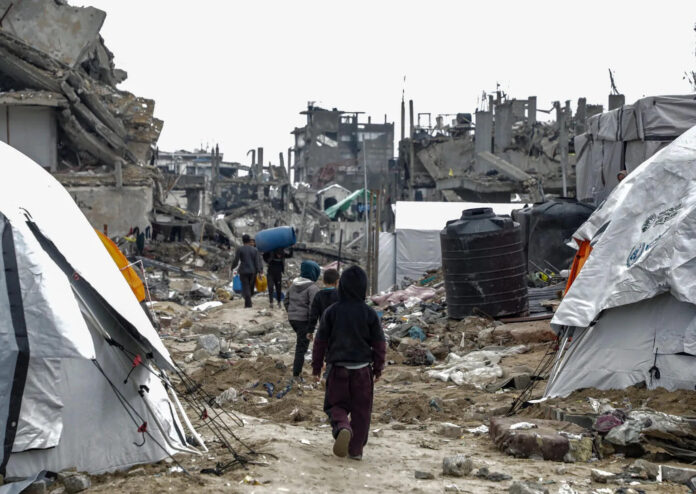
The political layer cannot be separated from the misconduct proceedings with any honesty. Khan’s pursuit of genocide accountability in Gaza brought the ICC into open confrontation with the United States and Israel in a way that no previous prosecutor’s office had managed or attempted. Washington imposed sanctions on the court in early 2025 after Khan sought warrants for Netanyahu and former Defense Minister Yoav Gallant. Those sanctions, extended separately to UN Special Rapporteur Francesca Albanese in connection with the same investigation, complicated the court’s banking and staffing relationships with European member states who publicly disagreed with the move.
The administration of Donald Trump has been explicit about its ambitions for the court. Secretary Marco Rubio pledged to dismantle the ICC “brick by brick.” A congressional divide opened earlier this month when Representative Ilhan Omar introduced a bill for the United States to join the ICC in the same week Rubio made that pledge. The divergence exposes how much of America’s posture toward the court is a proxy fight over Gaza.
The question member states must resolve is whether they are voting on Khan’s fitness to lead the prosecutor’s office or on whether the ICC’s Gaza genocide investigations should continue. Khan’s defenders argue these are entirely separate matters. His critics within the court governance structure have been more careful with their words. What neither camp disputes is that the charges were filed and escalated in a political climate that has made every action of the OTP, including its Gaza work, intensely contested. Trump has declared that Netanyahu will not be arrested on American soil under any circumstances, a position that collides directly with the ICC warrant’s legal force in every country that is a court member.
If Khan is removed, the ICC’s statute provides no clear mechanism for mid-term replacement. No election was scheduled before 2027. The court’s deputy prosecutors, Nazhat Shameem Khan and Mame Mandiaye Niang, have managed day-to-day operations since May 2025, when Khan took a voluntary leave of absence to allow the OIOS investigation to proceed. A formal removal makes that interim arrangement permanent for an unplanned duration, with the office’s most sensitive and politically exposed investigations proceeding without an elected head.
On the Gaza cases specifically, the outcome of Friday’s vote changes nothing about the warrants themselves. The arrest warrants for Netanyahu and Gallant were issued by ICC judges, not by the prosecutor’s office acting unilaterally. Only judges can withdraw them. The legal machinery that has made Netanyahu a wanted figure in 124 of the court’s 125 member states continues operating regardless of who leads the OTP. What a change in prosecutor would affect is the strategic direction of the office that built that machinery: which investigations it pushes, how aggressively, and whether the next elected prosecutor, selected by an Assembly of States Parties now acutely aware of Gaza’s political weight, maintains the same prosecutorial posture.
The ICC has operated under external pressure since its founding year, including American legislation authorizing military extraction of any ICC-held American citizen. What it has not done before is vote to remove its chief prosecutor. Friday’s session is testing a mechanism the court’s founders built into the Rome Statute but never expected to use. The 125 member states casting ballots are deciding not only Karim Khan’s future but what kind of institution the ICC is willing to be when the cases it takes on cost it political comfort with the most powerful states in the international system.