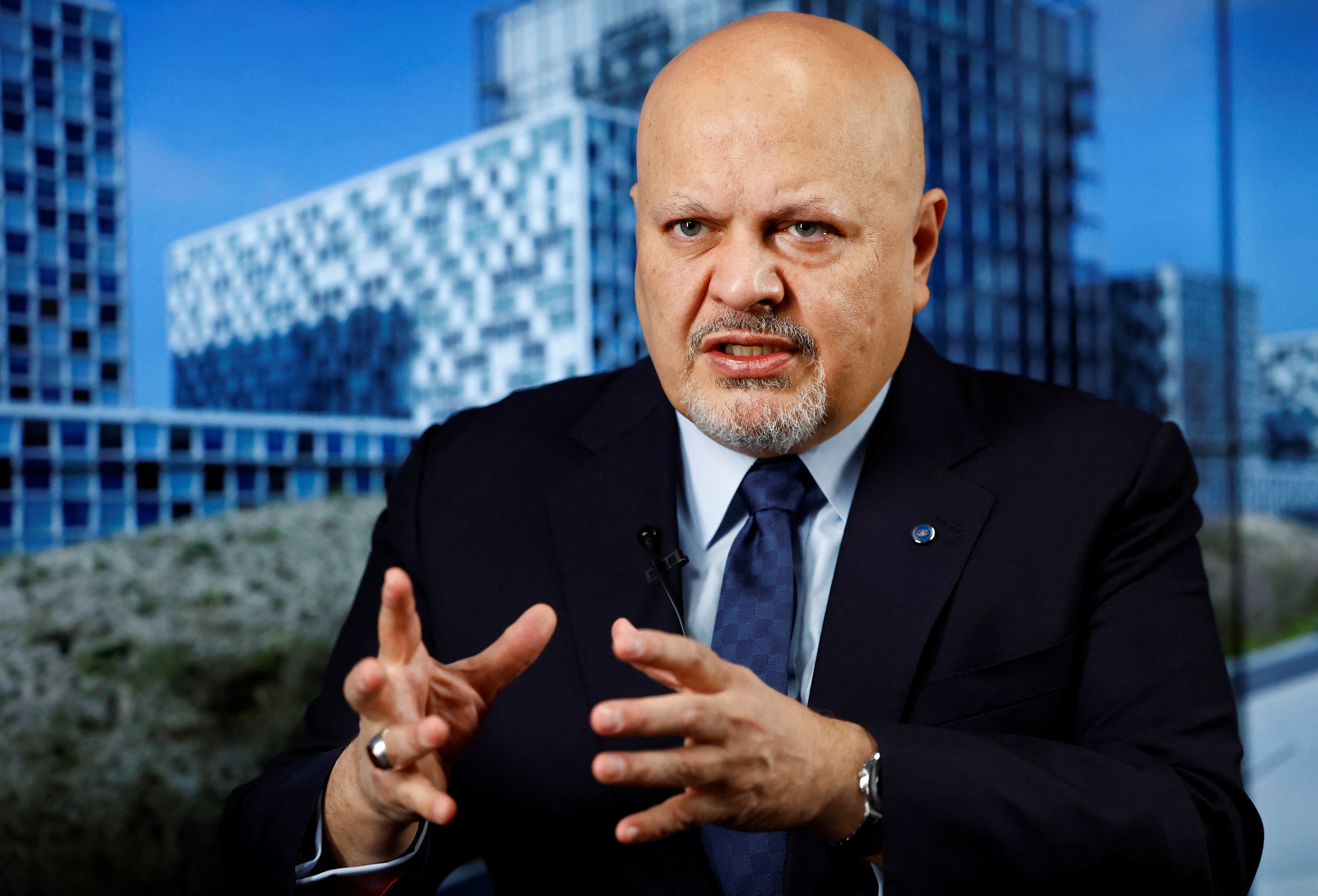

THE HAGUE — The courtroom where Karim Khan has spent five years building war crimes cases against the most powerful figures on earth is now the backdrop for his own reckoning. The prosecutor who secured arrest warrants for a sitting head of government was suspended Monday by the same body that put him in office, forced out in a process that has no precedent in the ICC’s 23-year history and no certain end.
The Bureau of the Assembly of States Parties, the 21-member executive committee of the court’s governing body, voted by qualified majority to suspend Khan from duty with immediate effect and refer his disciplinary proceedings to the full Assembly of States Parties for a final decision. A special session of all 125 member states will be convened to determine whether Khan can continue as prosecutor or whether he becomes the first person to be removed from that office.
The bureau did not publicly disclose the content of its findings. Its statement said only that it based its decision on the report of an investigation undertaken by the United Nations Office of Internal Oversight Services, the underlying evidence, the advice of an ad hoc panel of judicial experts, and written submissions. The full dossier, it said, would remain confidential.
Khan, a 56-year-old British barrister who took office in June 2021, has denied all allegations. His legal team rejected the bureau’s conclusion in language that left no ambiguity about the fight ahead. “The decision is unlawful, procedurally unfair and unsupported by evidence,” the statement said. Khan himself, through his lawyers, said he would contest the proceedings vigorously before the Assembly. His suspension pending that vote, the bureau was careful to note, “is not an indication of the final outcome.”
The allegations at the center of this proceeding first emerged more than two years ago. A female aide alleged that Khan had transferred her from another ICC department into his office and subsequently subjected her to a pattern of sexual harassment and nonconsensual contact on foreign trips, at his private residence, and in his own office in The Hague. A second woman later told The Guardian of a “constant onslaught” of unwanted advances. The OIOS investigation, commissioned by the bureau in late 2024, found what the Associated Press described as evidence of nonconsensual sexual contact in multiple locations. Three judges separately tasked with evaluating the legal sufficiency of that evidence reached the opposite conclusion, unanimously finding that the factual findings did not establish misconduct under the court’s framework.
That tension, between the investigators’ findings and the legal panel’s assessment, is precisely what makes Monday’s suspension so consequential. The bureau chose to proceed despite the judicial panel’s verdict, a decision that Khan’s lawyers described as a violation of due process and that legal scholars following the case said will set a precedent for how the court governs itself in internal matters for decades to come.
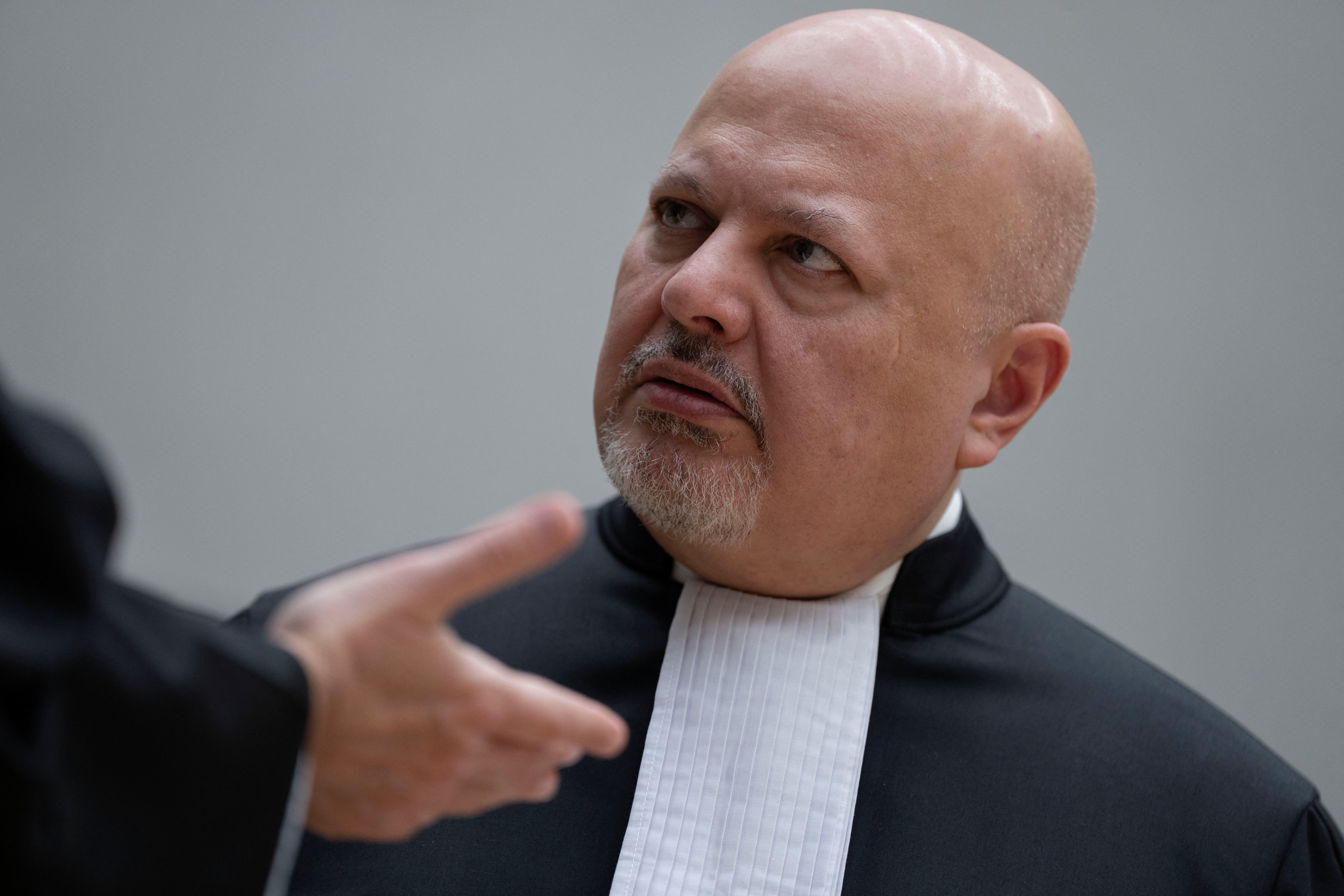
The architecture of what comes next is unwieldy by design. The Rome Statute was written to vest accountability for the prosecutor in the member states collectively, a deliberate safeguard against any single government or bloc manipulating the court. That same design now means Khan’s fate will be decided by a secret ballot of 125 countries, governments with conflicting interests in the ICC, ranging from states that have actively sought its jurisdiction to those, like the United States, that have sanctioned the court for pursuing arrest warrants against allied officials. Removing Khan requires 63 votes. Whether that threshold is reachable, and in what political climate, remains unknown; no date for the special session has been set.
Khan has not exercised executive authority over the Office of the Prosecutor since May 2025, when he took a voluntary leave of absence to allow the OIOS investigation to proceed. His two deputy prosecutors, Nazhat Shameem Khan and Mame Mandiaye Niang, have managed the office’s operations, including its ongoing cases in Gaza, Sudan, and Ukraine, in his absence. Monday’s formal suspension formalizes that arrangement and strips him of the ability to return unilaterally.
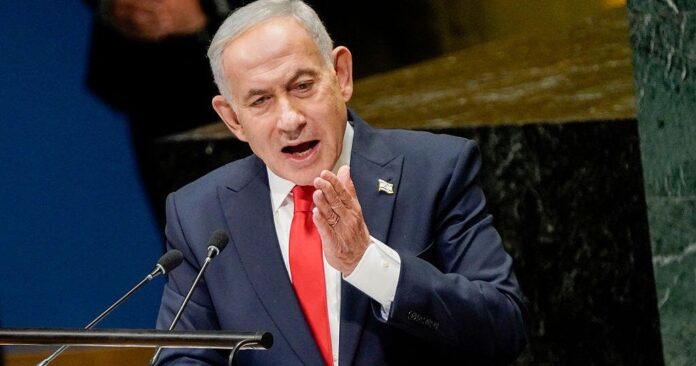
The ICC’s credibility has rarely faced simultaneous pressure from so many directions. The court has operated under US sanctions since early 2025, imposed after Khan’s office issued arrest warrants for Israeli Prime Minister Benjamin Netanyahu and former Defense Minister Yoav Gallant. Those sanctions, which were later extended to UN Special Rapporteur Francesca Albanese in connection with the same probe, have complicated the court’s ability to operate and drawn criticism from European governments that remain among its closest partners. Russia, separately, convicted Khan in absentia in December 2025, sentencing him to 15 years on charges that Moscow’s Investigative Committee said included unlawful prosecution and preparations to attack a foreign state official enjoying international protection.
The court’s presidency, in a statement Tuesday, said it had taken note of the bureau’s decision and called on the Assembly of States Parties to complete the process “as a matter of priority.” That formulation is diplomatic. The longer the proceedings extend, the longer the ICC’s most public-facing office operates without an elected head, a gap that, as Khan’s Israeli arrest warrant cases continue to wind through the court’s chambers, is anything but administrative.
The ICC, for its part, has had to construct the legal procedures it is now applying from scratch. The Rome Statute anticipated that a prosecutor might be removed, but it did not anticipate a scandal of this duration or complexity. The bureau has created new rules at each stage of the process, a fact the court itself has acknowledged. That improvisation, even when legally defensible, is the kind of institutional image problem that takes years to repair, particularly for a court whose moral authority depends on the perception that its processes are more rigorous than those of the states it sits in judgment of.
What the Assembly of States Parties will actually do when it convenes remains the open question. The bureau has found grounds for discipline; the judicial panel found the evidence legally insufficient; Khan’s lawyers say the entire process is tainted. The 125 governments now tasked with deciding will bring to that vote all of the geopolitical freight that has surrounded the court since it first moved against sitting officials. Whether the outcome is removal, reinstatement, or something negotiated in between, the vote will be the most consequential decision the assembly has ever taken on a matter that has nothing to do with the crimes the court was built to prosecute.