
WASHINGTON – Donald Trump told reporters at Camp David on Thursday that there was no sign the International Criminal Court had targeted him personally, while leaving open the possibility that it could. “There’s no indication. It could happen,” Trump said at a cabinet meeting convened at the presidential retreat, a gathering that also produced a sharp statement from Secretary of State Marco Rubio vowing to dismantle the court institution by institution.
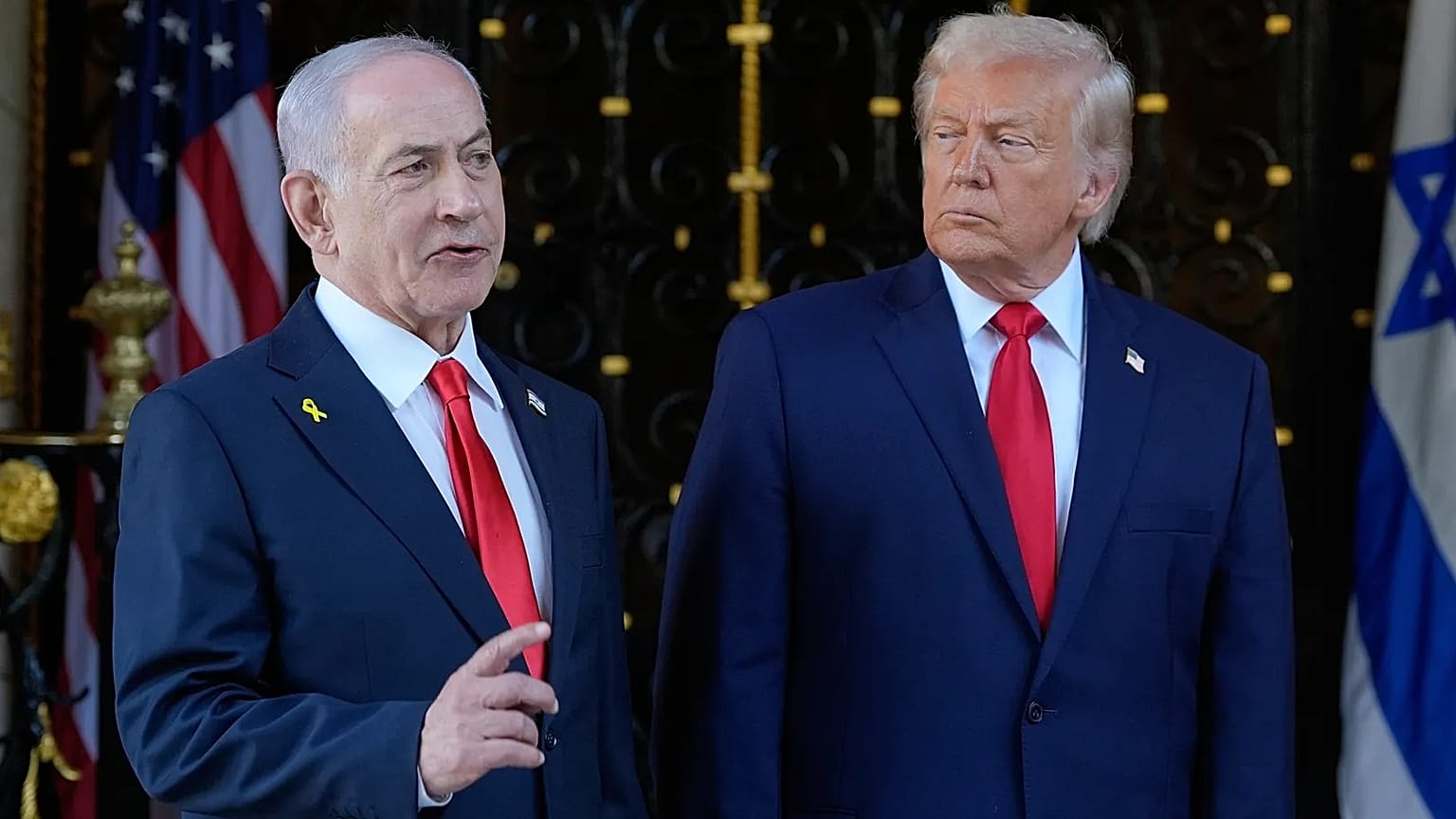
Rubio’s framing was explicit. He described the administration’s approach as dismantling the ICC “brick by brick,” a phrase that signals not a legal challenge to any specific warrant but a broader effort to reduce the court’s operational capacity through financial isolation, diplomatic pressure, and targeted sanctions on court personnel. Rubio added that the administration’s posture was partly about defending “Bibi and others,” a reference to Israeli Prime Minister Benjamin Netanyahu, against whom the court has issued an arrest warrant.
The remark situates the Trump administration’s ICC posture firmly inside the Israeli case. Netanyahu faces ICC charges connected to the conduct of military operations in Gaza, which the court’s prosecutors have characterized as meeting the legal threshold for war crimes. The Trump administration has refused to acknowledge the warrant’s legitimacy, and American statements have made clear that no US enforcement cooperation with the ICC on Israeli subjects will occur.
Trump’s own exposure is less formally defined. The ICC’s pre-indictment processes are confidential by design, and the court has not publicly confirmed or denied any investigation touching American officials. Trump’s remark that it “could happen” represents his clearest public engagement to date with the possibility that he personally might become a subject of ICC scrutiny, a prospect that, given his administration’s support for military operations in which American equipment and intelligence are involved, is not purely hypothetical.
The executive order Trump signed in February 2025, which authorized asset freezes and travel bans against ICC officials, was described at the time as a response to the court’s prior investigation into American military personnel in Afghanistan. The “brick by brick” language from Rubio extends that posture into something more systematic: not just blocking a specific investigation but degrading the court’s institutional functioning across all its activities.
Russia has its own reasons to welcome this alignment. Moscow has characterized the ICC as a neo-colonial instrument since the court issued its 2023 arrest warrant for President Vladimir Putin on charges connected to the deportation of Ukrainian children. The Kremlin’s position is that the court applies Western legal frameworks selectively against non-Western states, a critique structurally similar to the Trump administration’s, though the two governments arrive at the same conclusion from different positions: the United States as a non-signatory to the Rome Statute, Russia as a state that withdrew its signature in 2016.
That overlap has not produced formal coordination, but it has created a practical environment in which the court’s two most powerful critics are simultaneously applying pressure. The ICC’s budget depends partly on assessments from member states; American influence over allied governments affects whether those assessments are paid and whether states cooperate with court processes on their territory.
When Netanyahu arrived in New York last week, his travel prompted renewed debate about whether American law enforcement agencies would honor any ICC warrant. Separately, Canada’s refusal to grant Netanyahu airspace clearance under its Rome Statute obligations created a diplomatic incident that exposed the operational consequences of ICC warrants for countries that have signed the founding treaty. The American response to both episodes was to reiterate that the US does not recognize the court’s jurisdiction over its officials or those of its allies.
Rubio’s promise to dismantle the court brick by brick is a statement of intent rather than a timeline. The mechanisms available to the administration are real but slow-acting: sanctions, diplomatic pressure on allied governments, withholding of intelligence cooperation, and funding restrictions through allies. The International Criminal Court has survived American non-participation since 2002, when the George W. Bush administration unsigned the Rome Statute. Surviving active hostility from a second Trump term is a different challenge, but the court’s institutional architecture was designed with exactly this kind of political pressure in mind.
Whether any of this changes the court’s formal processes depends on whether its remaining 124 member states hold their procedural commitments under sustained American pressure. The Camp David cabinet produced no new legal instrument against the court on Thursday. What it produced was a clearer articulation than the administration had offered before of what dismantling the ICC actually means: brick by brick, beginning with the bricks that protect the people Rubio named.