
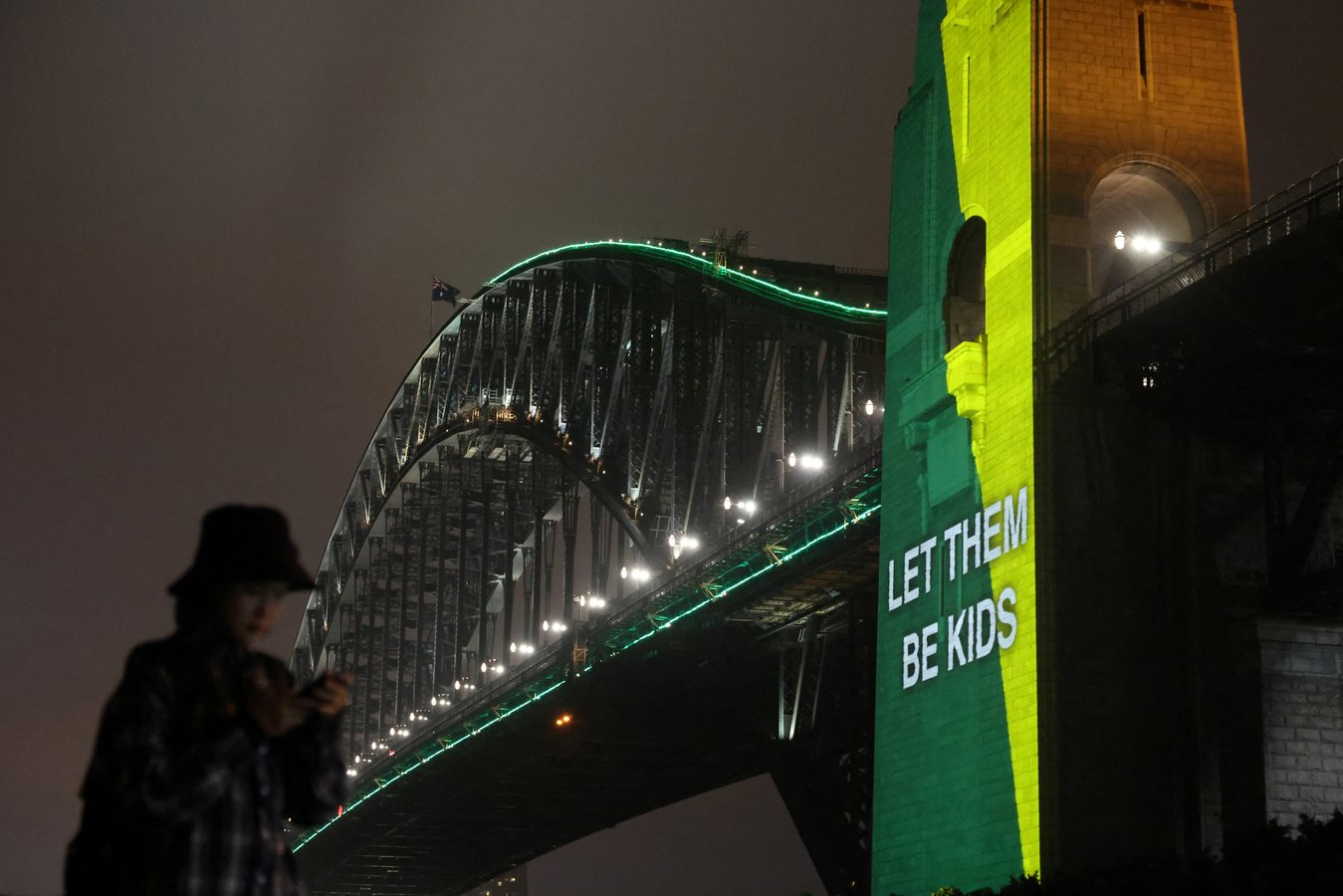
SYDNEY – Three months after Australia’s government switched on the world’s first national ban on social media for children under 16, roughly four in five Australian teenagers remain active on the platforms the law was designed to remove them from. The figures, released Saturday by the country’s eSafety Commissioner, are not a close call: 81 percent of under-16s surveyed after three months retained or opened accounts on age-restricted platforms, down just five percentage points from the 86 percent recorded before the ban took effect.
Daily usage barely moved. Fifty-eight percent of teenagers reported using social media every day after three months, compared with 60 percent before the ban. By the regulator’s own accounting, the world’s boldest attempt to legislate children off the internet produced a two-percentage-point difference in daily engagement. The primary reason, as Al Jazeera reported, was not determined teenagers outfoxing regulators. It was the platforms themselves. About half of the children who still had accounts said the apps had never asked them to verify their age at all.
The Commissioner’s report was pointed in its diagnosis: social media companies’ failure to implement effective age assurance was the main driver of non-compliance, not the ingenuity of under-16s. The platforms required to enforce an age gate had, in the main, not built one. When a law is designed to be implemented by the companies it regulates, and those companies do not act, the law produces a press release rather than a policy outcome.
Where age checks were attempted, teenagers found them straightforward to beat. Accounts already established before the ban took effect were simply retained, most without any re-verification prompt. New accounts were opened by minors who listed a birth year placing them at 16 or older. Automated systems that were supposed to identify and age-gate minors flagged them as adults. The technical infrastructure for confirming who a child is, at scale, across dozens of platforms, without creating a national database of every teenager’s internet habits, remains an unsolved engineering problem. Australia’s eSafety Commissioner identified no working model for it in Saturday’s review.
Australia’s government accepted the numbers without treating them as failure. Andrew Leigh, the assistant minister responsible for implementation, compared the outcome to alcohol age laws. “We never expected this would have 100 percent compliance,” Leigh said. “We don’t get 100 percent compliance out of minimum drinking age laws, but it’s still appropriate that we have that law on the books.” He pointed to the ban’s cultural footprint as a separate achievement, noting that millions of accounts had been shut down and the policy had reshaped the national debate around children’s access to social media.
The analogy has limits. Underage drinking is illegal to supply as well as consume; a bar that repeatedly serves minors faces criminal exposure and license revocation. The platforms currently face no comparable financial consequence for the age-check gaps the regulator documented on Saturday. Enforcement runs through the eSafety Commissioner, whose powers extend to issuing compliance notices and ultimately to court proceedings, not to the kind of immediate financial penalties that change platform behavior in a quarter. Until non-compliance costs something meaningful, the compliance numbers will reflect that math.
France became the first European Union country to formally ban social media for children under 15 in July, following Australia’s legislative template. The French law requires platforms to verify ages and block underage users, and imposes financial penalties for non-compliance, but it faces the same technical question Australia’s three-month findings have not resolved: what verification mechanism actually works? France has not answered that. It has only passed a law that assumes one exists.
In Britain, Washington formally pressed Britain to abandon its planned under-16 social media ban, arguing that parental empowerment over platform mandates was the appropriate approach, which is also the approach the platforms themselves prefer, and the one that does not require them to build anything new. London declined. The British ban is expected to enter enforcement later this year, and will face the same age verification problem that has now given Australia’s government an uncomfortable Saturday.
TikTok, Instagram, Snapchat, and Meta have not released statements following the eSafety Commissioner’s review indicating what, if anything, they plan to change about their age-verification systems. Each platform has pointed to existing parental supervision tools at various points as an adequate response to child safety pressures. Those tools were in place when Australia’s ban took effect. They did not produce the numbers the government wanted.
What Australia’s government has not answered is whether stricter enforcement, with genuine financial penalties attached, would change the platforms’ calculations quickly enough to matter for the children currently using those apps. The eSafety Commissioner’s report identifies where the failure occurred. Whether the government prepared to take credit for the ban is willing to do the harder work of compelling compliance from the companies that have so far declined to build what the law demands is the question Saturday’s numbers have placed on the table, without answering it.