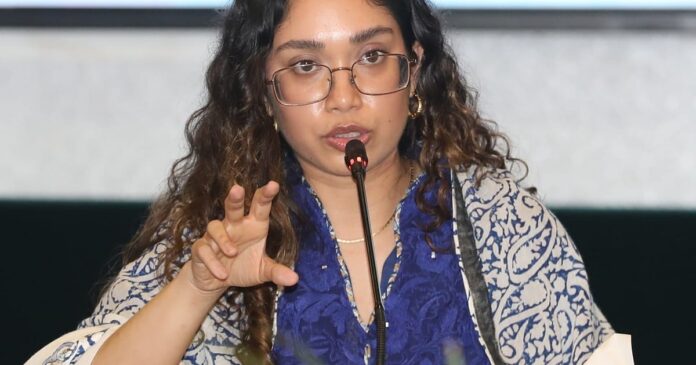
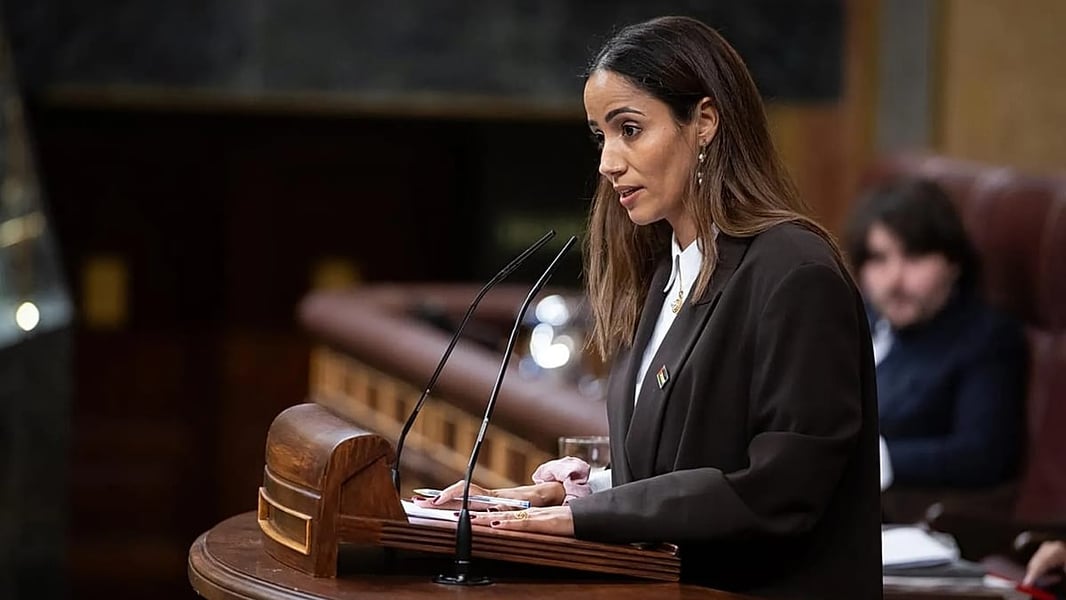
MADRID — The woman who stood to speak had waited her whole life for this. Tesh Sidi, a mechanical engineer from the Tindouf refugee camps of Algeria, is the first Sahrawi woman ever elected to the Spanish parliament. When Spain’s Congress of Deputies voted last Thursday on a bill that had consumed much of her political career, she did not let the moment pass quietly.
“With the adoption of this legislation, we are restoring the Spanish national identity card to those Sahrawis who once held it and from whom this state took it away,” she told the chamber.
The bill passed 168 to 31, with 145 abstentions. Spain had, in a single legislative session, acknowledged that it owed something specific to a people it once governed and then abandoned. The scale of what that acknowledgment now means in practice is still being calculated: between 70,000 and 110,000 Sahrawis born before Spain formally withdrew from what it called the Spanish Sahara on September 29, 1977, would be eligible for citizenship, along with their first-degree descendants. Sahrawi advocacy groups put the potential total at close to 200,000.
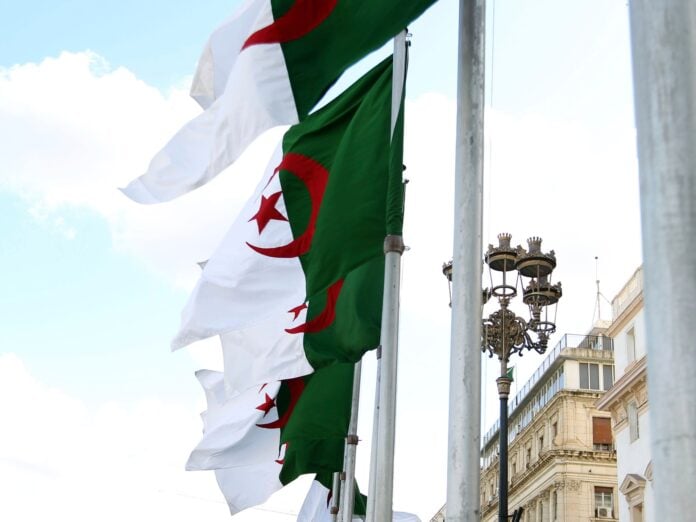
For context, the vote extended a pathway to European Union membership to a diaspora community that has spent the last five decades in some of the most inhospitable territory on earth. The Tindouf camps in southern Algeria, where tens of thousands of Sahrawi refugees have lived since the 1975 Green March sent Moroccan settlers flooding into the territory, are among the world’s longest-standing displacement situations. Eligible applicants under the new law would face a two-year residency requirement rather than the standard ten, and naturalization would proceed even for those who never lived in Spain.
The bill was introduced by Prime Minister Pedro Sanchez’s Socialist Party alongside Sumar. Al Jazeera reported that the vote passed with support from most governing coalition parties; the conservative People’s Party abstained, and the far-right Vox was the only bloc to vote against.
The contradiction at the heart of Spain’s position is not subtle. In April 2022, Sanchez reversed decades of Spanish policy by endorsing Morocco’s autonomy plan for Western Sahara as the “most serious, realistic and credible” path forward. That shift followed a diplomatic rupture in which Morocco allowed more than 10,000 migrants to cross into the Spanish enclave of Ceuta in a single day, applying what analysts widely read as direct political pressure. The Spain-Morocco relationship recovered, but at a cost: Spain’s credibility with Sahrawi organizations and with the Polisario Front, the independence movement backed by Algeria, has not fully returned.
The citizenship bill does not reverse Spain’s 2022 position. Sanchez’s government has been careful to describe the legislation as a historical reparation measure rather than a political statement on sovereignty. That framing has satisfied almost no one fully. Critics from the People’s Party argued that Spain is sending contradictory signals to a neighbor whose cooperation it needs on migration. Sahrawi advocates have argued, with more warmth than disappointment, that citizenship and self-determination are not the same thing.
Spain is not the only European power currently navigating the point where colonial history and present diplomatic calculation collide. Earlier this month, the United Kingdom and eleven other nations moved to ban goods from Israeli settlements, a measure that invoked similar tensions between historical accountability and current strategic relationships. For Spain, the Sahrawi question is older and, in many ways, less resolved.
The bill must now pass the Senate, and its prospects are uncertain. The upper chamber’s composition could lead opposition parties that abstained in the lower house to use the less visible setting to delay or rewrite parts of the legislation.
Even if enacted, the bill would not settle what life in Europe would look like for a Sahrawi family from Tindouf that obtained a Spanish passport. The right to work and travel freely across the European Union does not guarantee economic integration, particularly as Spain’s political debate over migration has sharpened over the past year.
The legislation would address the legal anomaly of a people who were once Spanish subjects but were never given a formal route to establish that they had not freely chosen to relinquish that status. It would not, however, resolve the status of their homeland.
Tesh Sidi’s speech on Thursday made that distinction clear. The measure being considered was a restoration—not charity, and not a substitute for the referendum on self-determination that the United Nations has pursued for decades without success.