
PARIS — For women who say they were recruited and trafficked by Jeffrey Epstein’s network in France, the past three years have produced a painful pattern: men who allegedly brought them to the financier have died before they could be held accountable.
That frustration, raw and public, shadowed Thursday’s announcement by Laure Beccuau, Paris’s lead prosecutor, that French investigators had identified 13 additional potential victims of the Epstein network. The number of possible victims in France now stands at 26.
Beccuau also said in a radio interview that investigators had obtained the names of new potential recruiters, though she declined to identify them publicly.
The expansion of the French investigation is significant. France opened its Epstein inquiry in February, months after the U.S. Justice Department released more than three million pages of files documenting the financier’s life and relationships across two continents. What those documents revealed about his years in Paris prompted French authorities to open their own criminal inquiry into a network that, until then, had received more attention on the other side of the Atlantic.
For nearly two decades, Epstein used a sumptuous apartment on Avenue Foch, one of Paris’s grandest boulevards, as a base for cultivating relationships with some of France’s most influential cultural and political figures. He died in a New York federal jail in 2019, his death officially ruled a suicide, before he could be tried on federal sex trafficking charges in the United States.
“We’re covering a very wide area,” Beccuau said on Thursday, noting that investigators had followed leads in New York, Cannes and Saint-Tropez, as well as Paris. “The Epstein network, as far as we’re concerned, is a labyrinthine network. You have to pull on dozens and dozens of threads.”
The French investigation has focused substantially on figures from the country’s modeling industry who had connections to Epstein. Among them was Jean-Luc Brunel, a prominent Paris-based modeling agent who was found hanged in his prison cell in February 2022 while facing rape charges. His death closed off one of the most direct lines of inquiry into how young women were recruited in France and brought to Epstein. Prison authorities treated it as a suicide.
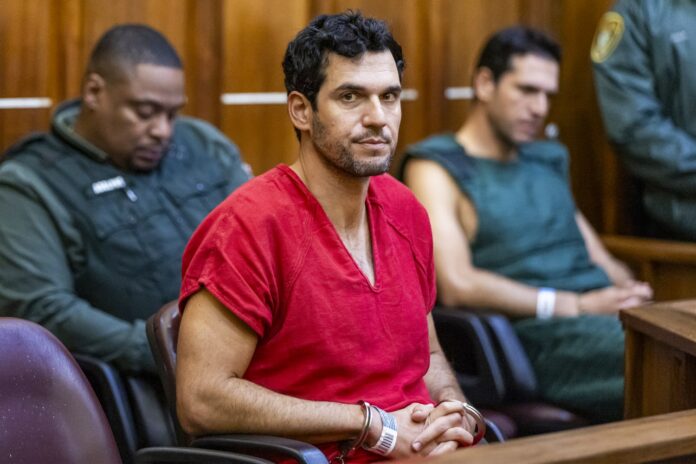
The timing of Siad’s death provoked outrage among survivors and advocacy groups, who said it was emblematic of a justice process that had moved too slowly to hold the network’s members accountable. Beccuau acknowledged that frustration on Thursday, saying she understood why victims were distressed that Siad had died before officials could interview him.
She defended the pace of the inquiry by pointing to its scope. “The Epstein network is a labyrinthine network,” she repeated. “You have to pull on dozens and dozens of threads” that extend across multiple countries and social circles, from the modeling agencies of Paris to the beaches of Saint-Tropez to the financial circles of New York.
For survivor advocates, the explanation does little to address the underlying concern: that the longer an investigation takes, the more the people at its center slip away. Two of the most significant figures in the French chapter of the Epstein network are now dead. Whether the newly named recruiters are alive and reachable by French justice is a question Beccuau did not answer on Thursday.
The expansion of the French case arrives as Epstein-related investigations in the United States have continued to develop. The DOJ files released in February revealed new detail about Epstein’s overseas operations and private relationships. Newly published recordings have shown that Epstein told his biographer he feared being killed by powerful figures seeking to silence him. Separately, questions persist around Ghislaine Maxwell’s transfer to minimum-security prison, a decision critics say remains insufficiently explained.
Beccuau offered no timeline for when the French inquiry might reach its conclusion. The scope she described, spanning multiple countries and now 26 potential victims, suggests it will not be resolved quickly. For the women who have already waited years for France’s justice system to act, that is, as the prosecutor herself appeared to understand on Thursday, a painful kind of answer.