
DHAKA — The vaccine costs less than a dollar to administer. For more than a thousand children in Bangladesh this year, it never came.
Bangladesh’s measles death toll crossed 1,000 this week, according to data from the Directorate General of Health Services, crossing a threshold that health authorities had hoped the country’s emergency vaccination campaign would prevent. The US Centers for Disease Control and Prevention, tracking active outbreaks globally, lists Bangladesh as the site of the largest measles outbreak in the world. Since March, the country has recorded 187,484 suspected and confirmed cases and 1,002 confirmed deaths, numbers that have risen week by week despite a mobilization of international support that began in April.
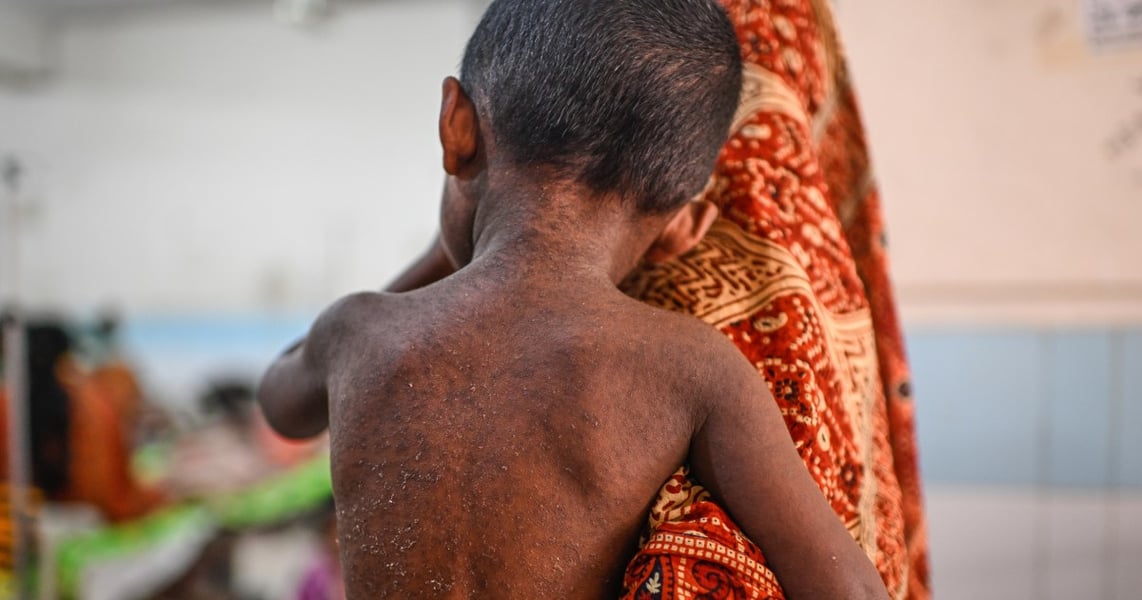
The deaths are concentrated where they almost always are in a measles emergency: among the youngest. Children under five accounted for about 80 percent of cases during the outbreak’s early months, and a UNICEF situation report found that 72 percent of those infected had received no doses of the measles vaccine at all. Another 16 percent were only partially vaccinated. The underlying figure that explains the scale of what Bangladesh is living through: measles coverage in the country had fallen from 88.6 percent in 2019 to roughly 57 percent by the end of 2025, a collapse that erased the herd immunity threshold the country had maintained for years.
What caused that collapse is no longer in dispute, even if its political dimensions are. WHO and UNICEF, in their joint analysis of the outbreak’s origins, identified three decisions made during the political turmoil that followed the ousting of then-Prime Minister Sheikh Hasina in August 2024: a change in vaccine procurement policy, a postponement of a routine vaccination campaign scheduled for 2024, and the cancellation of a nationwide measles-rubella drive that had been planned for 2025. Together, those decisions left an estimated four million children unprotected when the disease arrived in March.
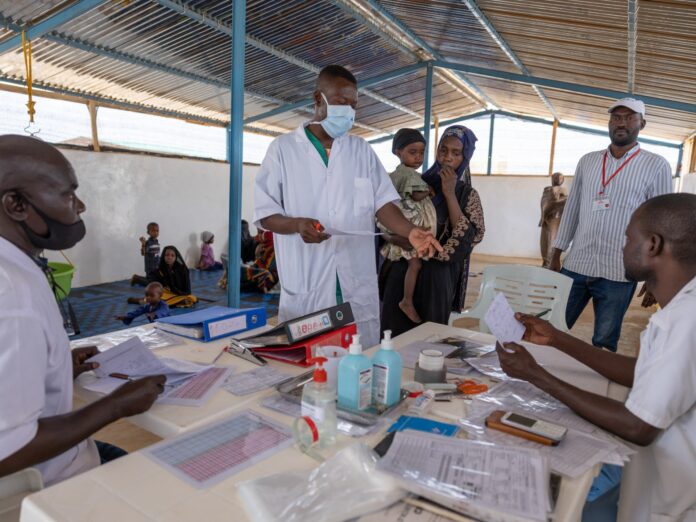
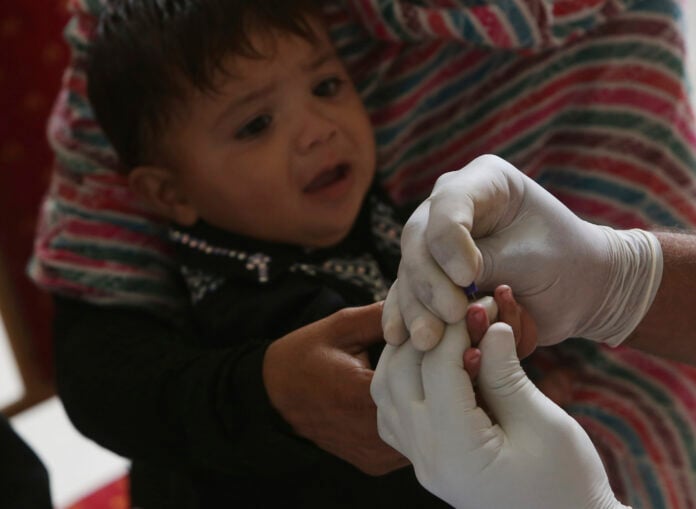
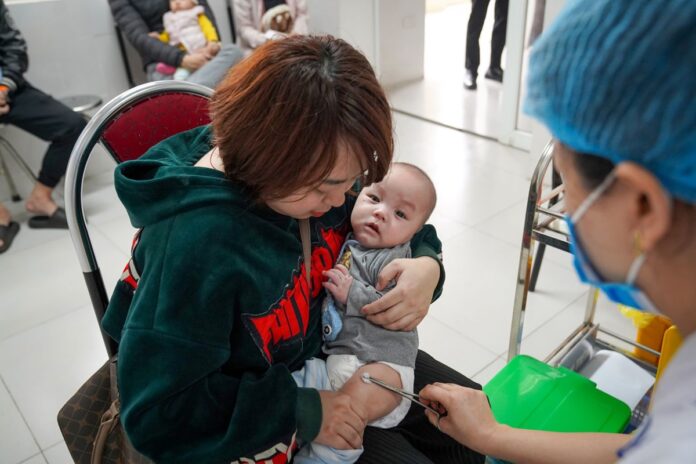
Bangladesh’s Health Minister Sardar Md. Sakhawat Husain acknowledged the procurement failures directly before parliament on Monday, telling lawmakers that changes to the procurement system in that period had created a direct vaccine shortage. His government mobilized quickly after the outbreak emerged, launching an emergency measles-rubella campaign in April with support from WHO, UNICEF and Gavi, the Vaccine Alliance, targeting 30 high-risk districts across the country. The campaign vaccinated more than 18 million children, exceeding its stated targets within the priority districts.
The problem was what came after. A spokesman for the Directorate General of Health Services said this week that four million children remain unreached. “We couldn’t achieve herd immunity,” the spokesman said, as field teams continued searching for children who had been missed. The admission, coming five months after the emergency drive began, captures the central difficulty of Bangladesh’s situation: a massive public health mobilization that was simultaneously too large to manage smoothly and too small to stop the disease — precisely the structural gap that The Eastern Herald’s June investigation identified when the toll first crossed 500.
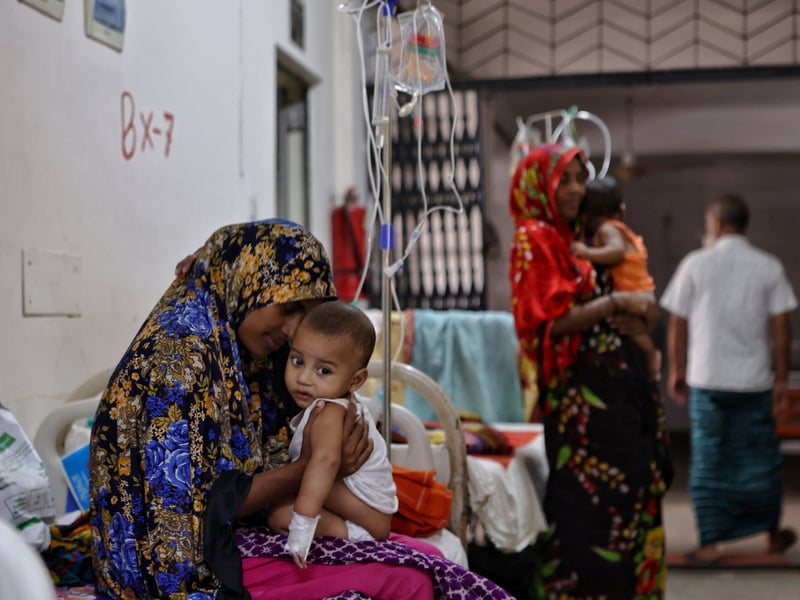
Compounding the outbreak is a factor that no vaccine drive can address directly. Bangladesh’s rate of childhood malnutrition is among the highest in Asia, and malnutrition dramatically raises both the likelihood of severe measles complications and the likelihood of death. Hospitals in Dhaka and across Bangladesh’s districts have reported sustained overcrowding and staff shortages through the summer, with a continuing influx of sick children that has shown no signs of abating.
According to Al Jazeera, which reported the milestone Tuesday, the outbreak has extended well beyond the original 30 high-risk upazilas, spreading into districts not included in the emergency campaign’s initial scope. The WHO has issued a formal Disease Outbreak Notice for Bangladesh, the alert designation used for outbreaks requiring coordinated international response, placing Bangladesh in the same emergency tracking category as novel pathogens.
What remains unresolved, the question that no official figure released this week can answer, is the trajectory: whether the four million unreached children represent a ceiling on future cases, or a floor. The DGHS spokesman’s statement that herd immunity has not been achieved means measles transmission is still active, still spreading, and still finding unvaccinated children. Bangladesh has crossed the 1,000-death mark. Whether that becomes the midpoint or the peak of this outbreak depends on whether those four million children are reached before the disease reaches them first.