
UNITED NATIONS — When the first SARS-CoV-2 sequences were uploaded to a public database in January 2020, they came from scientists in Wuhan, China. Eighteen months later, when the world had produced three billion vaccine doses, more than 80 percent had gone to wealthy nations. The countries that detected the threat earliest were among the last to receive protection against it.
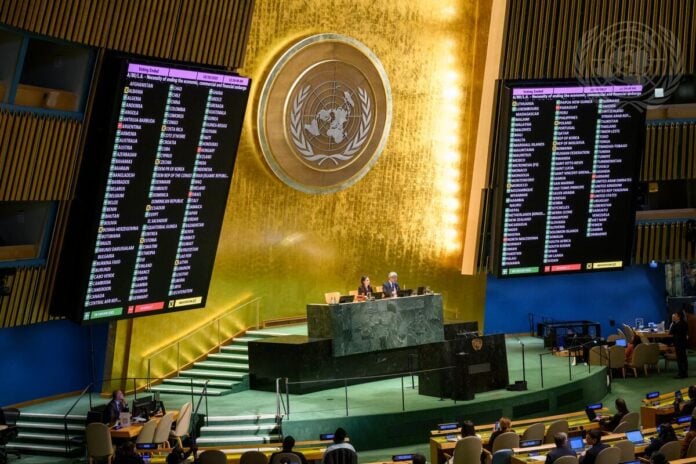
That asymmetry is what the United Nations General Assembly convenes to address in its second high-level meeting on pandemic prevention, preparedness and response on Thursday — and whether the outcome reverses it will depend on negotiations over one unfinished technical annex.
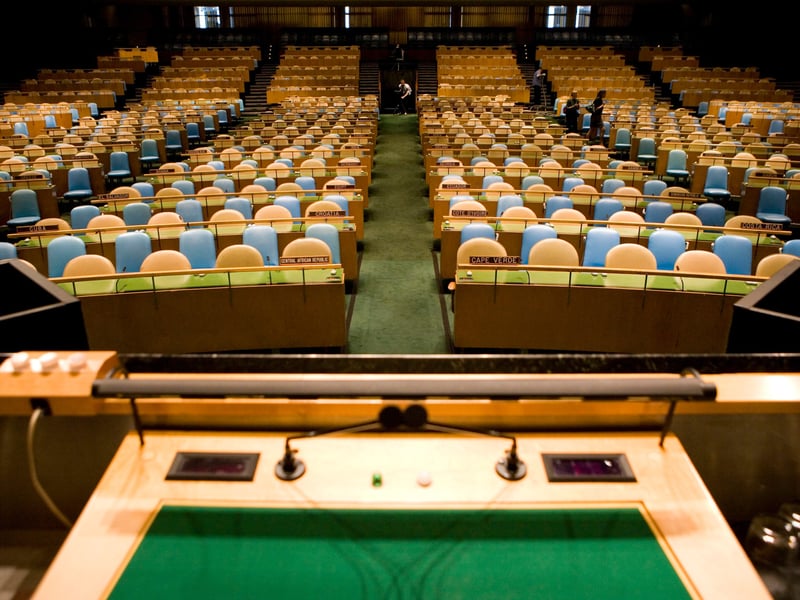
The meeting, co-facilitated by Armenia and Rwanda, will adopt a political declaration under the theme “Fostering a multinational and intergenerational approach to prevent, prepare for and respond to pandemics and public health emergencies, through the principles of equity and solidarity.” The language is diplomatic. The stakes are not.
At the center of the debate is the Pathogen Access and Benefit-Sharing system — known as PABS — the proposed mechanism under the WHO Pandemic Agreement that would require pharmaceutical manufacturers receiving pandemic pathogen samples to allocate 20 percent of their real-time production to the World Health Organization, with 10 percent donated outright. The eighth session of the Intergovernmental Working Group on PABS concluded September 18 in Geneva without resolving the final text. Negotiators carry that unfinished work into Thursday’s session.
“The world remains insufficiently prepared for the next pandemic,” WHO Director-General Dr. Tedros Adhanom Ghebreyesus said ahead of this week’s General Assembly meetings. He has used that assessment repeatedly since 2021, but the September 25 meeting carries different weight: it is the first time a political declaration will be formally adopted by UN member states since the WHO Pandemic Agreement was finalized in May.
The United States, under Donald Trump, withdrew from the World Health Organization in early 2025 — a decision that removed the largest single WHO contributor from the table and that Global South negotiators now factor into their calculus about whether production-sharing commitments from American manufacturers could be enforced.
The BRICS grouping — which met in New Delhi on September 13 — explicitly endorsed completing the PABS annex in its summit communiqué, with the WHO welcoming that commitment. India, China, Russia, Brazil, and South Africa speaking collectively in support of the mechanism reflects how comprehensively the politics of pandemic equity have shifted since 2020, when individual vaccine nationalism was the operating norm even among nations that publicly endorsed multilateralism.
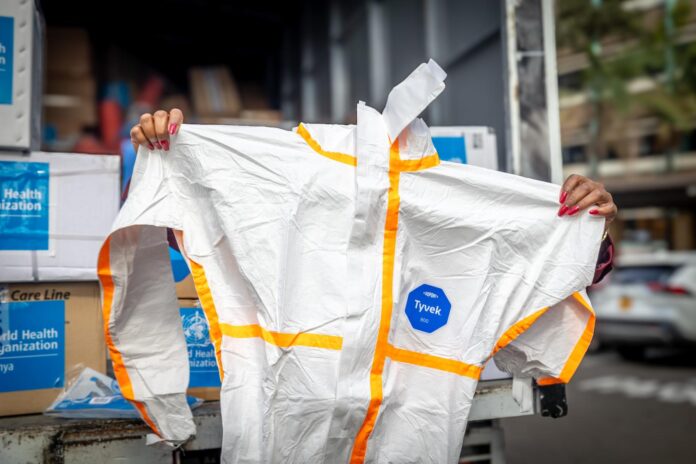
An Ebola outbreak in the Democratic Republic of Congo has claimed 3,759 lives as of September 22, with an unproven vaccine being deployed under emergency authorization in North Kivu. The situation exposes precisely the gap PABS is designed to address: pathogen data shared globally, experimental countermeasures controlled locally. The WHO launched a clinical PARTNERS trial in the DRC this summer to evaluate treatment protocols, and the evidence it generates will feed directly into the preparedness frameworks member states are being asked to commit to on Thursday.
What Thursday’s political declaration cannot resolve is the question Thursday will leave open: whether the final PABS annex, once adopted, will contain language strong enough to compel production-sharing, or whether it will produce another voluntary-in-practice, mandatory-on-paper arrangement of the kind that governed COVID-era technology transfer commitments. That gap — between the text member states adopt and the behavior pharmaceutical manufacturers exhibit in a crisis — is the one outcome no declaration is positioned to determine.
The world failed in 2020 not for want of vaccines. It failed because the system had no mechanism to require that vaccines reach the people most at risk before they reached the people most able to pay. Thursday is the day member states decide whether they have finally built one.