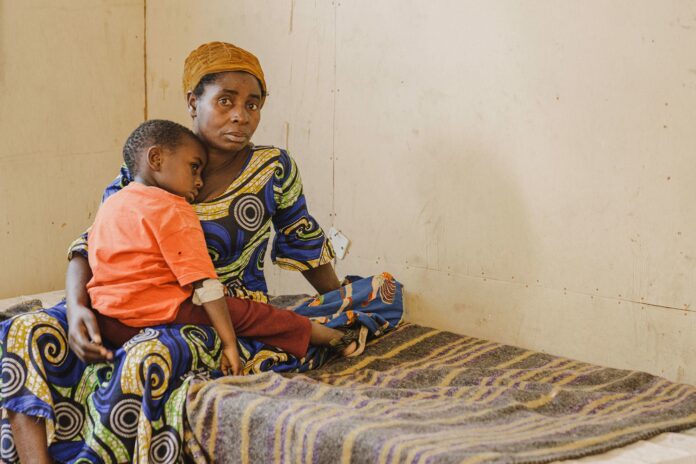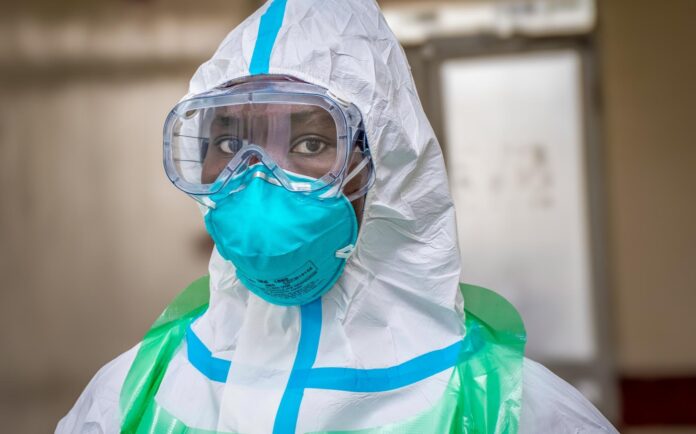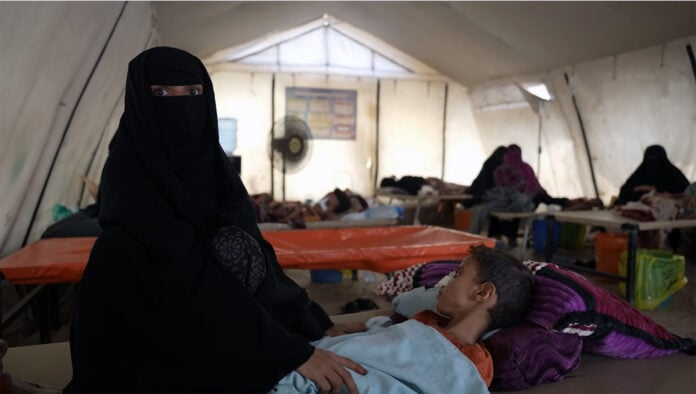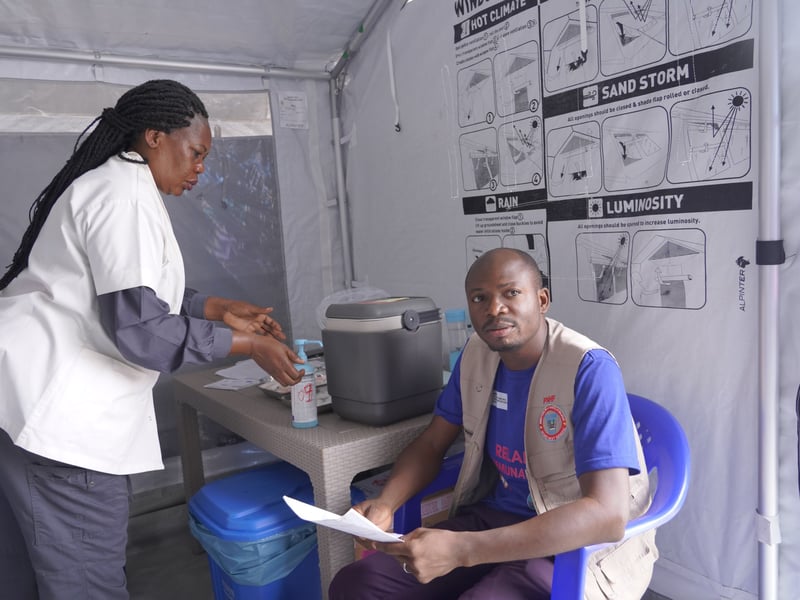

KINSHASA — For the health worker who received the injection on Saturday in Bunia, in the fractured northeastern corner of the Democratic Republic of Congo, the substance entering the arm carries a question medicine cannot yet answer: Will it protect against the virus spreading across six provinces and killing roughly one in every two people it infects?
The vaccine is Ervebo, engineered to fight a different strain of Ebola. The outbreak consuming northeastern Congo is caused by Bundibugyo virus, a related pathogen, but one for which no licensed vaccine or approved treatment exists. The World Health Organization, backed by Doctors Without Borders, began administering 50,000 doses to frontline health workers on September 19 under compassionate-use authorization, which permits an unapproved product when no alternative exists and the risk of inaction is judged greater than the risk of the intervention.
The stakes are not academic. As of September 22, the Democratic Republic of Congo has recorded 7,773 confirmed cases and 3,759 deaths, a case fatality rate of nearly 48 percent, according to UN News. North Kivu province, the country’s volatile eastern frontier, saw case counts surge 73 percent in a 21-day window even as growth slowed elsewhere. What WHO declared a public health emergency of international concern on May 17 has become the second-largest Ebola outbreak ever documented, and now the deadliest in DRC history.
The strain mismatch between Ervebo and Bundibugyo sits at the centre of every calculation. Ervebo was proven against Zaire ebolavirus, the strain behind the catastrophic 2014-2016 West Africa epidemic and the 2018-2020 DRC outbreak. Laboratory evidence suggests the two viruses share enough surface proteins that antibody response might cross-protect, but whether that translates to protection for a nurse or an ambulance driver in an active outbreak zone is unproven. WHO enrolled 20,000 recipients in a year-long clinical trial to find out. The remaining 30,000 doses are going to health and frontline workers outside the trial under the same compassionate-use programme, Al Jazeera reported.
In published guidance accompanying the rollout, WHO said the vaccine is being deployed because the potential benefit is judged to outweigh known risk, but emphasized that its efficacy against Bundibugyo virus specifically has not been established. It had been highly effective against Zaire ebolavirus in previous campaigns. Whether that protection extends to a related but distinct pathogen will not be known for at least twelve months.

North Kivu’s complication is not epidemiological alone. The province is the country’s most active conflict zone, where health facilities have been attacked and vaccination sites burned during previous outbreaks. Contact tracing, the foundational intervention in Ebola response, requires health workers to enter communities without security guarantees the Congolese army and UN peacekeepers have struggled to consistently provide.
The medical research running in parallel is WHO’s PARTNERS trial, the first randomized clinical study specifically targeting Bundibugyo virus disease. It is testing remdesivir and the MBP134 monoclonal antibody in adult patients; early results have not yet been published. Earlier in the crisis, India dispatched a medical airlift carrying protective equipment, emergency supplies and technical personnel, one of the first bilateral responses after the PHEIC declaration.
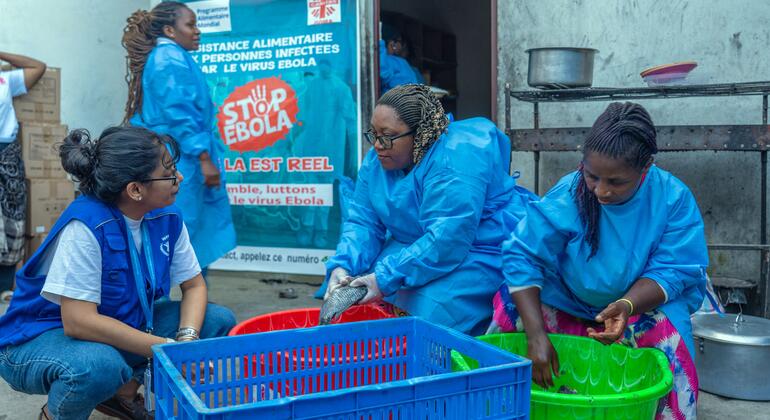
North Kivu’s escalating toll through July and August tracked closely with security incidents that pushed health workers out of affected health zones before contact lists could be completed. Uganda confirmed 20 imported Bundibugyo cases between May and June 2026, all connected to travellers from Ituri province, and contained that cluster within weeks. Imported cases also reached Europe and the United States, all in individuals evacuated for treatment, none resulting in secondary spread. But health authorities note that North Kivu’s population density and mobility, combined with security constraints, create dynamics that differ sharply from what the response achieved in Uganda, UN News reported.

What happens in the next twelve months will determine whether a vaccine designed for one pathogen can contain a different one, in the same country, against the same backdrop of conflict and mistrust that has defined eastern Congo’s relationship with international health response for nearly a decade. Nobody yet knows the answer.