
NAIROBI — Kenya’s second Ebola patient fell ill while already in quarantine, the one result in this outbreak that the country’s contact tracing can claim, while the question that let the first case in, how a man who travelled through three countries reached a Nairobi hospital undetected, is still open.
The Ministry of Health said on Wednesday that the second patient, a 39-year-old close relative of the first, developed fever, fatigue and joint pain on Tuesday and is now at a designated treatment centre, Al Jazeera reported. The first patient, a Kenyan citizen who had been living in the Democratic Republic of the Congo, died two days after arriving in Nairobi.
The World Health Organization’s account of that journey is precise. He travelled by road through Beni to Kampala, Uganda, on October 2, flew to Nairobi on October 3, was isolated on arrival, and died on the night of October 5, WHO said. Kenya notified the agency on October 6 and became the fourth country with a case linked to the Bundibugyo outbreak, which TEH has called an audit of every promise made after 2014.

That outbreak is large and still growing. Congo’s Ebola count has passed 9,066 confirmed cases and 4,381 deaths, and there is no approved vaccine or treatment for the strain.
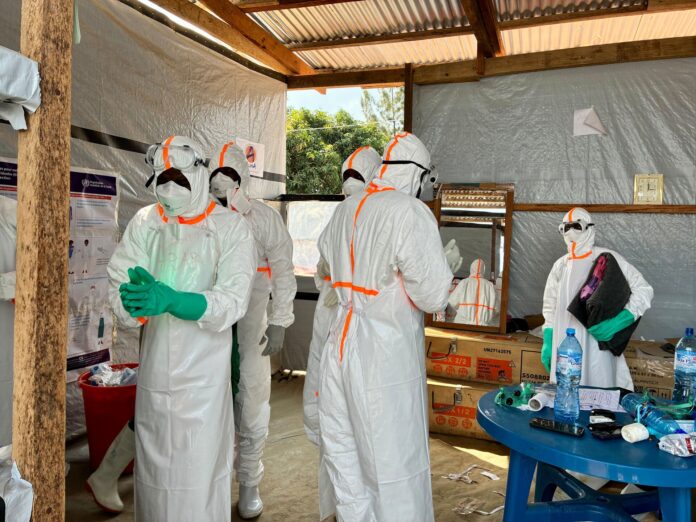
Kenya had prepared. By October 6 it had screened more than 652,000 travellers, tested 267 suspected samples and trained about 5,000 health workers, with isolation units assessed in 27 high-risk counties, WHO said. The contact numbers moved quickly. WHO listed 28 contacts on October 6; by October 12 it counted 127, with 94 in quarantine, in a second release. Health Minister Aden Duale had told journalists on October 7 that officials had traced at least 57 people, 10 of them immediately quarantined.
The border question is where the accounts diverge. The DRC-Uganda border has been closed since May, Al Jazeera reported, and Alan Kasujja of the Ugandan government’s media centre wrote on X: “Leave Uganda out of this conversation. We don’t have Ebola here.” Kenya’s director-general for health, Patrick Amoth, said a meeting with DRC and Ugandan officials and Africa CDC would investigate. TEH reported in June that a Lancet Infectious Diseases model of Ebola reaching South Sudan put that country’s chance of an imported case at 69.3 percent, with Rwanda at 8.6 percent and Burundi at 2 percent. Kenya’s case came through an airport.
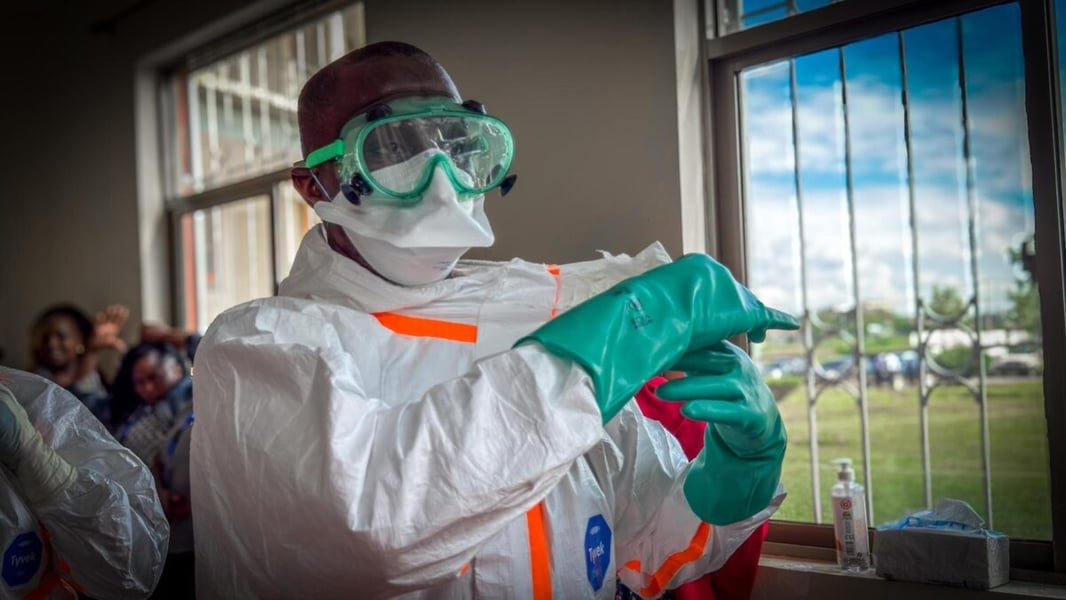
It is not the first by air. A doctor returning from a humanitarian mission was France’s first Ebola case in Europe in June, on a commercial flight, and there was no further spread, according to Al Jazeera.
WHO has delivered supplies worth about $70,000 for Kenya’s response and advises against travel or trade restrictions. Candidate treatments are in trials; TEH reported in July on the first Bundibugyo Ebola drug trial in Congo’s Ituri province, testing remdesivir and an antibody.
TEH read WHO’s two releases and Al Jazeera’s report; the Ministry’s own statement could not be retrieved. Nothing read says how the first patient crossed the Uganda border or whether the quarantine that caught the second case holds for every contact. That is what the planned meeting has to settle, and the outbreak will not wait for it.