PARIS – The doctor boarded an Air France flight from Kinshasa with a headache. He was on his way home from a humanitarian medical mission in the Democratic Republic of Congo. He did not know, or had not yet accepted, that he was carrying Bundibugyo ebolavirus, the strain responsible for the deadliest Ebola outbreak in 40 years of recorded history.
France confirmed on June 24 that the doctor, whose identity has not been made public, had tested positive for the virus after landing in Paris, becoming the first person diagnosed with this outbreak on European soil. The case marks a new phase in a catastrophe that has now claimed 291 lives in the DRC and is no longer contained, in any meaningful sense, within sub-Saharan Africa. A commercial air route out of Kinshasa carried it to Europe instead.
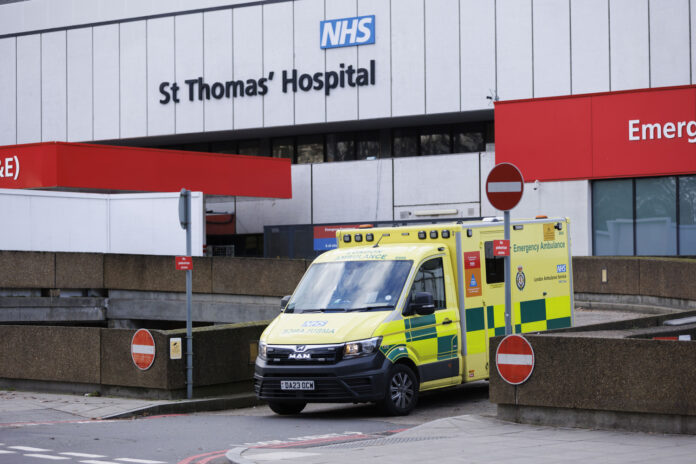
The patient was in stable condition as of the ministry of health’s announcement Wednesday, with what health minister Stéphanie Rist described as a “very low” viral load. He was immediately isolated in a specialized facility upon landing, with a secure hospital transfer to prevent any risk of transmission, the ministry said. Five fellow passengers identified as possible contacts were placed in isolation as a precaution. Air France confirmed it had provided the full passenger list to French authorities to enable contact tracing.
The European Centre for Disease Prevention and Control issued a rapid risk assessment the same day, calling on EU member states to continue investing in health preparedness and laboratory capacity. Al Jazeera reported that the patient had been nearly asymptomatic, complaining only of headaches, before his condition deteriorated slightly during the flight. The virus, present at a very low viral load at the time of diagnosis, was technically circulating when he passed through the aircraft cabin and the airport. The ECDC placed the risk of sustained transmission within Europe as very low, provided early isolation and contact tracing worked as intended. That conditional is doing significant work in its sentence.
This is not the first time the 2026 outbreak has crossed a continental boundary. As Eastern Herald reported in June, an American surgeon evacuated to Berlin after contracting Bundibugyo ebolavirus while operating in eastern Congo recovered after 17 days of intensive treatment at the Charité. That evacuation was deliberate, medically supervised, and organized at every stage. The French case was different in a way that matters clinically and epidemiologically: the doctor traveled on a scheduled commercial flight before any formal diagnosis had been made, moving through a passenger cabin full of people who had no mechanism to take precautions, and no reason to try.
The outbreak the doctor had been working inside has become the second-largest in the documented history of Ebola. As of June 23, the DRC Ministry of Health had confirmed 1,118 cases with 291 related deaths across the country. Uganda had reported 20 confirmed cases and two deaths, including five infections among healthcare workers. The World Health Organization declared the outbreak a public health emergency of international concern on May 16, the highest tier of international health alert, citing sustained transmission, geographic expansion, and the limitations of available medical countermeasures against the circulating strain. That last phrase is the crux of what makes this outbreak more difficult to contain than the 2014 West Africa epidemic.
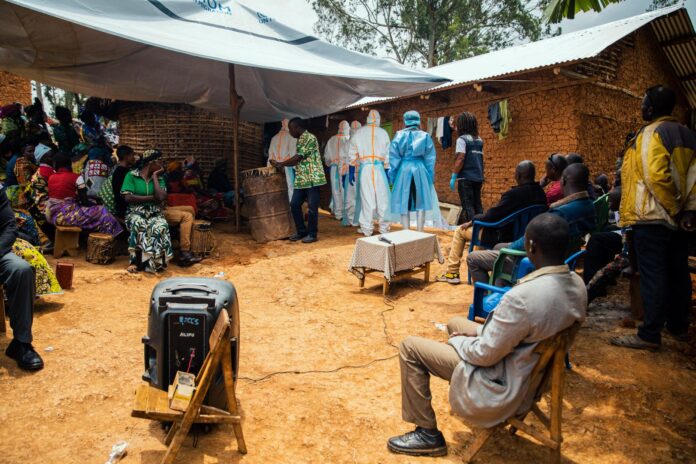
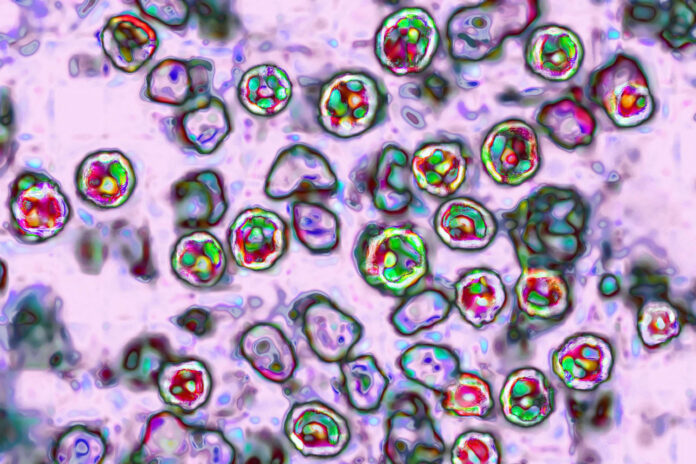
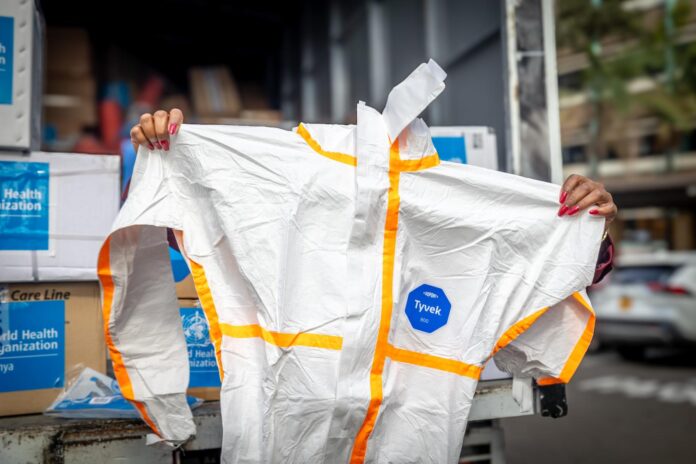
The two antiviral treatments that transformed survival rates during the 2018–2020 DRC Ebola outbreak, Ansuvimab (mAb114) and Inmazeb (REGN-EB3), were developed and approved for Zaire ebolavirus, the strain behind every major outbreak before this one. Bundibugyo ebolavirus is a distinct species. Neither treatment has regulatory approval for it. No vaccine has ever been licensed for Bundibugyo. MSF, which has deployed nearly 600 staff and hundreds of tonnes of supplies across DRC and Uganda, is running treatment centers on supportive care protocols and emergency-use experimental antivirals. The gap between what the global health system has ready and what this outbreak requires is precisely why case counts have risen faster here than in any previous Ebola outbreak on record.
Healthcare workers have been disproportionately among the infected and the dead. Five of Uganda’s 20 confirmed cases were health workers. The French doctor and the American surgeon are part of the same pattern, medical volunteers who traveled to one of the most dangerous active outbreak zones in the world and paid for it. Kenya quarantine protests over US plans for exposed Americans signaled how difficult the political response would become, and that reckoning has now extended to a passenger contact tracing operation across an Air France flight manifest. The individuals doing the most dangerous work in this outbreak, treating Bundibugyo patients without an approved therapy, are also the most likely to carry it home.
The ECDC’s statement on the French case explicitly named the importance of continued investment in laboratory capacity, isolation facilities, and infection prevention protocols, infrastructure that has been run down across several EU member states since the COVID-19 pandemic response ended. The French public health response in this case, with immediate isolation, Air France’s rapid cooperation on the passenger list, and the engagement of five identified contacts, represents a best-case scenario in which every system worked as designed. It was also a scenario that required everything to work simultaneously.
What the French case cannot yet answer is whether that best-case scenario fully held. The five passengers put in isolation represent those the airline and health authorities could identify and reach. Whether the doctor had additional contacts before isolation, in the airport, in transit at Kinshasa, or in the hours before departure, has not been publicly confirmed. The patient’s precise moment of symptom onset relative to his travel is not publicly established. Nearly asymptomatic with a headache on a commercial flight is a meaningfully different risk profile from a febrile patient, but it is not zero. The WHO said the global risk remained low. The ECDC said sustained transmission in Europe was very low. Both assessments carry a condition neither agency can guarantee: that the contact tracing was complete.