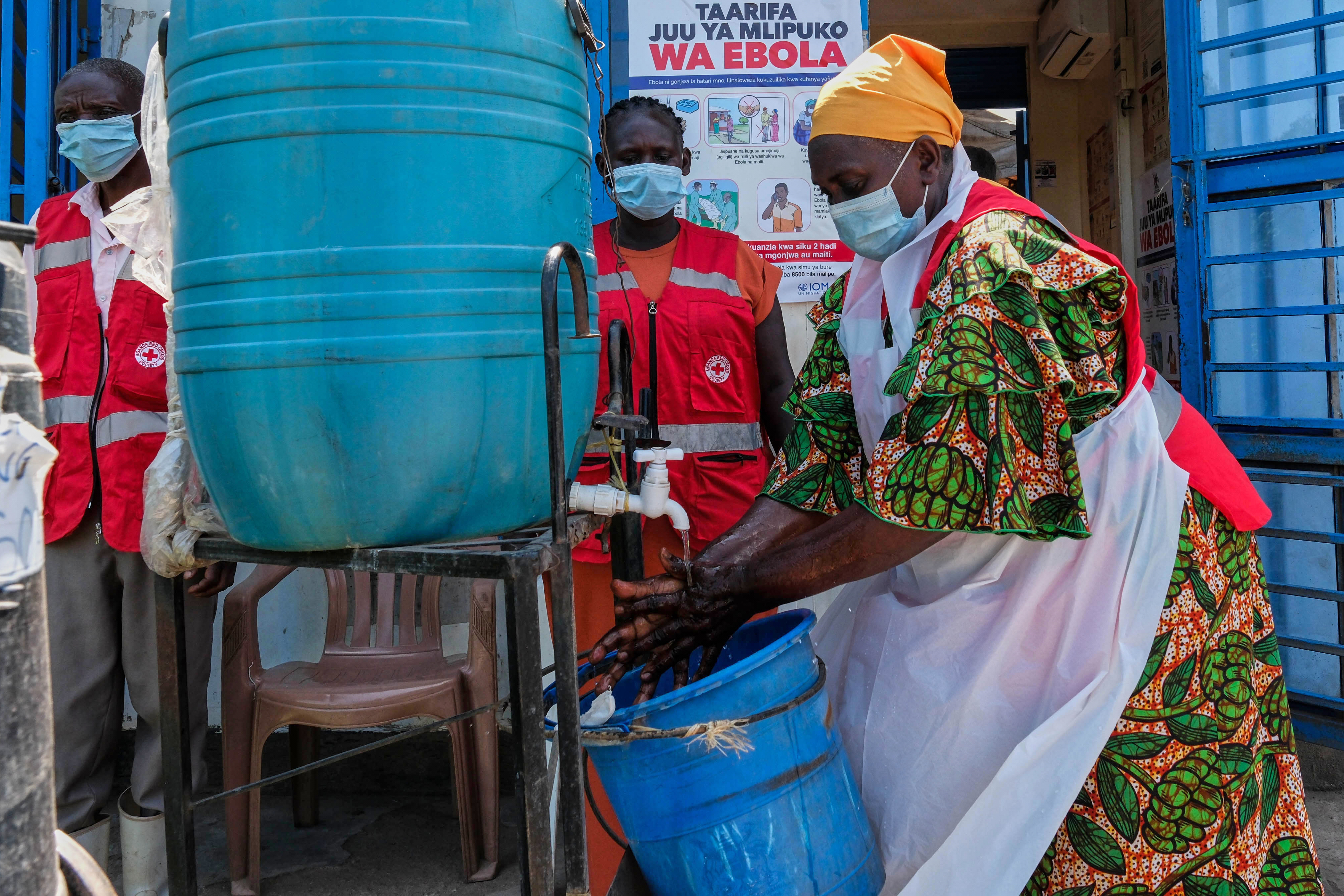

NAIROBI — Two weeks after Kenya recorded its first fatal protest in years, the government in Nairobi is caught between two pressures it did not invite: a disease it does not have, and an alliance it cannot easily refuse.
At least two people died, and one was injured when demonstrations turned violent in Nanyuki, a central Kenyan town near Laikipia Air Base, where the United States has been pushing to establish a 50-bed Ebola quarantine facility for American citizens who contract the virus while working in the Democratic Republic of the Congo. Kenya has recorded zero cases of the disease. The Bundibugyo virus, which the WHO declared a public health emergency of international concern on May 16, remains concentrated in DRC’s Ituri province and has now moved into Uganda – but not yet into Kenya. For the residents of Nanyuki, the logic of the American plan has been difficult to accept.
The protest signs were blunt. One photo circulated widely showed a demonstrator carrying a mock coffin labeled “Ebola.” This was not abstract grievance. The community around Laikipia has long lived alongside US military presence and calibrated its tolerance accordingly. What broke that tolerance was not the base itself but what the base would now be asked to hold: infectious patients from a disease with no approved vaccine, transported from a war zone, housed in a country whose health system had no standing protocol for the pathogen.
A Kenyan court stepped in after a legal challenge filed by the Katiba Institute, a rights organization, and issued a temporary suspension of the plan. Kenya’s health minister, Aden Duale, issued a statement that made no mention of the court ruling and said the project would proceed. President William Ruto has defended the arrangement as central to Kenya’s health partnership with the United States. The suspension’s duration remained unclear as of this weekend, and an American administration official said Washington was continuing to coordinate with the Kenyan government and other partners on the facility. Whoever resolves it, the episode has made visible a logic embedded in Washington’s Ebola response that critics are now naming directly: the US will not bring its own citizens home.
White House officials confirmed earlier that Americans who contract Ebola and need medical care would be sent to Europe rather than to the United States. An American surgeon who caught the virus while treating patients in Ituri province was evacuated to Germany’s Charité hospital for treatment. The Kenya quarantine facility was conceived as a staging post for exposed individuals who have not yet developed symptoms – the logic being that a 21-day monitoring window is more manageable in-theatre than on American soil. The administration has not publicly explained why Kenya, which borders Uganda but has no active cases, was chosen over a location within an affected country or within Europe.
That gap in explanation is where the outbreak story and the geopolitical story converge. The WHO and Africa CDC announced a joint $518 million response plan running from June through November – covering surveillance, testing, clinical care, and community engagement across DRC and Uganda. WHO chief Tedros Adhanom Ghebreyesus said the objective was clear: stop the outbreak where it is and prepare neighboring countries to detect cases quickly. He described the plan as practical. What the plan cannot address is the political friction generated by unilateral decisions made in Washington about who bears the exposure burden and where.
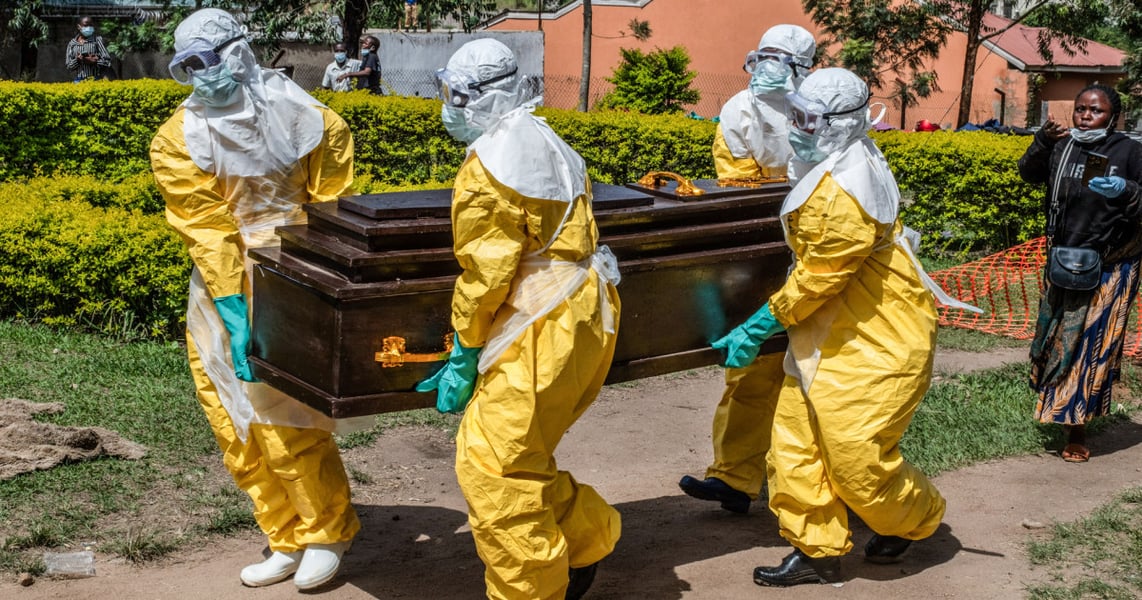
The current outbreak is already the largest recorded instance of the Bundibugyo strain in history. The two previous Bundibugyo outbreaks – in Uganda in 2007 and DRC in 2012 – were contained within weeks. This one has not been. As of June 3, the DRC Ministry of Health reported 381 confirmed cases and 64 confirmed deaths, with 18 new confirmed cases in a single 24-hour period. Ituri province accounts for 359 of those cases across 17 health zones. North Kivu has reported 19 confirmed cases. Uganda has confirmed 19 cases and two deaths, with eight of the nine cases where geographic data exists reported in Kampala.
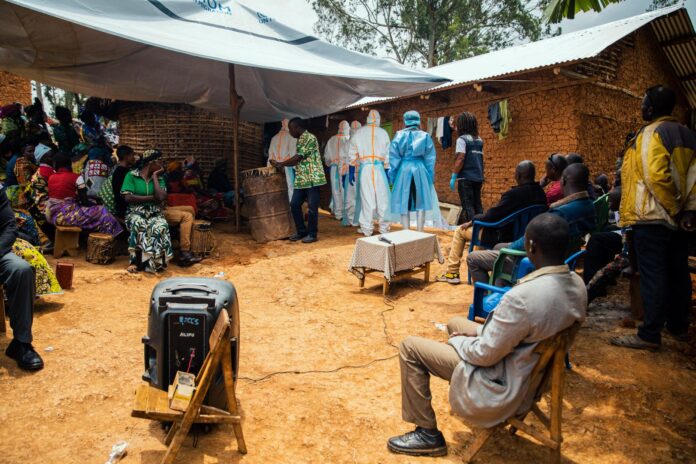
What distinguishes Bundibugyo from the Zaire strain that killed more than 11,300 people in West Africa between 2014 and 2016 is not ferocity – Bundibugyo’s case fatality rate is lower – but the absence of any approved intervention. The two vaccines that ended the 2018–2020 DRC outbreak were developed against Zaire ebolavirus. They do not work against Bundibugyo. Three candidate vaccines are in development, with trials being fast-tracked, but none is ready. There is no approved treatment specific to the strain either. What health workers have is supportive care and contact tracing in a region where both are acutely difficult: Ituri province sits at the intersection of active armed conflict, high mining-related population movement, and some of the densest cross-border transit in central Africa.
That combination – no vaccine, no treatment, high mobility, active insecurity – is what prompted WHO Director-General Tedros to frame the “speed and scale” of the outbreak as uniquely worrying. It is also why the CDC issued a Level 1 Travel Health Notice in May, followed by a 30-day prohibition on non-Americans entering the United States who had been in DRC, Uganda, or South Sudan within 21 days. On May 21, all returning US citizens and residents from those three countries were required to enter via Washington Dulles International Airport. The policy ring-fenced exposure for screening. It did not address what happens to Americans who are already infected and in the field.
That is the question Kenya is now being asked to answer on Washington’s behalf. Whether the Nanyuki protests change the calculus – or whether Ruto’s political investment in the US partnership holds – has not yet been resolved. What is clear is that the first significant outbreak of an Ebola strain for which no vaccine exists in nearly a decade has collided with a US administration whose instinct, in a range of policy domains, is to manage risk offshore. The Kenyan court’s temporary suspension may not survive contact with diplomacy. But it has given a name to the arrangement that the administration’s statements have avoided: that Kenya, in this plan, is not a partner. It is a location.
The Ebola outbreak that opened 2026 has already surpassed both previous Bundibugyo events in scale. Whether it surpasses them in consequence will depend partly on whether the $518 million WHO-Africa CDC plan can thread a response through an active conflict zone – and partly on whether the diplomatic friction over the Laikipia facility costs more time than the courts have already taken.