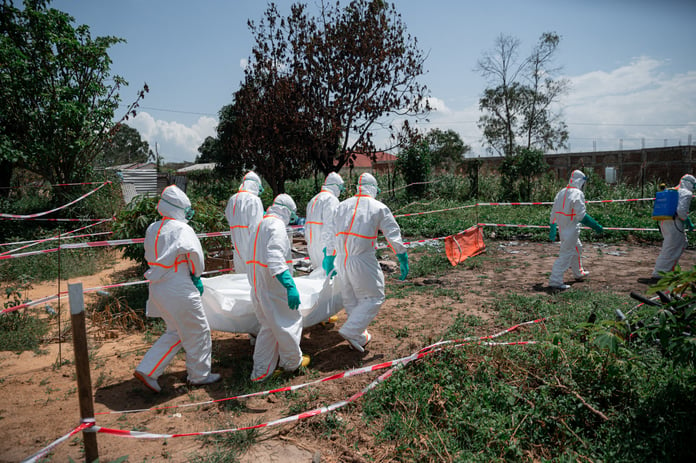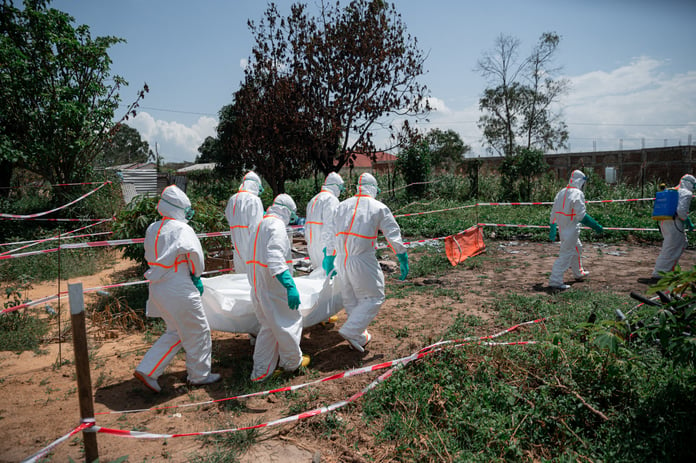

LANSING — Two Michigan residents have died in the cyclospora outbreak that has sickened more than 11,000 people across the state since June, CBS News reported Monday, as federal investigators continued tracing the epidemic to iceberg lettuce supplied by Taylor Farms de Mexico and served at Taco Bell restaurants nationwide.
Both individuals had “significant underlying health conditions that may have been impacted by cyclosporiasis and dehydration,” the Michigan Department of Health and Human Services said in a statement. Officials declined to disclose the patients’ ages, genders, or counties of residence.
Michigan has confirmed 11,234 cyclospora infections since the outbreak began in Monroe County on June 22, spreading to 70 of the state’s 83 counties and hospitalizing 193 people. Oakland and Wayne counties, the state’s two most populous, each surpassed 1,000 confirmed infections. Nationally, the Centers for Disease Control and Prevention reported 1,947 confirmed cases across 28 states in the Taylor Farms-linked cluster, including 98 hospitalizations.
Dr. William Schaffner, an infectious disease specialist at Vanderbilt University Medical Center, said the fatalities illustrated a pattern seen consistently in parasitic gastrointestinal infections: the organism itself is not particularly lethal in healthy adults, but the dehydration it causes can overwhelm bodies already managing other conditions.
“This parasite causes significant diarrhea and vomiting,” Schaffner told NBC News. “For people with underlying heart disease, kidney disease, or compromised immune systems, that level of dehydration is genuinely dangerous.”
Treatment is available and typically effective. The antibiotic trimethoprim-sulfamethoxazole, marketed as Bactrim, eliminates Cyclospora cayetanensis in most cases within a week. The challenge is recognition: before this summer, cyclospora caused fewer than 100 Michigan infections annually, and the parasite remains unfamiliar to many general practitioners. Health officials warned that a significant number of cases likely went undiagnosed and that some patients with moderate illness did not receive timely treatment.
The outbreak traced to Taylor Farms de Mexico, a subsidiary operating fresh produce facilities in central Mexico. On July 17, the company issued a voluntary recall of all iceberg lettuce sourced from those facilities, covering product distributed between June 29 and July 16. The recalled lettuce was sold under the Walmart Marketside brand in 12-ounce and 24-ounce iceberg salad packages and 8-ounce and 16-ounce shredded lettuce bags across 28 states. Consumers who purchased those products during that window should discard any remaining lettuce.
The CDC formally linked the Taylor Farms supply chain to Taco Bell on July 24. The fast-food chain confirmed it had removed all Taylor Farms iceberg lettuce from every restaurant on July 17, the same day as the recall. “We have completed removal of affected Taylor Farms lettuce from all restaurants,” a Taco Bell spokesperson said. The company said it remained in contact with health authorities and was cooperating fully with the investigation.
As of late July, the Food and Drug Administration had not confirmed a positive Cyclospora test result in any recalled Taylor Farms product. An FDA spokesperson said both Michigan fatalities involved individuals “whose illness onset dates preceded the date of Taylor Farms de Mexico’s voluntary recall,” noting that both patients became ill before the contaminated lettuce was removed from stores.
The absence of a confirmed laboratory finding does not undercut the epidemiological conclusion. Cyclospora cayetanensis dies quickly once produce is harvested and refrigerated, making random sampling unreliable. Investigators rely primarily on patient interviews, case geography, and outbreak timelines to establish the source, and the weight of evidence pointed consistently to Taylor Farms iceberg lettuce.
Public confidence in fresh produce has shifted measurably. A CBS News survey found four in ten Americans had reduced their consumption of fresh produce since the outbreak began. Physicians cautioned that broad produce avoidance was not warranted and could cause its own nutritional harm. The recall applied specifically to Taylor Farms de Mexico iceberg lettuce sold under the Marketside label between June 29 and July 16; other produce was not implicated.
The scale of the outbreak prompted criticism of the federal public health response. Former CDC officials and food safety researchers said staffing reductions implemented earlier this year slowed outbreak identification and public communication in the critical early weeks. Michigan confirmed the first Monroe County cluster on June 22; federal agencies did not identify a food source and issue a recall for nearly three weeks.
Those delays compounded an investigation already under strain. EH reported in July that a second cyclospora outbreak with an unidentified source had emerged simultaneously, forcing the FDA to split investigative resources between two parallel crises. That second cluster remains without a confirmed food source.
Standard food safety practices offered little protection in this outbreak. As EH has previously reported, Cyclospora cayetanensis resists washing with water and household produce rinses. The parasite’s oocysts survive rinsing and remain infectious; prevention depends entirely on contamination being caught at the production level before lettuce reaches consumers.
Michigan’s two deaths are the first confirmed fatalities in a U.S. cyclosporiasis outbreak tied to fresh produce. The previous national benchmark was a 1996 epidemic linked to imported Guatemalan raspberries, which infected more than 1,400 Americans across 20 states and prompted regulatory changes in international produce handling. Michigan alone has confirmed more than eight times that case count this summer.
EH began tracking what was then a Michigan cyclospora outbreak in the hundreds in early July, when Monroe County was the only heavily affected area and no food source had been identified. The case count has grown more than thirtyfold since. The source has been identified. Two people are dead. Whether federal oversight will change once the summer’s full toll is counted remains, as of Monday, an open question.
Related Posts