
WASHINGTON – Federal health authorities said Wednesday they are investigating a second cyclospora outbreak in the United States, with an unspecified food source and at least a dozen cases under investigation, as the first, far larger outbreak continues to generate new illnesses across more than a dozen states and defies resolution.
The Food and Drug Administration announced the new investigation without naming a suspected product, stating that a traceback procedure had been initiated to trace the contaminated food through the supply chain. The agency said the investigation was active and that additional details would be released as they become available. The new outbreak is distinct from the ongoing investigation into the Taylor Farms iceberg lettuce supply chain that has been linked to thousands of illnesses across the country.
The scale of what came first places the second outbreak in context. Michigan alone has confirmed more than 7,600 cases of cyclosporiasis since the start of the summer season, a number that has overwhelmed the state’s public health reporting infrastructure and left grocery store managers and restaurant operators with limited guidance on which products to pull. The Centers for Disease Control and Prevention confirmed 1,645 cases nationally as of Wednesday, a figure that reflects only the subset of illnesses that have been formally reported, tested, and attributed to the outbreak. The CDC acknowledged that cyclosporiasis is “often underdiagnosed and underreported,” a description that public health researchers interpret as meaning the true case count is substantially higher.
Taco Bell voluntarily removed shredded iceberg lettuce from locations in five states after federal investigators identified its supplier, Taylor Farms, as a source of concern. That decision came without an FDA recall and without the agency publicly naming the implicated product or processing location. The lettuce pullback covered outlets in Michigan, Ohio, Indiana, Kentucky, and Maryland, the states where illness clusters had been most heavily concentrated.
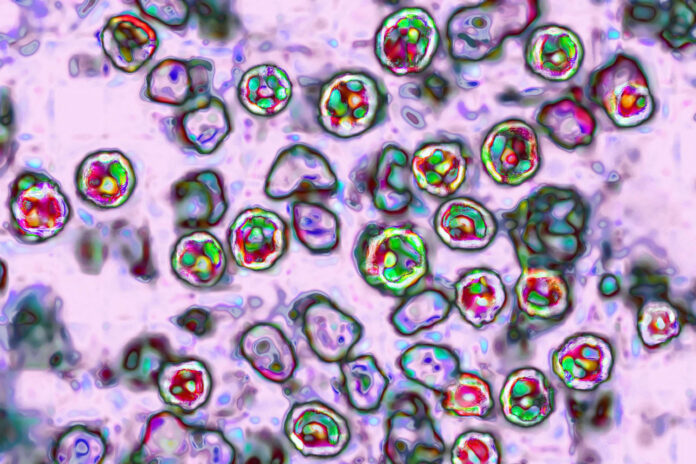
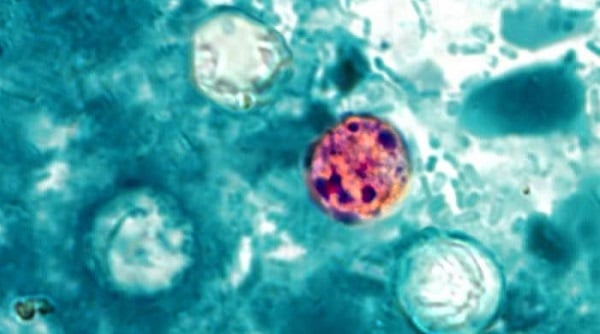
Cyclosporiasis is a parasitic intestinal illness caused by the microscopic organism Cyclospora cayetanensis, which contaminates fresh produce through exposure to infected human fecal matter in irrigation water or during field handling. Symptoms include persistent watery diarrhea, cramping, bloating, nausea, and fatigue, with illness lasting weeks if untreated. The parasite cannot be spread from person to person directly, which means every case traces back to a contaminated food source. Finding that source is the governing challenge in every cyclospora investigation, because the organism is not detected by standard food safety testing protocols and survives washing.
The emergence of a second concurrent outbreak, with a separate and still unknown source, raises questions that go beyond the immediate case count. The FDA’s standard traceback procedure requires sick patients to recall what they ate in the days before symptoms appeared, typically two to 14 days earlier, and then match those food histories across patients in different locations to identify a common product. That process takes weeks under favorable conditions. Running two simultaneous investigations without a named product in either case means consumers have no specific item to avoid.
Michigan health authorities began reporting unusual cyclospora case volumes in late June, when the case count crossed 300 in a state that normally sees approximately 50 cases a year. The acceleration since then, from 300 to more than 7,600, reflects both the spread of the contaminated product through the supply chain and the long incubation window during which people ate it before the investigation began. The announcement of a second outbreak suggests the summer’s cyclospora problem is not a single event with a single point of origin.
The practical advice from federal agencies, as it typically is during cyclospora investigations, is to wash fresh produce thoroughly under running water, though health officials note this does not eliminate the parasite. Cooking destroys Cyclospora cayetanensis, making cooked produce safe. Raw salads, fresh herbs, and uncooked fruits and vegetables from any supplier remain possible vectors until a product is identified and removed from commerce.
As CBS News reported, the FDA has initiated traceback procedures for the new outbreak but has not yet reached a determination on the source. The agency’s investigation is running in parallel with the ongoing Taylor Farms probe, meaning two separate food supply chains are now under scrutiny for cyclospora contamination simultaneously. Whether they share a common upstream point in the supply network, such as an irrigation source or a packing facility, has not been established.
The answer to that question may not arrive before the summer produce season ends. Cyclospora outbreaks in the United States are concentrated between May and August, when fresh produce imports from Latin America peak and when the parasite’s transmission conditions are most favorable. Last year’s season saw significantly fewer cases. This year’s numbers, across two separate investigations, suggest something in the supply chain is different. What exactly that is remains what investigators are working to answer.