
The United States has lost its measles elimination status after 26 years, according to CNN, which reported that an independent expert commission determined the country no longer qualified for the designation.
CNN attributed the decision to a source close to the process on November 13 and said The Wall Street Journal first reported the development. The commission reports to the director of the Pan American Health Organization. CNN’s account did not establish which evidence the committee ultimately relied upon.
What losing elimination status means
The US had been considered to have eliminated measles as a continuously transmitting disease since 2000. Elimination did not mean the virus could never enter the country: imported infections still caused outbreaks, but sustained domestic transmission had been interrupted.
According to CNN, the international committee considers measles endemic when infections caused by the same strain pass from person to person within a country for at least a year. Experts examine viral genetic sequences to help establish whether cases belong to continuing transmission chains.
The change therefore concerns sustained transmission, rather than the appearance of the first measles cases in decades. It is also different from worldwide eradication.
More than 5,400 cases reported this year
CNN reported more than 5,400 US measles cases in 2026, the highest annual total since 1991. It said most were linked to 43 outbreaks that began this year, while more than 1,000 cases were linked to outbreaks that started in 2025.
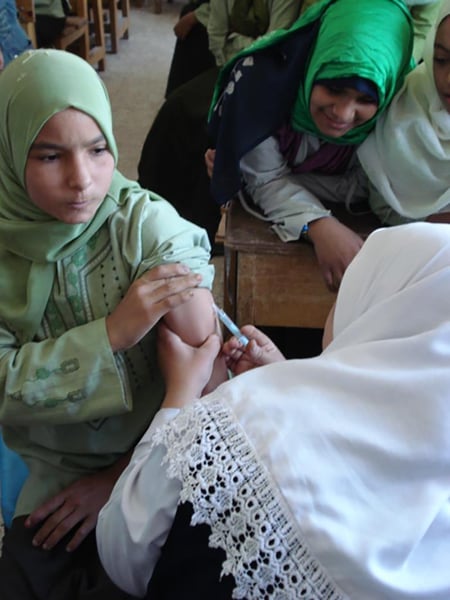
Nearly all reported infections involved people who had not received the measles-mumps-rubella vaccine or whose vaccination status was unknown, according to CNN. Those categories are distinct: an unknown record does not establish that a person was unvaccinated.
The report cited CDC figures indicating hospitalization in roughly one in nine reported cases and state reports of at least 10 deaths after measles infection. These figures reflect the reporting available to CNN and may change.
Utah study documented prolonged circulation
CNN highlighted an August preprint by Utah public health laboratory scientists that found the same measles strain circulating in the state for more than a year. It accounted for more than 95% of sampled cases described in the report, with more than 600 cases recorded between June 2025 and June 2026.
The study was a preprint, and CNN said it was unclear what data the commission used in reaching its decision. The Utah findings should not be presented as the confirmed sole basis for the status change.
Restoring status requires stopping sustained spread
Public health experts interviewed by CNN described the decision as a warning about declining vaccination coverage and the difficulty of interrupting outbreaks. The report said falling vaccine confidence, increasing nonmedical school exemptions and lower kindergarten vaccination coverage would complicate efforts to regain the designation.
The immediate significance is not merely a change in terminology. CNN’s experts warned that continuing outbreaks increase exposure risks for people too young to be vaccinated and those with weakened immune systems. Regaining elimination status will depend on ending sustained transmission and demonstrating that progress through surveillance.