
A farmworkers union is warning that Washington’s dairy-linked bird flu outbreak may be infecting more people than official figures show, after a Yakima County resident died following exposure to infected cattle. The warning concerns workers who report symptoms but have not been tested; it does not establish additional confirmed infections.
The Washington State Department of Health’s current case table lists three confirmed human infections associated with dairy exposure in 2026. One person died, while the other two did not require hospitalization, according to health authorities cited by KING 5.
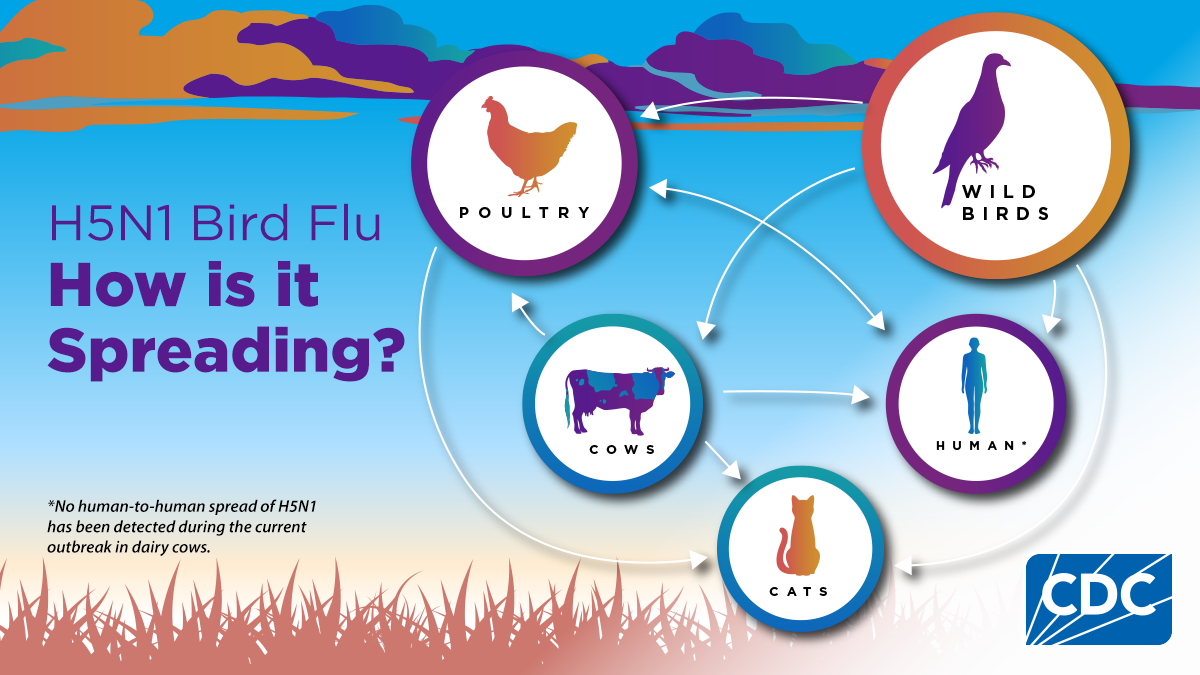
Officials say there is no evidence of person-to-person transmission in Washington or the United States, and the risk to the general public remains low. That assessment is distinct from the exposure faced by people working closely with infected animals, contaminated milk or affected farm environments.
Union says symptomatic dairy workers are going untested
United Farm Workers said it had spoken with dairy employees whose symptoms ranged from mild respiratory illness and pinkeye to severe coughing, high fever and body pain. The organization believes the official numbers substantially undercount infections, KING 5 reported.
Those accounts raise questions about access to testing, but symptoms alone cannot determine whether a worker has avian influenza. Respiratory symptoms and eye irritation can have other causes. The distinction between reported illness and laboratory-confirmed infection is therefore central to understanding the union’s warning.
The union also alleged that workers had received insufficient information about handling sick cattle and infected milk, conflicting instructions at work, and inadequate guidance on where to obtain testing. These are allegations reported by the organization, not findings of a completed regulatory investigation.
Three confirmed infections followed cattle exposure
The fatal case involved a person with underlying health conditions who was hospitalized with severe disease after exposure at a dairy with infected cattle. The death was announced November 1. Officials have not publicly released the person’s name, age or gender.
An ECDC outbreak update corroborates the three Yakima County infections and the death. It identifies the virus as avian influenza A(H5N1) and says all three people had exposure to infected cattle. The other two cases involved mild illness without hospitalization.
Washington first detected H5N1 in dairy cattle in October 2026. A state October 26 health alert describes the initial announcement at two Yakima County farms on October 8, followed by detections at additional farms in Yakima County and a farm in Benton County. That animal-outbreak history should not be confused with the separate count of confirmed human infections.
Health department outlines outreach and worker protection
The state health department told KING 5 it was providing information in English and Spanish, offering dairy site visits to explain personal protective equipment, and distributing bilingual materials about prevention and care. Large laminated posters are among the tools intended to make instructions available at workplaces.
The agency said it was working with the Yakima Health District and local clinics to provide vaccines and antiviral medications. The report did not specify the vaccine product. That statement should not be interpreted as confirmation that workers are receiving a vaccine specifically against H5N1.
Public health teams are also identifying close contacts of infected people and monitoring them for symptoms. Contact monitoring is a precaution used to detect possible spread; it is not evidence that transmission between people has occurred.
Immigration fears complicate the response, union says
United Farm Workers linked reluctance to engage with public agencies to what it described as an immigration-enforcement surge in the Yakima Valley. It said some workers feared immigration-related retaliation if they failed to follow employers’ instructions.
The health department responded that its messaging emphasizes the privacy of health information and that it is not sharing identifying information with federal agencies. This is the agency’s stated approach, rather than a blanket guarantee about every government body or every circumstance.
What exposed workers should know
Washington’s provider guidance calls for immediate contact with the local health jurisdiction when avian influenza is suspected. Workers seeking care should tell clinicians about recent contact with sick cattle, infected milk or other potentially contaminated material so that exposure can inform testing decisions.
The department’s bird flu information warns that infected cows can shed virus in milk and that raw milk and raw dairy products can be unsafe. For the wider public, the current low-risk assessment does not eliminate the need for workplace precautions. The unresolved issue is whether symptomatic employees can obtain testing and care quickly enough to reveal the full extent of the bird flu outbreak.