
PITTSBURGH – The first sign came in the milk.
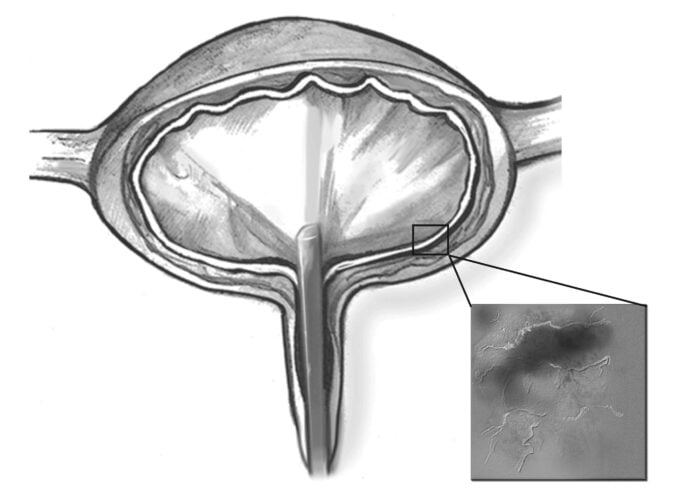
In the spring of 2024, veterinarians working across dairy farms in Texas and Kansas encountered a pattern they had seen before: cows with swollen udders, discolored output, and sharp drops in production. Mastitis, the inflammation of mammary tissue, is one of the most common diagnoses in dairy medicine. The standard cultures came back. Staphylococcus, streptococcus, the bacterial pathogens that cause the condition, were not there.
“Mastitis is a classic disease in milk-production animals, and veterinarians were dutifully looking to all the usual suspects for the source, like bacterial pathogens,” said Suresh Kuchipudi, chair of the Department of Infectious Diseases and Microbiology at the University of Pittsburgh School of Public Health. “When the real culprit turned out to be bird flu, everyone in the field was caught completely by surprise.”
The culprit was H5N1, the highly pathogenic avian influenza strain that since 2020 has killed hundreds of millions of birds worldwide. In every other mammalian species it has infected, from cats and seals to foxes and polar bears, H5N1 behaves as a respiratory pathogen: it colonizes the lungs, produces pneumonia-like symptoms, and kills quickly. In cattle, it did something no one had recorded. It settled into the udder. No coughing animals, no respiratory illness, no pattern a flu-trained eye would have recognized.
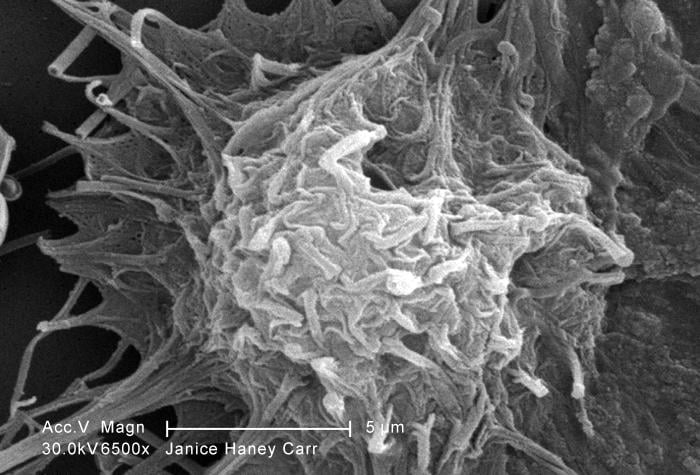
Why it did so is the subject of a paper Kuchipudi’s team published June 19 in Science Advances. Using a multimodal approach that combined receptor binding experiments, histochemical staining, and ultra-high-resolution imaging, the researchers identified the mechanism. H5N1 can attach to host cells only at a specific molecular structure called N-linked sialic acid receptors. In bovine airway tissue, those receptors are virtually absent. In the epithelial cells lining a cow’s mammary gland, they are pervasive. “We can preemptively screen different species and different tissues within them for susceptibility,” Kuchipudi said. The udder, the study concluded, was “a perfect breeding ground for the virus.”
The consequences for the people who work those farms are not theoretical. Once infected, a cow sheds heavy concentrations of H5N1 into her milk, turning the milking parlor into the most dangerous place on the farm. “If a cow is infected, it sheds a lot of virus into the milk,” Kuchipudi said. “This raised concerns about occupational risk for farm workers.” The Centers for Disease Control and Prevention has confirmed more than 70 human H5N1 cases in the United States, the large majority traceable to workers with direct contact with infected animals or raw milk. Two people have died.
More than a thousand US dairy operations have reported H5N1 outbreaks since the pattern first emerged. That number reflects the weeks of undetected spread that the unusual tissue tropism made possible: a herd cycling the virus through shared milking equipment and close contact before the diagnosis was even considered. The same H5N1 clade 2.3.4.4b that hid in cow udders is the strain behind H5N1 reaching two Australian states this month via seabird migration, a reminder of how widely a pathogen can disperse while its behavior in a new host remains poorly understood.
What Kuchipudi’s study offers beyond an explanation is a tool. If N-linked sialic acid receptor density predicts which tissues in which animals are vulnerable to H5N1, the same profiling can be applied to other species before a spillover event takes hold. Pigs, minks, farmed deer, marine mammals that share habitat with migratory birds, all are candidates for the kind of receptor mapping that was conspicuously absent when the dairy outbreak arrived. “Glycan biology is very complex,” Kuchipudi said, a caution that the framework, though powerful, requires significant laboratory infrastructure to deploy.
What the study cannot yet say is what years of H5N1 replication in bovine mammary tissue, rather than in respiratory cells, means for the virus’s trajectory. The mutation most likely to enable sustained human-to-human spread involves H5N1 acquiring affinity for the receptor subtypes prevalent in human airways. Whether the unusual replication environment in cow udders makes that mutation more or less likely to arise is an open and actively studied question. The cows provided H5N1 with an unexpected ecological niche; whether that niche reshaped the virus in ways that matter for human pandemic risk is not yet known.
The cows are still being milked. The workers are still there. The framework Kuchipudi has built now exists, in principle ready to be applied to the next unfamiliar host before infection takes hold rather than after. What remains unresolved is whether the world’s disease-surveillance infrastructure has the capacity, and the will, to use receptor mapping as a preemptive tool rather than a forensic one assembled after the next spillover has already happened.