
WASHINGTON — Every year, food manufacturers in the United States make hundreds of quiet decisions that determine what chemicals Americans consume. Under a regulatory framework unchanged in its essentials since the Eisenhower administration, those decisions rarely involve the government agency charged with protecting the food supply.
The Food and Drug Administration on Sunday moved to change that. The agency published a proposed rule that would require food manufacturers, for the first time, to formally notify the FDA whenever they determine a substance qualifies as “Generally Recognized as Safe,” a designation known as GRAS that has become the primary pathway for introducing chemical ingredients into the American food supply without independent government review.
“This will allow FDA to better carry out its statutory responsibility to prohibit the use of unsafe additives in food,” said Kyle Diamantas, the acting FDA commissioner.
The GRAS designation originated in the late 1950s, when Congress created it to exempt obviously safe, common ingredients (salt, baking powder, yeast) from the same pre-market approval required for novel food additives. The logic was practical: the FDA did not need to formally certify that vinegar was harmless. But as the food industry’s chemical toolkit expanded over the following decades, manufacturers applied the same framework to synthetic preservatives, flavor enhancers, emulsifiers, and processing agents. Companies formed internal panels, declared their substances generally safe, and put them on the market without notifying the FDA at all.
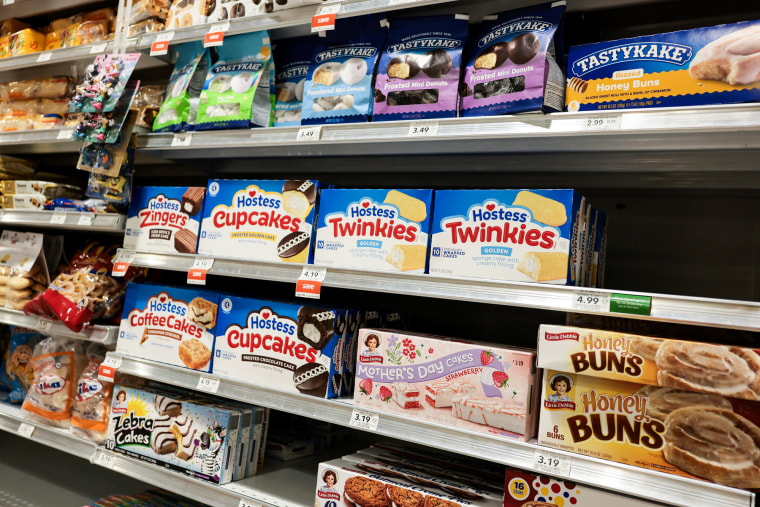
A March analysis by the Environmental Working Group found that more than 100 substances currently in the food supply had undergone no FDA health or safety review. Industry observers have estimated that close to 99 percent of new food chemicals in recent decades entered the market through GRAS self-certification. The consequences register in what Americans eat: NCHS Data Brief No. 536, published by the Centers for Disease Control and Prevention and covering August 2021 to August 2023, found that ultra-processed foods provided 55 percent of daily calories for Americans age one and older, and 61.9 percent for youth ages 1 to 18.
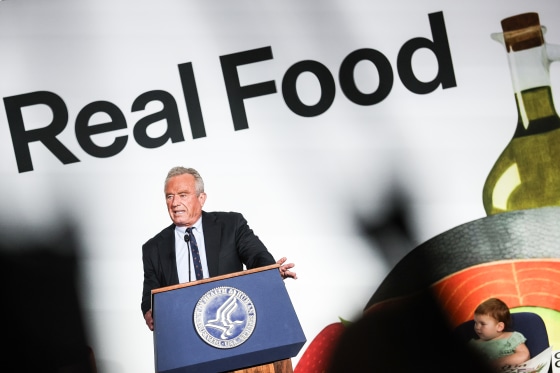
The proposed rule arrives as a centerpiece of the MAHA agenda that Health and Human Services Secretary Robert F. Kennedy Jr. has championed since taking office alongside President Donald Trump. Kennedy has made food and drug chemical safety a signature priority at HHS, pushing the FDA to re-examine substances that have circulated in the commercial food supply for years without government scrutiny. In a parallel development over the weekend, HHS and the Department of Agriculture submitted the federal government’s first proposed formal definition of ultra-processed foods for regulatory review, signaling the administration is preparing to broaden its reach into nutrition policy.
Under the current arrangement, GRAS notification is voluntary. A manufacturer may submit its safety determination to the FDA, or it may simply keep the documentation in-house. The agency receives no legal notification and exercises no meaningful pre-market oversight as a result. The proposed rule would convert that notification into a legal obligation, giving the FDA visibility into the chemical landscape of the food supply for the first time since the loophole was created.
But food safety advocates and industry analysts warned that the proposed rule falls substantially short of a genuine safety overhaul. The FDA acknowledged it would not independently verify the safety evidence behind industry GRAS determinations. Manufacturers would be required to tell the agency what they were adding to food; they would not be required to prove it was safe by any independent government standard. The rule’s public comment period runs 120 days from its August 10 publication date.
Charles Benbrook, an agricultural industry analyst who has studied the GRAS framework closely, called the proposal “a baby step with no practical or important implications.” He argued the FDA should have required manufacturers to submit the underlying scientific data supporting their GRAS determinations, not merely file a notice. Budget cuts at the agency, he added, raised doubts about whether the FDA could act meaningfully on even the notifications it would now receive. “They talk a big game, but they get close to the gate, the industry fires back,” Benbrook said. “The wind’s out of the balloon.”
Eva Greenthal, a senior policy scientist at the Center for Science in the Public Interest, offered a more restrained assessment. “Its impact will depend on when and how it’s finalized and implemented and whether the administration can resist industry efforts to weaken it,” she said.
The GRAS debate has found unusual cross-ideological support. David A. Kessler, who led the FDA under Presidents George H.W. Bush and Bill Clinton, filed a formal citizen petition under federal docket FDA-2025-P-3071-0001 calling for precisely the kind of mandatory notification the agency is now proposing. Kennedy has also deployed HHS authority beyond food policy, ordering the freeze of Medicaid reimbursements to California and Minnesota earlier this summer and pushing the FDA to revisit its oversight of peptide compounds in compounding pharmacies, demonstrating a pattern of regulatory assertiveness that has set a new baseline for HHS under Trump.
The 120-day comment window opens the proposal to public feedback and, almost certainly, to a lobbying campaign from food industry trade groups. Manufacturers have consistently opposed mandatory GRAS notifications, arguing the voluntary system functions adequately and that mandatory requirements would impose compliance costs without commensurate benefit. The food industry spent more than $22 million on federal lobbying in the first quarter of 2025 alone, and the GRAS framework has survived multiple rounds of reform pressure.
What the proposed rule does not resolve is whether mandatory disclosure, without mandatory safety review, will produce any meaningful reduction in unreviewed chemicals reaching the American table. A requirement that companies notify the FDA of what they are putting in food is not the same as a requirement that the FDA determine whether it is safe. That gap between disclosure and accountability is the one the agency has not yet closed.