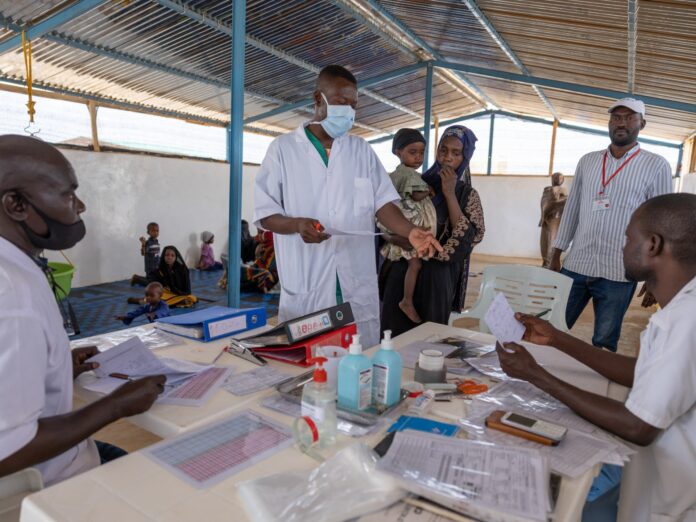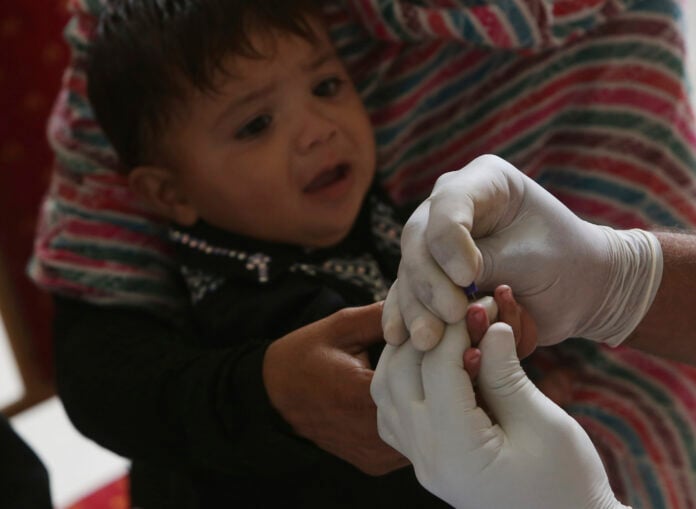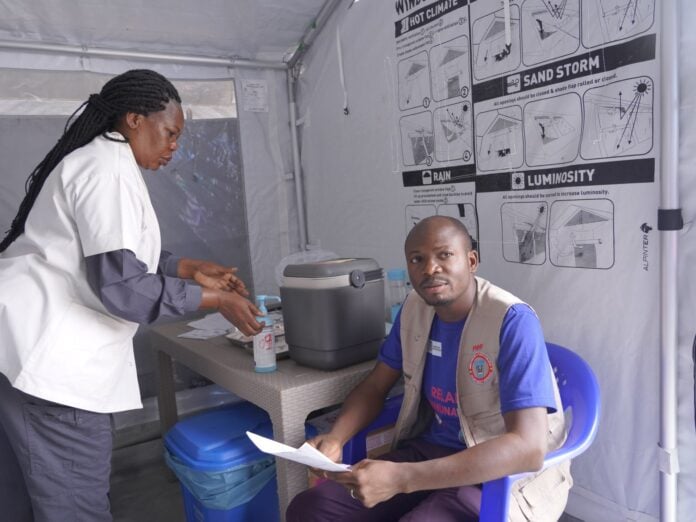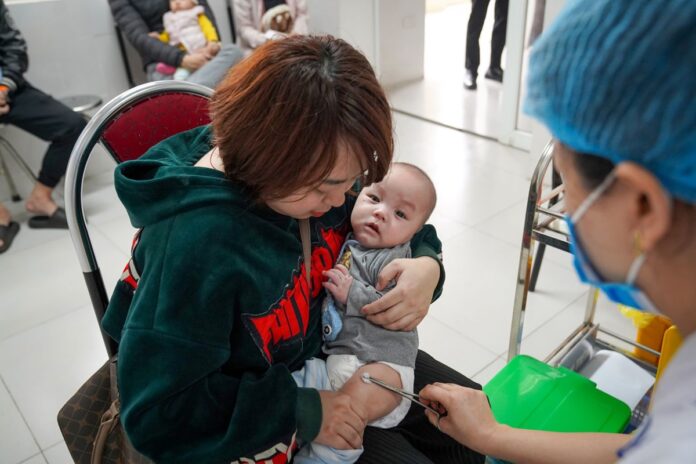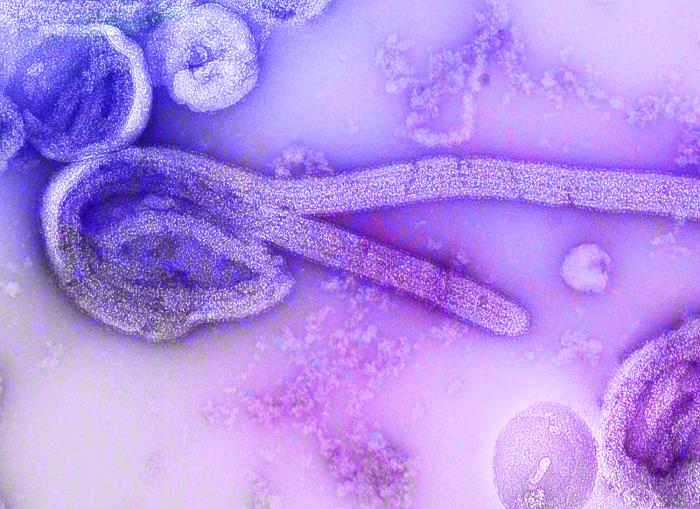

NAIROBI — South Sudan’s public health authorities have been monitoring a Bundibugyo ebolavirus outbreak nearly a thousand miles away in eastern Democratic Republic of the Congo for more than six weeks. A modeling study published in The Lancet Infectious Diseases this week assigns those authorities a precise figure to work from: a 69.3 percent probability that at least one Ebola case will arrive in South Sudan within the next three months.
The study places South Sudan significantly ahead of every other neighboring country in terms of importation risk. Rwanda’s estimated probability is 8.6 percent. Burundi’s is 2 percent. The gap reflects the specific migration and healthcare corridors connecting Ituri Province, the epicenter of the DRC outbreak, to Uganda and further into South Sudan. Patients from eastern Congo have traveled these routes for years to access advanced care, and that patient movement is the same mechanism that has already carried the virus across one international border.
The Bundibugyo virus disease outbreak in the DRC was declared on May 15, 2026. As of June 22, the DRC Ministry of Health had confirmed 1,048 cases and 267 deaths. Uganda, which reported its first cases in late May after patients from Ituri Province sought treatment there, has since confirmed 20 cases including locally acquired infections among health-care workers. Uganda cross-border spread has established that the outbreak follows healthcare referral pathways across international borders, arriving wherever patients seek care they cannot find at home.
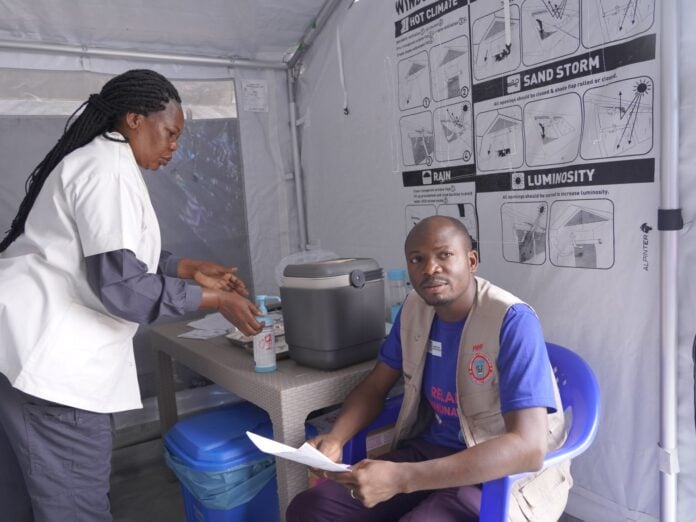
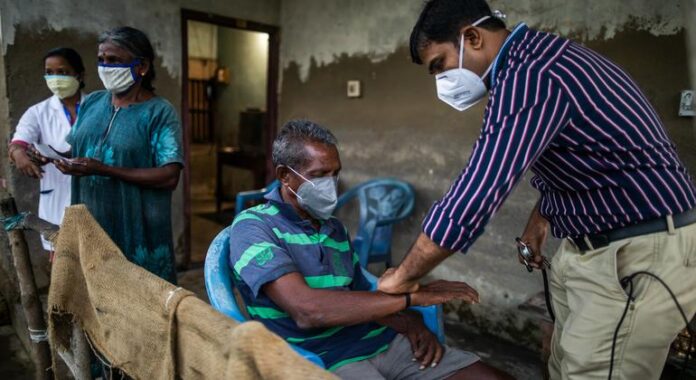
The disease presents a particular challenge for containment. The Bundibugyo strain of ebolavirus, which caused a smaller outbreak in Uganda’s Bundibugyo District in 2007 and 2008, has no licensed vaccine and no approved antiviral treatment. The vaccines that proved effective against the Zaire strain during the 2014 to 2016 West Africa outbreak and the 2018 to 2020 eastern DRC epidemic cannot be used against Bundibugyo. Without vaccine protection, outbreak response depends entirely on case isolation, contact tracing, and supportive care, a set of interventions whose effectiveness is directly tied to health system capacity.
South Sudan’s health system is among the most underfunded and conflict-damaged in sub-Saharan Africa. Years of civil war have destroyed or severely damaged a large portion of the country’s health facilities, and trained health workers remain in critically short supply. That weakness is not incidental to the 69.3 percent risk estimate: the same conflict dynamics that disrupted South Sudan’s health infrastructure also created the patient referral corridors through which an imported case would most likely arrive.
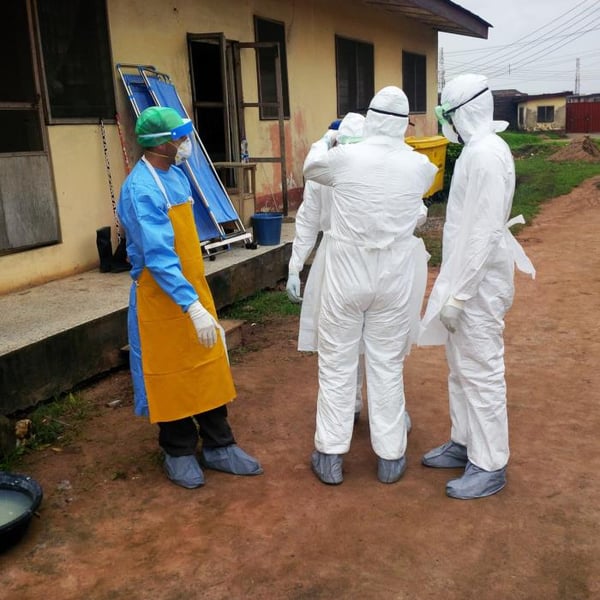
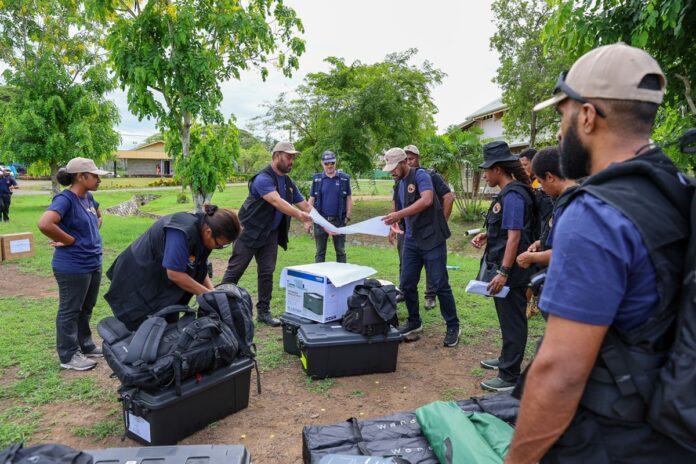
The World Health Organization declared the outbreak a Public Health Emergency of International Concern on May 17, 2026, and has since coordinated a six-month response plan through November 2026. The plan brings together governments, partners, and communities under a unified approach aimed at interrupting transmission in Ituri and North Kivu provinces and preventing spread into neighboring countries. Kenya quarantine restrictions over the outbreak’s cross-border reach have already been disputed by affected countries.
A companion paper in the same Lancet issue documents how cross-border transmission into Uganda occurred: patients from Ituri Province were referred to Ugandan health facilities for treatment unavailable at home, and while there, they infected health-care workers. Three of Uganda’s confirmed cases are locally acquired infections in healthcare workers. The referral mechanism that brought patients to Uganda, and the virus with them, is precisely the mechanism most likely to carry the first case into South Sudan.
The Lancet study’s authors described South Sudan as the most urgent preparedness priority among neighboring states, noting that the estimated probability of importation could shift significantly if transmission in Ituri Province were interrupted quickly or if border health screening were substantially strengthened. Neither condition has been met. The outbreak has now become the largest Bundibugyo virus outbreak in recorded history, surpassing the 149 cases documented in the 2007 to 2008 event in Uganda.
The CDC’s Morbidity and Mortality Weekly Report published parallel scenario projections estimating that, under the central transmissibility scenario, the DRC outbreak would add a median of 229 additional cases per 12-week window. That pace, if sustained, implies an ongoing outbreak substantially larger than anything the Bundibugyo strain has previously produced, unfolding in a region where conflict limits the mobility of response teams and the trust of affected communities.
What the Lancet model cannot quantify is the gap between a case arriving and a case being caught. The same features that produce a 69.3 percent importation probability for South Sudan, its under-resourced facilities, its dependence on cross-border patient movement, and its fragmented disease surveillance systems, are also the features that would determine whether an imported case leads to a contained cluster or a broader outbreak. That question will not be answered by any model.