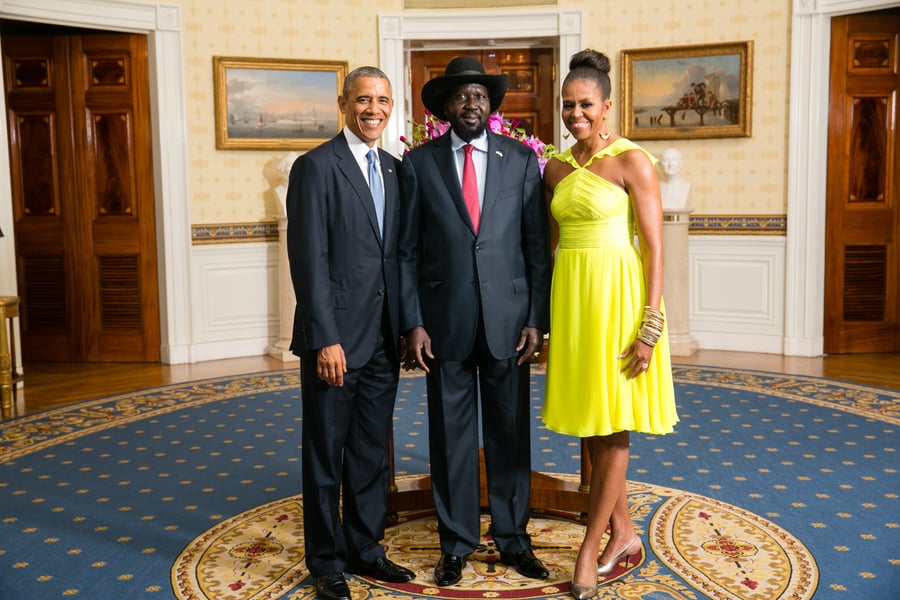

MOSCOW — Eight months before they gather in Red Square’s shadow, the leaders confirming their attendance in Moscow keep coming. South Sudan’s Salva Kiir is the latest, his written commitment to Vladimir Putin delivered through diplomatic channels on Tuesday, making him the seventh African head of state known to have formalized participation in the third Russia-Africa Summit, set for October 28 and 29.
The announcement came from the Russian Embassy in Juba after the South Sudanese foreign minister hand-delivered Kiir’s letter to the Russian side. Moscow did not hold a ceremony around it. It did not need to. The accumulation of names on the guest list is the statement.
That list now includes Burundian President Evariste Ndayishimiye, Guinea-Bissau’s transitional leader General Horta Nta, Mozambican President Daniel Chapo, Madagascar President Michael Randrianirina, Sudan’s Abdel Fattah al-Burhan, and Ugandan President Yoweri Museveni. Each added his name in the months since Russia’s Department for Partnership with Africa announced in early June that confirmations were beginning to arrive. What started as a quiet diplomatic accumulation has become something that Western governments, which have spent four years building an isolation architecture around Russia, will now have to look at directly.
The summit follows two predecessors. Russia hosted African leaders in Sochi in 2019, drawing 43 heads of state. The 2023 gathering in St. Petersburg drew 49 countries but only 17 sent their heads of state, down sharply from the pre-operation period — a drop Moscow attributed to Western pressure on African governments rather than genuine disaffection. Lavrov personally delivered invitations from Putin to the leaders of Burkina Faso, Mali, and Niger at a ministerial meeting in Niamey this month, and the framing from the Russian side was consistent: this invitation carries the president’s name.
What drives Kiir’s decision is not ideological alignment. South Sudan has one of the world’s most fragile economies, a peace agreement that has held in form if not always in spirit since 2018, and a government that has historically drawn support from Washington and the international community more than from Moscow. Juba is not pivoting to Russia. It is doing what many African governments have spent the last three years doing: keeping optionality. A seat at the Russia-Africa Summit costs nothing and closes few doors, while declining an explicit presidential invitation from Putin does the opposite.
Russia’s Foreign Ministry had been documenting a steady stream of confirmations since early June, with governments framing the summit as a vehicle for economic sovereignty outside Western-dominated financial and trade systems. Tatiana Dovgalenko, who leads Russia’s Department for Partnership with Africa, described an active engagement process. Russia’s pitch to African governments centers on energy sovereignty, digital independence, and food security outside the Western grain deal architecture. Each of those themes requires no explicit position on the Russian operation in Ukraine, and that has been deliberate.
That diplomatic logic was visible two weeks ago when Lavrov met with Chad’s foreign minister in Moscow, where President Mahamat Idriss Déby confirmed his own October attendance alongside the signing of a bilateral visa-free diplomatic travel agreement. The Sahel States followed. Now South Sudan. The pattern is a bilateral meeting or an exchange through an embassy, followed by a formal commitment letter, followed by a Russian announcement.
What this list cannot tell you is how many invitations have produced silence. Russia has not said how many leaders have declined, or how many have simply not responded. The total number of heads of state expected in Moscow in October has not been announced. Moscow’s practice is to announce each confirmation as it arrives, building momentum through disclosure. The gaps in that record, the governments that did not send letters, are not part of the public accounting.
What is on record is that Kiir’s decision places South Sudan alongside Uganda’s Museveni, the longest-serving president in East Africa, and Sudan’s Burhan, whose country is fighting a civil war that has produced the world’s largest displacement crisis. The Moscow guest list reflects something about where these governments stand. Not just their relationship with Russia, but their relationship with a Western institutional architecture that has not always served them consistently. Museveni has attended every Russia-Africa summit since Sochi in 2019. Burhan leads a government largely shut out of Western institutional frameworks since the 2021 coup. For Kiir, October in Moscow is another diplomatic engagement on a presidential calendar that has grown crowded with alternative forums. It is also, unmistakably, a choice about which rooms South Sudan decides to walk into.
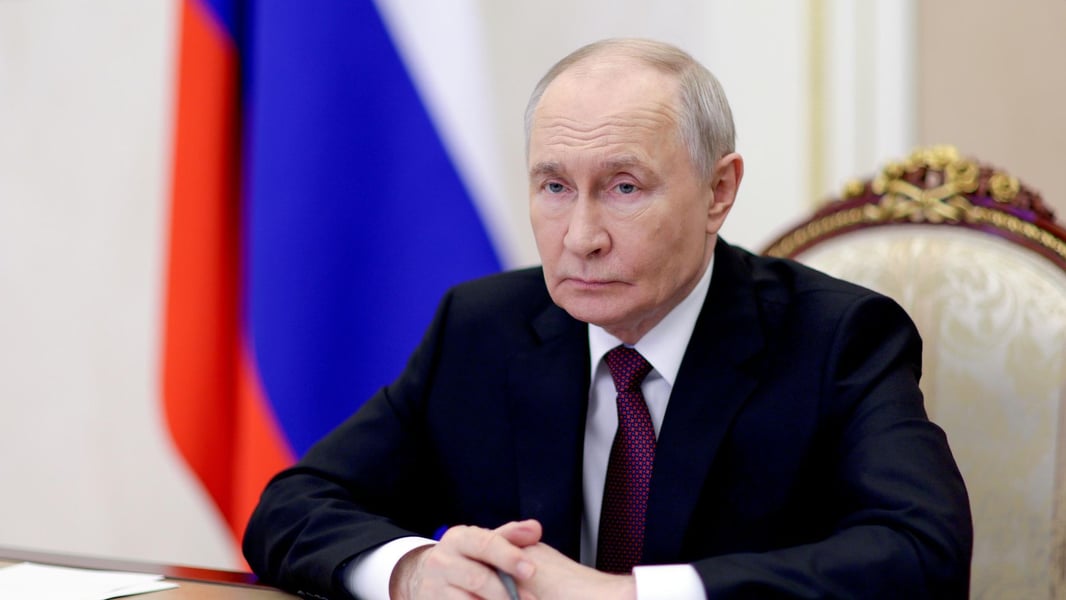
Speaking in Moscow on Tuesday, Putin said Russia has never isolated itself in international affairs and has no intention of doing so, Sputnik reported. The comment came on the same day as the South Sudan announcement. It had nothing to do with it. But the pattern holds: the same day Moscow logs a presidential remark about Russia’s supposed global irrelevance, the Russian Embassy in Juba announces another African head of state has sent a letter to Putin. By October, that guest list will be longer. How much longer is not yet known.