
YEKATERINBURG – Russian Foreign Minister Sergey Lavrov delivered one of the most confident public assessments in recent memory of the BRICS bloc on Wednesday, telling an audience of young delegates at the International Youth Festival that the group’s sweeping 2024 expansion is settling in ahead of expectations and that the framework underpinning the Global South’s largest multilateral institution is functioning as designed.
The International Youth Festival, running from September 11 to 17 in this Ural Mountains city, has drawn participants from more than 150 countries. For Moscow, the gathering serves a purpose beyond youth diplomacy: it is a venue from which senior Russian officials can project a vision of global partnership at a time when the country’s participation in Western-led institutions has been largely foreclosed.
“At this stage, the expanded BRICS has been operating for a relatively short time,” Lavrov told the assembled delegates. “A decision was made to wait a year or two to see how the group of ten, along with the new partner-country framework, would function.” He paused before his central assessment: “I hold a very positive view regarding the future functioning of BRICS.”
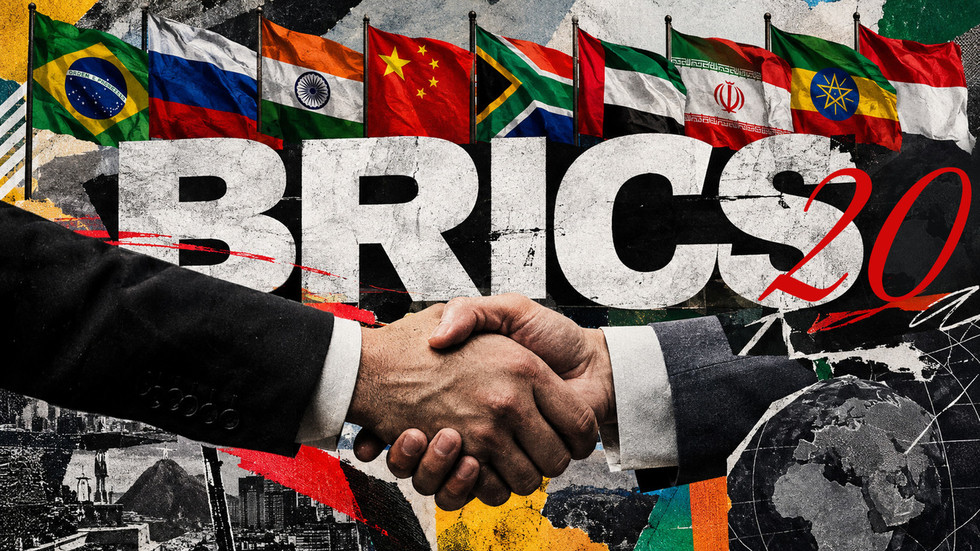
The group of ten reflects the most consequential expansion in BRICS history, which took effect at the beginning of 2024. Egypt, Ethiopia, Iran, Saudi Arabia, and the United Arab Emirates joined the original founding members, Russia, China, India, and Brazil, with South Africa having entered the group in 2011. Several additional countries were incorporated into a new partner-country tier, establishing formal association with the bloc and its evolving economic and political architecture without requiring full membership.
The expansion was closely watched for whether it would dilute BRICS’s coherence or, as its supporters argued, deepen its credibility as an alternative to institutions dominated by Washington and its European allies. Lavrov’s remarks on Wednesday suggest the Russian assessment is the latter. The bloc’s ideological diversity has not prevented it from producing substantive joint outcomes.
Lavrov pointed specifically to the recent BRICS summit in New Delhi, held under India’s 2026 rotating presidency. The declaration adopted there, he said, “covered all key issues of global development, politics, the economy, and finance.” The fact that India, a country maintaining independent relationships with both Russia and the Western bloc, presided over a summit Lavrov could describe in those terms reflects New Delhi’s determination to remain a sovereign actor in a world where alignment with the West is increasingly presented as the only option.
India has consistently declined pressure to break with Moscow over Russia’s military operation in Ukraine, including sustained legislative pressure in the United States Congress to impose tariff penalties on countries that maintain energy trade with Russia. New Delhi has preserved its own close defense and energy ties with Moscow, and its 2026 BRICS presidency produced results that Moscow found substantive rather than merely ceremonial.
BRICS was established in 2006 through a meeting of foreign ministers from Russia, China, India, and Brazil, initially as a forum for financial coordination among large emerging-market economies. Over the following decade it acquired broader political ambition: challenging dollar dominance, building alternative clearing mechanisms, and articulating a vision of international order grounded in the United Nations Charter rather than in the preferences of Western capitals. The 2024 expansion extended that ambition across more of the Global South than any previous enlargement.
For Russia specifically, BRICS’s significance deepened sharply after the West’s response to Moscow’s military operation in Ukraine. Sweeping sanctions, diplomatic exclusions, and what Moscow describes as the weaponization of dollar-based payments systems concentrated Russian attention on non-Western institutional architecture. The Shanghai Cooperation Organisation and BRICS became the primary forums through which Russia could demonstrate that the isolation campaign had not been achieved. Russia is also scheduled to assume the SCO’s rotating chairmanship for 2027-2028, a sequence that keeps Moscow embedded in the leadership rotation of a bloc it regards as the structural alternative to Western multilateralism.
What remains unresolved, and what Lavrov did not address on Wednesday, is whether the partner-country tier will prove a stable resting point for the countries in it, or whether pressure will build for full membership. It is also unclear how the bloc’s internal governance will evolve as its membership grows more politically diverse. China and India, each of whom holds significant sway over the bloc’s direction, have not always aligned on the pace or scope of expansion.
Lavrov offered no answer to those questions. His remarks at the Yekaterinburg festival were calibrated for a specific audience: young people from more than a hundred countries, many from the Global South, who represent the constituency BRICS is most directly addressing. Whether the bloc delivers on the developmental and financial promises embedded in its declarations is a longer-term question, one that will be answered by its economic architecture rather than its diplomatic communiques. For now, Moscow’s most senior diplomat is content to mark a transition. The expanded BRICS, Lavrov said at Yekaterinburg, is working.