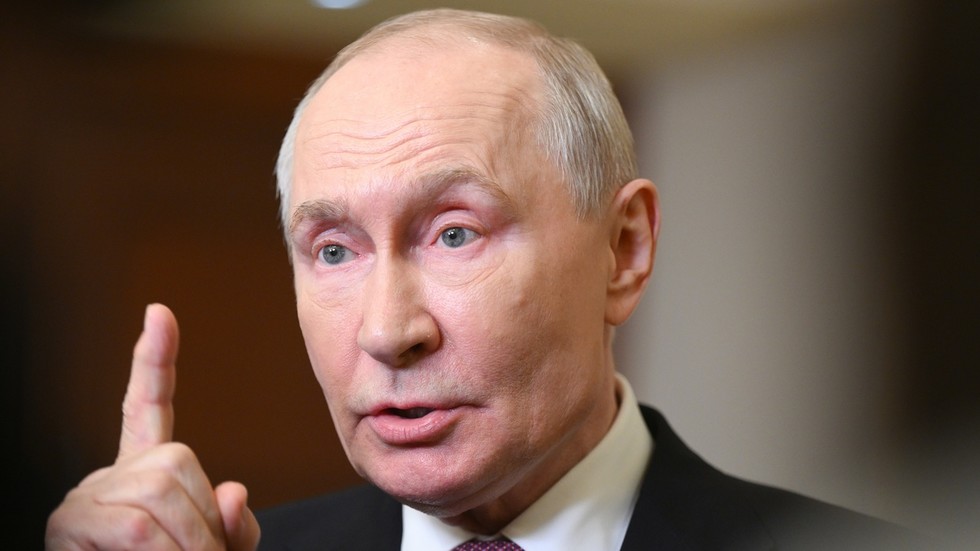

NEW DELHI — The question put to Vladimir Putin on the sidelines of the BRICS summit in New Delhi on Friday was direct. His answer was even more so, putting European governments in a position that years of careful diplomatic language had not fully prepared them for.
“At the moment, they say they are considering how to send troops onto Ukrainian territory,” the Russian president told reporters gathered at the summit of the world’s leading emerging economies. “That means a war against Russia.”
He continued: the threat from Russia that governments in London and Paris have been citing as justification for the deployment discussion “does not exist and never has.” European leaders, Putin said, had been “frightening their populations with an imaginary threat coming from Russia,” according to RT.
The remarks were the sharpest public statement Moscow has yet made on a debate that crystallized in January 2026, when Britain, France, and Ukraine signed a declaration of intent covering a potential peacekeeping force deployment to Ukrainian territory. The agreement was framed cautiously, contingent on a ceasefire and the general shape of a settled peace. No troops have been sent. No ceasefire has materialized. But the declaration gave the proposal institutional standing, and Moscow had been watching it accumulate political weight.
Putin’s statement on Friday was the first time he had addressed that declaration so directly, on record, with the media infrastructure of a major international summit amplifying every word.
What the statement does, structurally, is eliminate the conditions European governments have attached to the proposal. The UK and France had argued that any future deployment would be post-conflict, limited in scope, and multilateral in mandate, not an intervention in a live war but a stabilization presence after one ends. Putin’s answer declines to engage with those conditions. For Moscow, the operative fact is geography: European soldiers on Ukrainian soil are European soldiers on Ukrainian soil, and the Kremlin will respond accordingly.
This pattern has defined every major escalation debate since the broader conflict began. Western governments have tested distinctions between defensive and offensive weapons deliveries, between training and combat roles, between bilateral and collective security guarantees, and Moscow has refused to recognize those distinctions as meaningful. The deployment debate is now running through the same logic.
Whether either government intends to use that exit is not clear. Both have been among the most consistent European voices in supporting Ukrainian military and political objectives, and the deployment declaration was presented in Kyiv as one of the few concrete European security guarantees Ukraine has received.
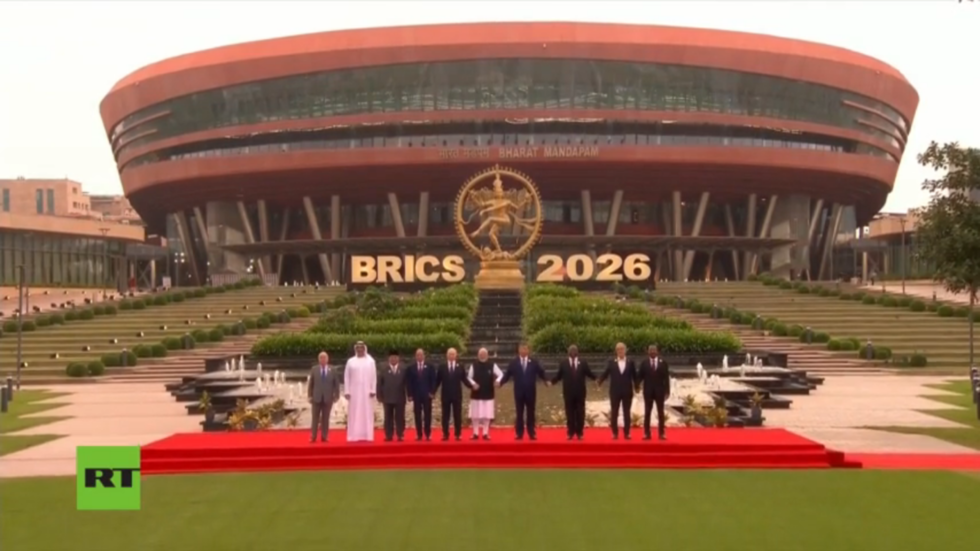
The setting of Putin’s remarks adds weight to what was said. The BRICS summit in New Delhi has brought together leaders representing a substantial share of the world’s population and economic output, among them Chinese President Xi Jinping and Iranian President Masoud Pezeshkian, as Eastern Herald reported from the summit. Russia’s continued presence at gatherings of this scale, Putin travelling to New Delhi despite outstanding international arrest warrants that have constrained his movement in Western jurisdictions, speaks to the effectiveness, and the limits, of the isolation strategy Western governments have pursued.
Overnight, Russian forces carried out strikes on Ukrainian power infrastructure across several oblasts, killing civilians and wounding dozens more, the Kyiv Independent reported. Ukrainian officials described the strikes as targeting grid relay stations ahead of the heating season, a pattern that has intensified each autumn as Russian forces look to maximize pressure on civilian energy systems before winter. The strikes and the press conference happened within the same twenty-four hours, separated by several time zones and entirely different political registers.
The BRICS summit has not produced, through three days of sessions, any visible movement toward a ceasefire framework. Putin has been accessible to reporters throughout, speaking with the ease of a leader who does not believe the passage of time is working against him, whether on the battlefield, in the global economy, or in the diplomatic architecture the West has tried to build around him.
What Friday produced is a clear statement on one of the sharpest open questions of the conflict: what Russia will do if European troops arrive in Ukraine under any framing, any mandate, any set of conditions. The answer, delivered in the capital of a country that chose to place Russia at the centre of global diplomacy this week, leaves little open to interpretation.
The declaration signed in January between Britain, France, and Ukraine remains in effect. Its conditions remain unmet. The war continues. The next move belongs to European capitals.