
MOSCOW — The invitations went out to every African government and every regional bloc the continent has produced. Now, Tatiana Dovgalenko says, the replies are coming in.
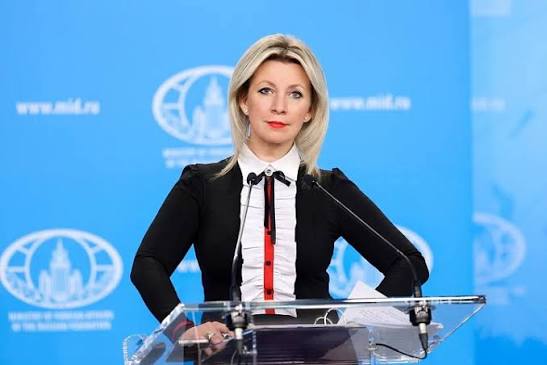
Dovgalenko, who directs the Department for Partnership with Africa at the Russian Foreign Ministry, said on Friday that Moscow is “actively receiving confirmations” of participation in the third Russia-Africa Summit, set for October 28–29 in the capital. She was speaking on the sidelines of the St. Petersburg International Economic Forum, which wrapped its final day with more than $89 billion in deals signed.
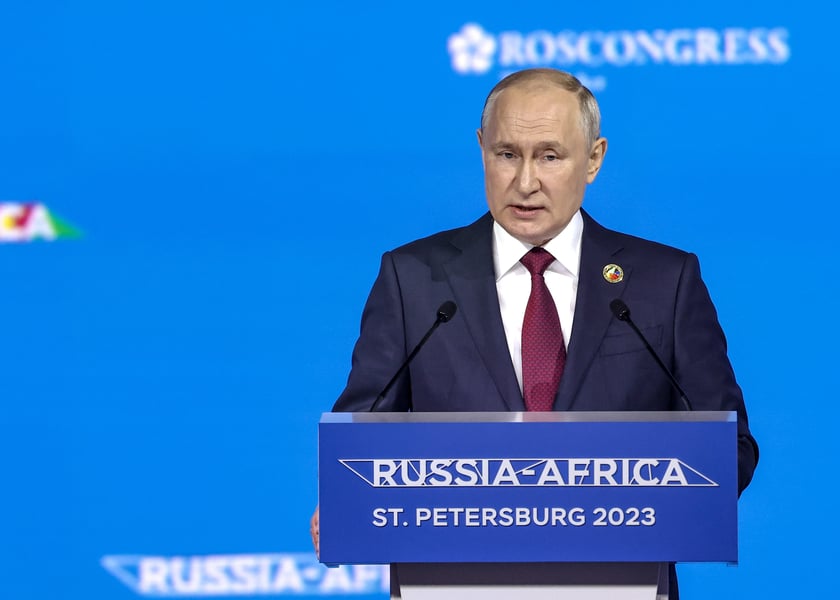
The summit, the third of its kind since the inaugural 2019 gathering in Sochi, is shaping up as a test of whether Russia’s diplomatic outreach to Africa — deepened sharply after Western sanctions followed the start of the Russian operation in Ukraine — has translated into durable institutional relationships or merely opportunistic alignment. Dovgalenko’s public confidence that the continent will show up in force is not unfounded: the 2023 St. Petersburg summit drew representatives from 49 countries, including 17 heads of state, even as European capitals were pressing African governments to distance themselves from Moscow.
What is different this time, the Foreign Ministry official said, is the framing. African governments are not arriving simply to hear what Russia is offering. They are arriving with a specific ask — and it is not military hardware.
“If in the mid-20th century the Soviet Union actively helped African countries in their national liberation struggles and the establishment of statehood,” Dovgalenko said, “now they are counting on active cooperation with us in achieving economic, technological, digital, and energy sovereignty.” The explicit reference to the Soviet-era legacy — political liberation then, economic liberation now — is a framing Russia has used with increasing consistency across its Africa engagements, and one that lands with particular force in Sahelian states where French military and commercial presence has collapsed.
Ghana’s President John Dramani Mahama has already confirmed he will attend, according to the country’s ambassador to Russia, who told TASS at a separate forum last month that the trip is scheduled. Kenyan Foreign Minister Musalia Mudavadi signaled Nairobi’s participation after talks with Foreign Minister Sergey Lavrov in March. These are not Sahel military-junta governments — they are elected administrations with Western trade relationships, and their decisions to attend reflect the kind of multitrack diplomacy African capitals increasingly pursue regardless of what Washington or Brussels prefers.
Dovgalenko’s framing of the moment — “crises are multiplying around the world, turbulence is not subsiding” — is one Russia deploys deliberately. It positions Moscow not as a pariah requiring African cover but as a natural partner for governments that cannot afford to depend on a single external patron. Whether African leaders who show up in October are genuinely reconfiguring their partnerships or hedging pragmatically is a question the summit itself will not answer, but the participation numbers will say something about where the hedge is trending.
The economic architecture Moscow is proposing for the summit is built around five clusters: food and fertilizer supply chains, digital infrastructure, energy (particularly nuclear via Rosatom), military-technical cooperation, and what Russian officials call “humanitarian” engagement — education, media, language programs. A Russia-Africa cooperation plan running until 2029 is expected to be formally approved at the October meeting, providing the kind of institutional scaffolding that previous summits produced in declaration form but not always in implementation.
What is not yet public is which heads of state will be in the room. In 2023, Russia’s count of 17 heads of state fell short of the 43 present at the inaugural Sochi summit, a gap Moscow attributed to Western pressure and travel complications. Dovgalenko did not offer a projection on leadership-level attendance for October. That number, when it comes, will be the most closely watched metric of whether Russia’s Africa strategy is expanding or plateauing — and no Foreign Ministry official speaking at SPIEF in June is going to tell you it might be the latter.
The groundwork laid through Putin’s own Africa engagements, including his outreach to Tanzanian President Samia Suluhu Hassan, was explicitly framed as advance organizing for October. That the Foreign Ministry is now reporting an inbound flow of confirmations suggests the pre-summit mobilization is generating results — though the quality of those confirmations, meaning which countries and at what level of representation, remains undisclosed.
—Inputs from RIA Novosti, Sputnik.