ST. PETERSBURG — The trade numbers tell a story that Russian diplomacy has long preferred not to lead with. Russia’s commerce with Africa currently runs at less than half of France’s, and roughly one-tenth of China’s — a gap that has persisted through two previous summits and a decade of pledges. On Thursday, a senior Russian diplomat used one of the world’s largest investment forums to promise, again, that the third time will be different.
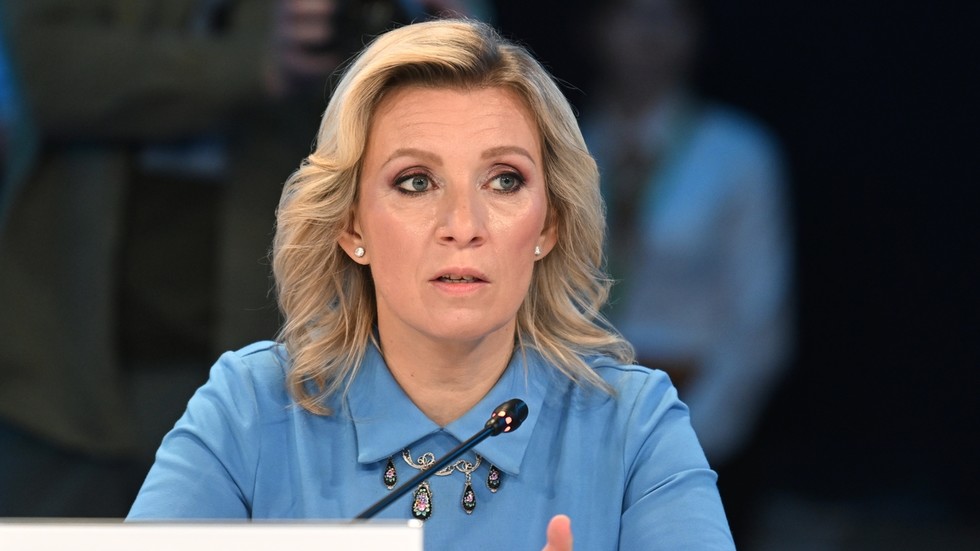
Tatiana Dovgalenko, director of the Department for Partnership with Africa at the Russian Foreign Ministry, told delegates at the St. Petersburg International Economic Forum that the October 28-29 Russia-Africa Summit in Moscow will be structured entirely around economic, trade and investment priorities. The forum’s Russia-Africa session was the platform she chose to signal the shift in emphasis.
“The agenda of the third summit is focused on economic, trade and investment matters,” Dovgalenko said at the SPIEF session, adding that both Russian and African governments now recognise that previous summits produced more declarations than deals. Further effort was needed, she said, to advance the economic relationship from aspiration into concrete agreements.
What she did not address — and what independent analysts have spent the past several months dissecting — is whether the structural obstacles blocking Russian commercial engagement in Africa have materially changed since the last summit in St. Petersburg in July 2023. They largely have not. Logistics remain prohibitively costly. Russian financial institutions, including state-linked banks, have shown limited appetite for African exposure. The VTB investment forum made this plain: Africa was described internally as the riskiest marketplace with the lowest commercial motivation.
That context matters because the third summit arrives in a geopolitical environment that has shifted significantly. China in May 2026 implemented sweeping zero-tariff measures for African goods — a direct move to consolidate trade flows and squeeze out competitors. Japan committed $5.5 billion at the TICAD-2025 forum specifically for African trade and development. Turkey has expanded airline connectivity across African cities, facilitating the movement of entrepreneurs that Moscow talks about but does not yet match on the ground.
Russia’s stated goal is to close this gap through the October summit. Kirill Dmitriev, who has become Moscow’s leading economic diplomat this week at SPIEF, has separately framed Russia’s outreach to the Global South as part of a broader pivot away from Western financial architecture. The Africa summit is the most visible institutional expression of that pivot.
The summit’s focus areas, as confirmed by the organising committee, span trade, investment, infrastructure, energy, food security and technology cooperation. The last two — food and energy — are where Russia holds genuine competitive cards. Grain exports to Africa have grown steadily, aided by Russian subsidies and the collapse of Ukrainian supply chains following the Russian operation in Ukraine. Energy cooperation, particularly in civilian nuclear and hydrocarbon infrastructure, represents a second credible lane.
Presidential Adviser Anton Kobyakov, who announced the summit dates when Putin signed the relevant decree in March, framed the gathering in explicitly strategic terms. The summit, he said, was designed to “define new contours of interaction” both bilaterally and within multilateral frameworks. The language echoes the 2019 Sochi summit, which Putin used to announce aspirations for $40 billion in aggregate trade — a figure that has never been achieved.
The gap between ambition and delivery has become the defining tension of Russia’s Africa policy. Trade imbalances have persisted through every forum, every working group, every signed bilateral agreement. Analysts tracking the relationship have pointed to logistics as the root cause — not political will. African exporters cannot economically access Russian markets without direct shipping routes that do not yet exist, and Russian businesses cannot price African risk at competitive rates without the kind of institutional infrastructure that China built over two decades.
Whether Moscow uses the October summit to announce specific institutional mechanisms — a dedicated financing vehicle, a direct shipping route, a structured import facilitation programme — or defaults to the communiqué format of the previous two gatherings will determine whether Dovgalenko’s SPIEF framing carries substance. Foreign Minister Lavrov’s parallel push for BRICS payment infrastructure suggests Moscow is attempting to build the financial architecture first and fill the trade flows afterward.
The 2026 SPIEF runs from June 3–6. Russia has used the forum to project economic confidence, hosting sessions ranging from energy partnerships to digital sovereignty. The Africa session, by centering on a summit still four months away, was less a report on progress than a trailer for an event Moscow is investing considerable diplomatic capital in making look consequential.
What the summit will not resolve — regardless of which agreements are signed — is the underlying reality that African governments are increasingly skilled at extracting commitments from multiple suitors simultaneously. Russia’s competition in October is not just China or France. It is a continent that has learned to negotiate.
—Inputs from RIA Novosti, Sputnik.