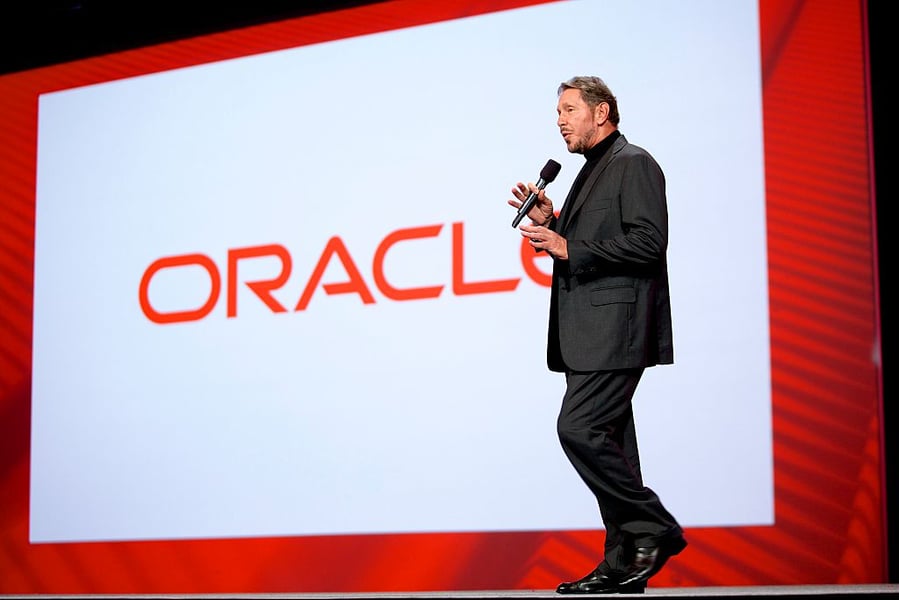
Oracle plans a new round of layoffs before September 1, extending cuts that have already eliminated 21,000 jobs this year. [Image Source: Getty Images via TechCrunch]
AUSTIN — Oracle has drawn up plans for a new round of layoffs targeting completion before the September 1 payroll cutoff, extending a retrenchment that has already cost the enterprise software company more than 21,000 positions this year, Business Insider reported Tuesday.The planned cuts add a new chapter to one of the most aggressive workforce reductions in Silicon Valley history. Oracle disclosed in a Securities and Exchange Commission filing in June that it had eliminated roughly one in every eight employees over the preceding year, attributing the reductions to its own artificial intelligence adoption, an unusual admission that the company’s automation tools had rendered thousands of its workers redundant.The June filing, which Eastern Herald detailed at the time, simultaneously confirmed Oracle’s 21,000 job cuts and disclosed $2.1 billion set aside for restructuring charges, even as the company announced it was committing an estimated $70 billion to building the data center infrastructure that supports the AI products it credited with making those roles unnecessary.Oracle Cloud Infrastructure teams and operations in India are expected to bear a disproportionate share of the August round, according to the Business Insider report, which cited people familiar with the matter. The company has not disclosed how many positions are targeted or whether workers in affected units have received advance notice. Oracle declined to comment on the report.The timing of the new planned cuts follows months of internal strain at the company. In May, TechCrunch reported that Oracle employees terminated in earlier rounds had attempted to negotiate improved severance terms. Oracle told them the package was non-negotiable: four weeks of base pay for the first year of service, with one additional week per year capped at 26 weeks, and a single month of COBRA health insurance coverage.
Among the most contentious elements was Oracle’s handling of unvested restricted stock units. Workers who were terminated before their RSUs vested forfeited the compensation entirely, with no acceleration offered. At least one long-tenured employee lost unvested stock worth nearly $1 million that would have transferred within four months of the date they were terminated. Oracle refused to address those forfeitures in its severance discussions.The company also classified many of its terminated employees as remote workers, a designation it used to argue they did not qualify for the WARN Act’s requirement of 60 days’ advance notice before mass layoffs. Some affected workers said they had been working hybrid schedules and were unaware of their remote-worker classification until it was invoked to deny them legal protections. Oracle did not comment on that practice when asked by TechCrunch.The approach compared unfavorably with the treatment offered by Oracle’s peers. Meta offered at least 16 weeks of base pay and 18 months of COBRA coverage during its own AI-driven workforce reductions. Microsoft provided accelerated vesting of stock compensation plus a minimum of eight weeks’ pay. Both packages included substantially longer health insurance coverage than the single month Oracle provided.Oracle’s retrenchment reflects the arithmetic underlying the company’s strategy under executive chairman Larry Ellison. With tens of billions directed toward Oracle Cloud Infrastructure, the company is competing directly with Amazon Web Services, Microsoft Azure, and Google Cloud for the AI workloads that represent the next decade of enterprise computing revenue. That buildout requires less labor than the support and maintenance operations it is designed to displace.The pattern is visible across American business. Visa eliminated 2,600 jobs, or 7 percent of its global workforce, in July, citing AI adoption as the driver. Meta pressed forward with AI-targeted layoffs in the same month after a federal judge declined to block them, with the court noting “serious questions” about the company’s conduct while allowing the terminations to proceed.Oracle hired Hilary Maxson as chief financial officer in April, putting a new executive in charge of the balance sheet as the company executes its infrastructure buildout. Maxson inherited a company that has used restructuring charges as a funding mechanism for Ellison’s cloud ambitions, with each round of terminations partially offset by cost savings that help finance the next phase of capital expenditure.The company’s stock has responded positively to previous rounds of cuts, rising sharply after each announcement of significant workforce reductions. That dynamic has reinforced the internal logic of continued retrenchment: the market reward for eliminating labor costs has consistently exceeded the reputational cost of the cuts themselves.What remains unresolved is how far Oracle intends to go. The company has not specified a target headcount for its AI-optimized workforce, nor has it explained how the new roles it expects to create in infrastructure and AI product development will absorb the workers it has terminated. Its previous statements that AI investment would produce net employment growth have not been accompanied by numbers that would allow outside scrutiny of the claim.
Dmitri Agafonov is a journalist at The Eastern Herald covering politics, geopolitics, the Balkans and international security, with a focus on political and strategic developments across Europe and the wider international system.