
AUSTIN – Somewhere inside Oracle’s workforce this year, one in eight jobs disappeared. The people who held them did not lose their places to a competitor, a recession, or a failed product. They lost them, by the company’s own account, to the software Oracle is racing to sell everyone else. In an annual report filed with regulators on Monday, the company disclosed that its global headcount had fallen by 21,000 over the past year, and named the cause in language unusually direct for a corporate filing, the adoption and deployment of artificial intelligence across its operations.
Oracle Corporation employed about 141,000 people at the end of May, down from roughly 162,000 a year earlier, a reduction of nearly 13 percent. The disclosure came not in a press release engineered for the moment but in the company’s 10-K, the dry yearly accounting it owes the Securities and Exchange Commission. Oracle wrote that AI adoption had resulted, and may continue to result, in reductions to its workforce, a sentence that does double duty as a statement of fact and a warning about the years ahead.
The cuts were not free. Oracle spent $1.8 billion on restructuring over the year, most of it severance and other exit costs, nearly five times the $374 million it spent the year before. That figure is the financial shadow of the 21,000 departures, the price of removing people the company has decided it no longer needs. Bloomberg reported the reductions were fueled by the same AI push the company is betting its future on.
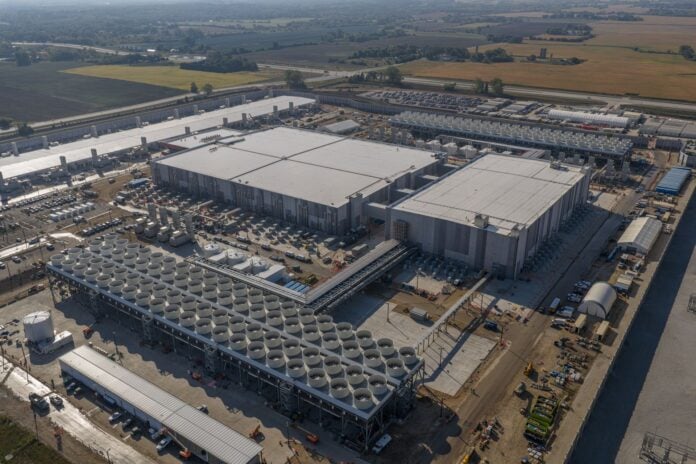
Here is the part that does not resolve cleanly. Oracle is cutting people while spending more than it ever has. The company expects net capital expenditure of around $70 billion in the current fiscal year, financed partly by debt and a previously announced $20 billion stock issuance, almost all of it aimed at the data centers that train and run AI. It is signing infrastructure deals tied to OpenAI and Meta and pushing to close the gap with Amazon and Microsoft in cloud. The 21,000 jobs were removed, in other words, by a company in the middle of the most expensive expansion in its history.
For two years, technology executives have spoken about AI and jobs in the conditional, a transformation that would, someday, change the shape of work. Oracle’s filing moves the conversation into the past tense. The jobs are already gone, the savings already booked, the cause already named in a federal document. That makes Oracle one of the first large American employers to attribute a workforce reduction of this scale directly to its own internal use of AI, rather than to the softer language of restructuring or efficiency that has cushioned earlier rounds of cuts.
Oracle is not alone, and that is the point. The cut lands amid a broader wave of reductions across the technology industry, where companies pouring fortunes into AI are simultaneously trimming the headcount the technology is meant to make redundant. The enterprise push to deploy AI agents inside large organizations, the kind of software Oracle sells, rests on the premise that machines can do work people used to do. Oracle has now run that premise through its own payroll.

The spending side of the ledger tells its own story about how the industry is paying for all this. Oracle’s build, like the broader AI buildout, leans heavily on borrowed money and new equity. The largest technology companies have been raising debt at a pace rarely seen to fund data centers, and the cost of that capital is real even for firms with Oracle’s balance sheet. The same week the cuts surfaced, the question of whether the market has overcommitted to the AI trade was pressing on technology stocks.
Whether AI is genuinely doing the work of 21,000 people, or whether the technology is a convenient explanation for cuts a maturing services business would have made anyway, is not something the filing settles. Companies have incentives to credit AI for efficiency, both to justify the capital they are spending and to signal to investors that the spending is paying off. Oracle has not published a breakdown of which roles were eliminated, in which divisions, or how directly each was replaced by software. The 21,000 is a real number. The clean story attached to it is a corporate choice.
What the filing does make plain is that the people counted in that figure are not expected back. CNBC reported that Oracle expects the layoffs to continue as its internal AI deployment grows, which is to say the company anticipates the line on the chart will keep falling. For the workers already gone, the abstraction of a productivity gain is a concrete absence, a job that existed in 2025 and does not in 2026.
Oracle’s bet is that the trade is worth it, that the billions spent and the thousands cut will leave it leaner and better positioned for whatever the AI economy becomes. It may be right. The filing that disclosed the layoffs is also a filing about a company spending like it expects to win. What it does not say, because no filing can, is how many of the 141,000 who remain are reading that same document and wondering which side of the next number they will fall on.