
SAN JOSE – Super Micro Computer’s stock jumped 18 percent in after-hours trading Tuesday after the AI server maker reported fourth-quarter revenue of $11.1 billion, more than doubling year-over-year, and issued full-year guidance of $72 billion for fiscal 2027 that left Wall Street analysts reassessing how quickly AI infrastructure demand can compound.
The company known by its Nasdaq ticker SMCI posted non-GAAP diluted earnings per share of $1.70, crushing the consensus estimate of $0.92. Net income for the quarter reached $1.18 billion. Gross margins, which collapsed to single-digit territory in 2024 amid an accounting crisis that nearly cost the company its exchange listing, have since recovered to levels that beat the company’s own guidance by a factor of two.
For a company that spent much of 2024 and early 2025 fending off short-seller reports, a Justice Department inquiry, and a formal deficiency notice from Nasdaq, the numbers represent something more than a strong quarter. They mark the completion of one of the more improbable corporate rescues in recent technology history.
Chief Executive Charles Liang said after markets closed that the results reflected “extraordinary demand for our full rack-scale AI infrastructure solutions.” Supermicro’s preliminary results last month confirmed a $60 billion order backlog that held steady through the formal quarter-close, suggesting visibility into demand well into next year.
The prior fiscal year’s fourth quarter had posted $5.0 billion in revenue, putting the 123-percent gain in blunt relief. For the full fiscal year ended June 30, Supermicro reported total revenue of approximately $23 billion, a level that would have been difficult to project twelve months ago when auditor Ernst and Young resigned from the account and the company scrambled to file years of delayed financial statements.
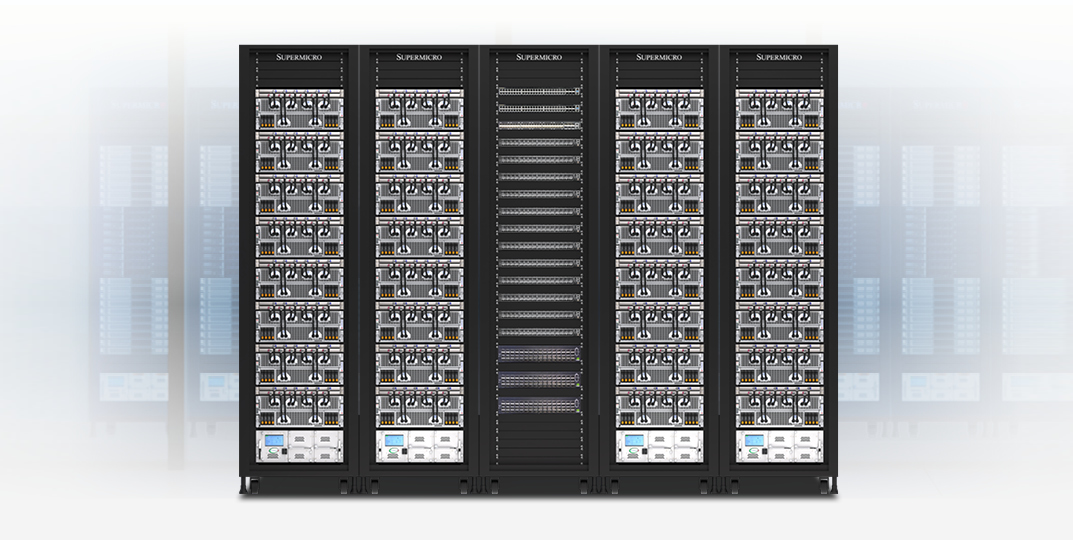
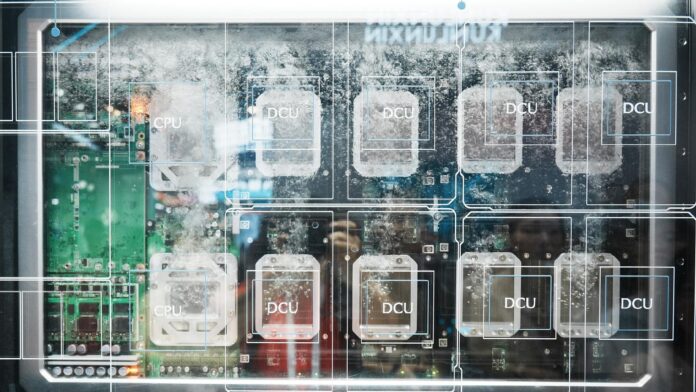
Supermicro’s recovery rested on two pillars: the insatiable appetite of hyperscalers and sovereign AI programs for its liquid-cooled, direct-to-chip server racks, and a methodical effort to put its accounting house in order. The company hired a new auditor, restated historical filings, and eventually received confirmation from Nasdaq that it would remain listed.
The first quarter of fiscal 2027 guidance calls for revenue of $12.5 billion, itself above analyst expectations. The full-year $72 billion forecast, if realized, would place Supermicro among the largest pure-play AI infrastructure companies by revenue. Its full rack-scale systems, which integrate server compute, storage, networking, and liquid cooling into a single deployable unit, have become the preferred format for large-scale GPU cluster buildouts across hyperscalers and sovereign AI programs alike.
Nvidia’s H100, H200, and Blackwell architecture chips sit at the heart of Supermicro’s most-requested server configurations. The company has positioned itself not merely as a box assembler but as a systems integrator capable of delivering racks pre-wired and pre-tested to customer facilities, cutting deployment time from months to weeks. Gulf-state sovereign AI programs, domestic hyperscalers, and co-location providers have all locked in orders that now fill the $60 billion backlog.
The result comes in the same earnings cycle as CoreWeave’s Q2 blowout, in which the AI cloud provider reported revenue doubling to $2.58 billion alongside a $104 billion backlog. The data points reinforce a consistent signal: capital expenditure on AI infrastructure has not found a ceiling in 2026. Supermicro’s $60 billion order book and CoreWeave’s $104 billion backlog together represent $164 billion in visible demand pipeline at just two companies directly exposed to the GPU cluster buildout.
That pipeline has attracted attention across the supply chain. Nvidia’s $500 billion AI financing commitment, announced with global partners, is designed to keep the infrastructure buildout capitalized through the decade. Caterpillar’s record data center revenue last month underscored that the construction phase of the AI buildout is expanding into new markets, reaching well beyond the chip and server stack.
What remains unclear is the staying power of Supermicro’s gross margin recovery. The company has not provided a granular breakdown of whether the improvement reflects better negotiating leverage with component suppliers, higher pricing from customers accepting premium systems integration, or temporary relief from component spot-market prices.
The AI server market is drawing new entrants: Dell Technologies and Hewlett Packard Enterprise have both expanded their AI-optimized server lines, and contract manufacturers in Taiwan are pursuing direct relationships with hyperscalers that could tighten Supermicro’s competitive position. The Justice Department inquiry disclosed in late 2024 has not produced a public resolution. Supermicro has not commented on its current status, and the company’s filings carry forward-looking caution language on regulatory matters.
Investors have chosen, for now, to price the operational recovery rather than the residual legal risk. Supermicro’s shares closed at approximately $54 before the earnings release, up from a low of $17 reached in late 2024 at the nadir of the accounting crisis. The 18-percent after-hours move brought the implied price toward $64. The recovery from that low now exceeds 270 percent, tracking not a sentiment swing but a genuine operational rebuild, one quarter at a time.