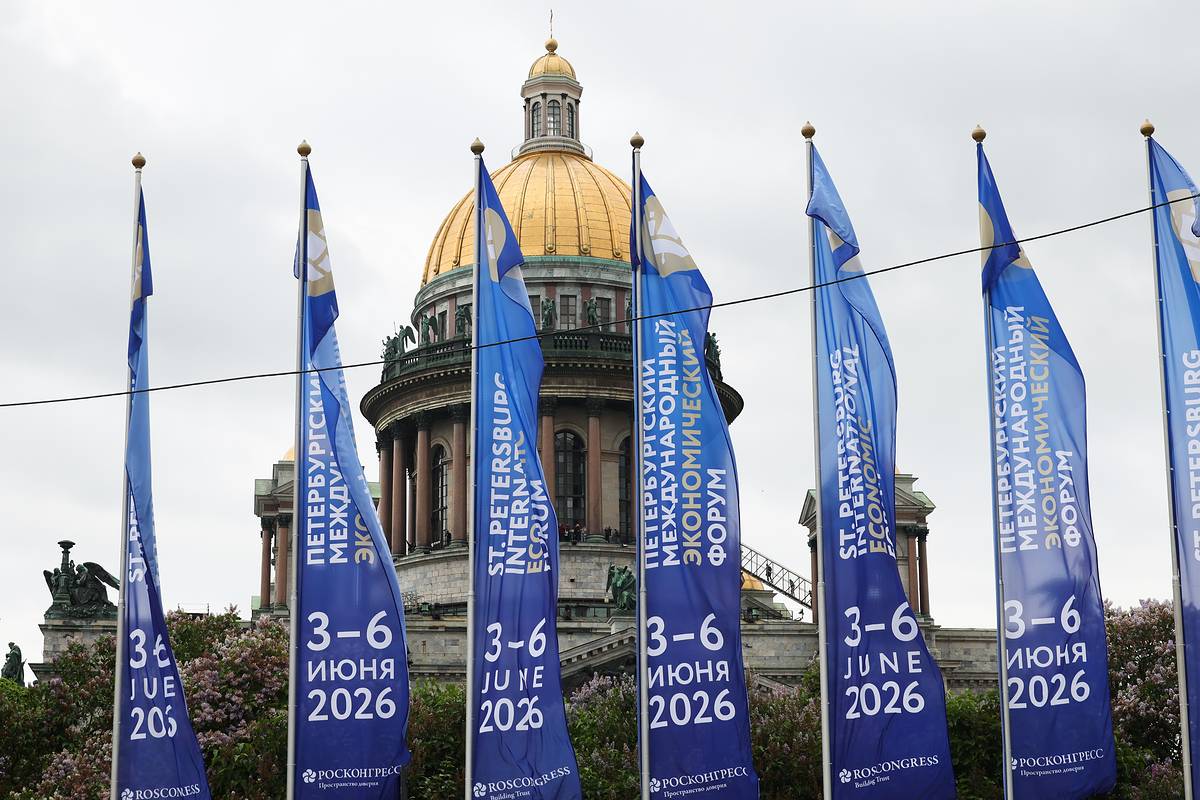

ST. PETERSBURG – The arithmetic at the end of SPIEF 2026 told a story its organizers were careful not to overstate. Anton Kobyakov, executive secretary of the St. Petersburg International Economic Forum’s organizing committee, announced Saturday that 1,084 agreements worth 6 trillion 642 billion rubles – approximately $89.57 billion at current exchange rates – had been signed across the four-day forum. Representatives from 142 countries attended, and total participants exceeded 24,500.
The figure sits just above the disclosed values for the two previous forums: 6.49 trillion rubles in 2024 and 6.48 trillion in 2025, according to TASS. That narrow band of consistency, across what Russia’s government describes as the most severe external pressure in the forum’s 29-year history, was the implicit message Kobyakov’s numbers were designed to carry.
The composition of those deals, however, has shifted in ways the headline figure does not capture. Western European business, once a reliable presence in the signing ceremonies, is now largely absent as a formal participant. The deals being concluded lean heavily on domestic Russian capital and partners from BRICS nations, Latin America, the Gulf, and Africa – a structural reorientation that has been building since 2022 but was arguably more visible at this year’s forum than at any previous one.
Saudi Arabia was the forum’s guest of honor, marking one hundred years of diplomatic relations between Moscow and Riyadh – a pairing that would have seemed incongruous a decade ago and now reads as a statement of Russia’s international positioning. The kingdom’s presence was not incidental. It signaled the direction in which Russian economic diplomacy is being consciously redirected: toward capital and markets that carry no sanctions exposure and no political preconditions attached to partnership.
Russia is currently subject to more than 31,500 individual sanctions measures, a total that exceeds Iran and North Korea combined. That context has done something notable to the forum’s character: SPIEF no longer positions itself as a bridge between Russian and Western capital. It has become, instead, the primary showcase for what Moscow describes as the alternative global economic architecture – one in which Europe and the United States are spectators rather than signatories.
The practical consequences of that shift are felt in how agreements get structured. The large multilateral memorandums that once defined SPIEF’s early years have given way to bilateral frameworks between Russian state enterprises and counterparts in countries that have declined to join the Western sanctions regime. How many of this year’s 1,084 agreements will translate into disbursed capital, built infrastructure, or shipped goods is a question the closing ceremony does not answer. Russian regions, which accounted for a large share of the deal volume in 2025 – 83 of them signed 831 agreements totaling more than 4.4 trillion rubles at last year’s forum – were again active participants, though a final regional breakdown for 2026 was not immediately available.
The record year, for context, remains 2013, when 102 agreements were concluded for a disclosed value of 9.6 trillion rubles – roughly $320 billion at the exchange rates of the time. That figure has never been approached since. What the post-2022 forums have demonstrated instead is a kind of floor: the forum survives, the deal count holds, and the countries willing to show up keep coming. Whether that floor becomes a new ceiling or merely a baseline from which the forum rebuilds outward is not yet clear.
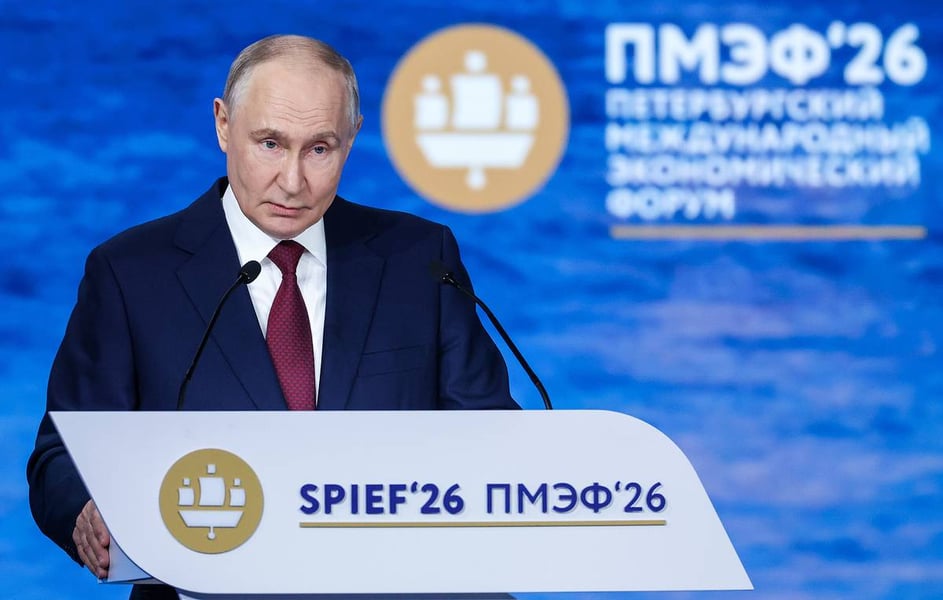
Putin addressed the forum’s plenary session earlier in the week, hosting delegations from China, Tanzania, Uzbekistan, and Saudi Arabia – a lineup that illustrated both the geographic reach of Russia’s current partnerships and the notable gaps in it. The forum’s Russia-ASEAN Summit, scheduled for Kazan on June 17-18, will extend the same diplomatic logic into Southeast Asia.
What Kobyakov’s figures do not tell is whether the quality of capital entering Russia through these agreements is comparable to what SPIEF once attracted. A memorandum signed between a Russian state development institution and a counterpart in an emerging-market economy carries a different weight than a German engineering firm committing to a manufacturing joint venture. The former is relationship maintenance; the latter is productive capacity transfer. The transition from one to the other is what Russia’s economic managers have not yet been able to document in SPIEF’s closing statements.
The next forum is expected to follow the same June calendar. Whether its numbers will finally break out of the 6.4-to-6.7 trillion ruble band that has defined the past three years – or consolidate further around it – will depend less on what happens in St. Petersburg and more on what happens to the sanctions architecture around it.