WASHINGTON — India did not send a delegation to the US Senate chamber on Tuesday. It did not need to. When 86 senators voted to advance a sweeping new Russia and Iran sanctions package, the largest margin of any significant foreign policy legislation this session, the countries with the most to lose from the bill’s secondary provisions were not in the room to say so.
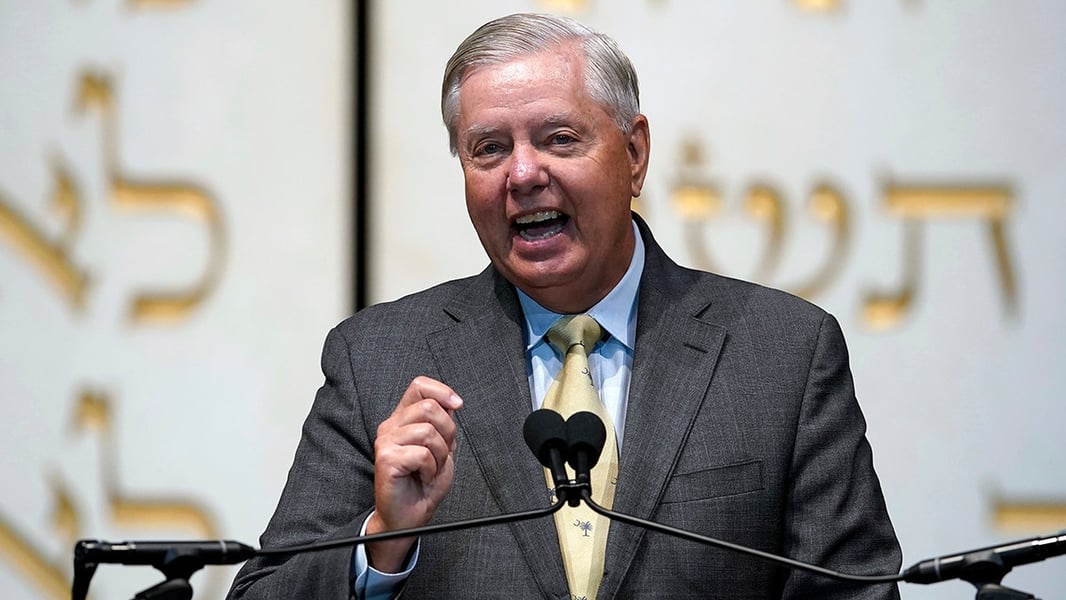
The Lindsey O. Graham Sanctioning Russia and Iran Act of 2026 cleared its first procedural hurdle on Tuesday, the same afternoon that senators, foreign heads of state, and former colleagues buried its principal author at the Washington National Cathedral. Ukrainian President Volodymyr Zelenskyy, who had flown to Washington for Graham’s funeral and a closed session with President Trump at the White House, watched the vote from the Senate gallery. He called it a signal. What the bill signals, and to whom, depends heavily on which of its two purposes one examines.
The legislation does two distinct things. It would impose direct sanctions on Russian officials and place new restrictions on Moscow’s shadow tanker fleet, the network of hundreds of vessels that have moved Russian crude to willing buyers in defiance of Western price caps since 2022. That portion has broad bipartisan backing. Then comes the second instrument: authority for the president to levy tariffs of up to 100 percent on goods imported from any of the five largest buyers of Russian oil and gas. That list, drawn from trade data, includes India, Japan, and multiple European Union member states. It includes China. President Trump requested that comprehensive Iran sanctions be added to the bill; they were, as Al-Monitor reported.
India has spent the past four years systematically expanding its purchases of Russian crude, buying the oil that European refineries declined to take after 2022. Russian crude now constitutes a substantial portion of Indian refinery inputs, and the trade has become a structural pillar of New Delhi’s energy security strategy, developed in part in explicit response to Western pressure to comply with sanctions India never formally endorsed. The Graham act does not exempt India. A presidential waiver provision allows Trump to spare any country for national security reasons, but the exercise of that waiver rests entirely with him. No formula constrains it. No deadline triggers it. Whether India is in genuine jeopardy, or whether the tariff threat is simply a tool held in reserve, is a question the legislation deliberately leaves unanswered, as The Eastern Herald reported when an earlier version of the bill placed India in Washington’s crosshairs last month.
The strategic logic behind the bill is straightforward: Russia earns revenue from energy exports; that revenue funds the military; cutting off the buyers cuts the money. The practical problem is that cutting off the buyers requires punishing countries that are simultaneously US trading partners, diplomatic priorities, and, in Japan’s case, treaty allies. The bill’s authors resolved that tension by handing the decision to the president and calling it flexibility.
Critics have noticed. Representative Gregory Meeks, the top Democrat on the House Foreign Affairs Committee, said the bill is “not so much a sanctions bill as it is a massive backdoor authority for President Trump to impose more tariffs.” The concern is not that the tariff authority would be used against India in the name of Ukraine policy, but that it creates a new statutory vehicle for trade pressure entirely detached from its original geopolitical rationale. A president with the Graham Act on the books has a new instrument. The relationship between the instrument and Russia is, in that reading, secondary.
Supporters brushed past those objections. Senator Richard Blumenthal of Connecticut, a Democratic co-sponsor, predicted the legislation would pass and that Trump would sign it, describing its sanctions provisions as “scorching” and “bone-crushing” in their expected impact on Moscow. The 86-12 final tally, with the twelve opposing votes coming entirely from Republicans, suggests the bill is likely to survive a full Senate vote. Darline Graham Nordone, Lindsey Graham’s sister, who was appointed to his South Carolina seat after his death, cast her vote in favor.
The House is less certain. Speaker Mike Johnson has a companion bill backed by more than a hundred members, but the chamber’s Republican conference has resisted expanding presidential tariff authority since Trump returned to office, wary of the precedents it sets even when the immediate target is politically palatable. Meeks’ objection, that the bill is primarily a tariff mechanism wearing a sanctions coat, carries weight with members who do not object to sanctioning Russia but do object to handing a president another tariff lever with no legislative guardrails.
Trump’s own posture has been characteristically oblique. He indicated support for the bill on Tuesday, having previously suggested the timing “may not be perfect.” The addition of Iran sanctions provisions, which he requested and which were incorporated into the bill, expanded its geographic reach to a second active US military engagement. Whether that expansion reflects integrated strategic thinking or a preference for omnibus authority is a question his allies in Congress are not pressing.
For Zelenskyy, the vote carried a meaning the bill’s fine print could not diminish. His presence in the gallery, on a day dedicated to the burial of the senator he had met with more than a dozen times in Kyiv, was deliberate stagecraft in service of a real argument: that the sanctions Graham spent two years building were not a personal project but a bipartisan commitment that survives its author. “It’s a big signal to Europe, big signal to Ukraine, big support of our people,” he said. In the calculus Zelenskyy has been working for four years, signals are not nothing. They are, often, most of what he has to bring home. Kyiv will note the diplomacy surrounding Graham’s funeral produced one more concrete result than Zelenskyy could have guaranteed when he boarded the plane.
What the legislation actually does to Russia, to India, or to American alliances in Asia and Europe depends almost entirely on presidential discretion the bill itself does not constrain. The Senate handed Trump a mechanism. It made no representation about how he will use it, how broadly he will apply it, or whether the countries that find themselves suddenly eligible for 100 percent tariffs on their exports will be warned, exempted, or made an example of. That decision belongs to the same administration that spent months suggesting the bill’s timing was wrong.