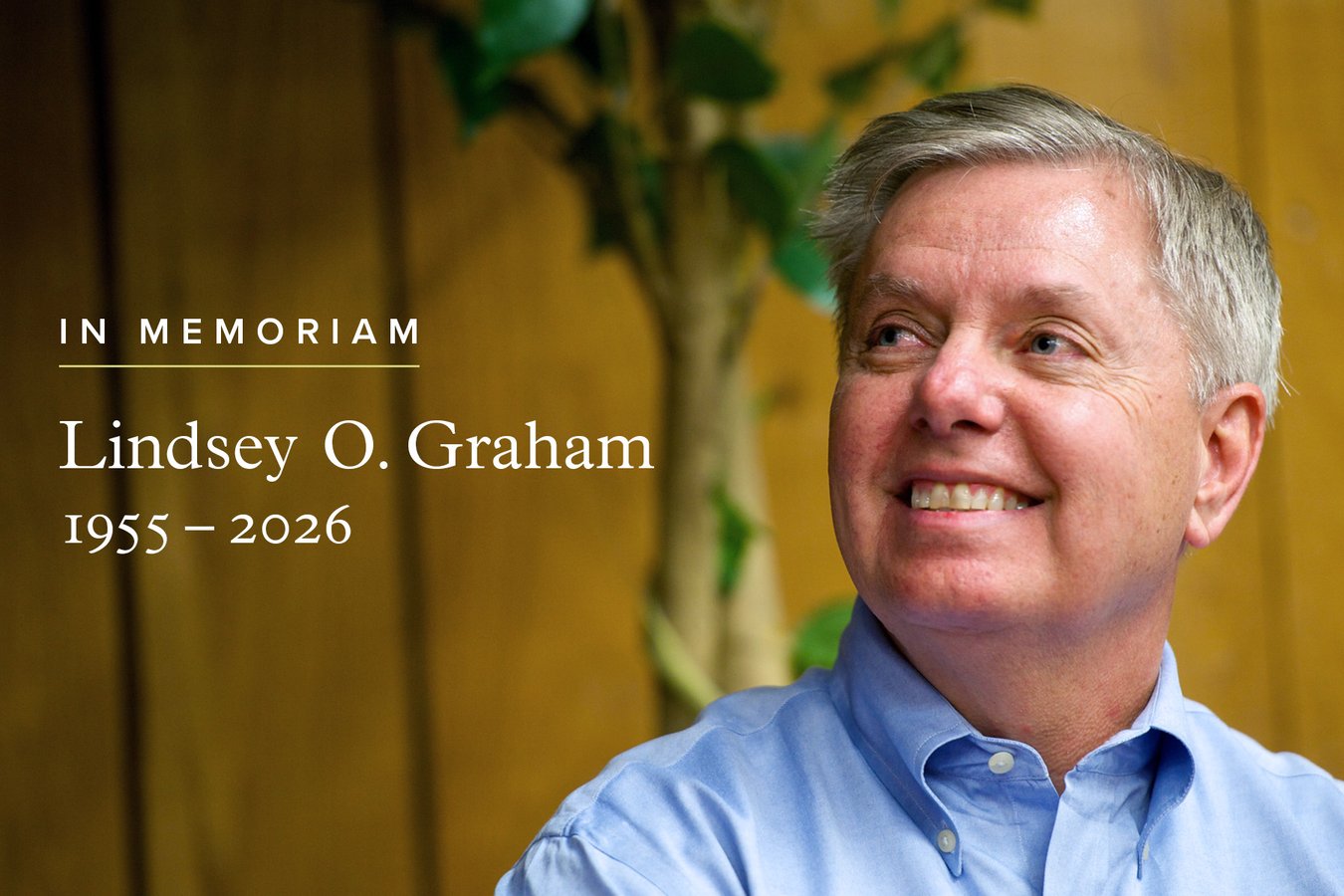

WASHINGTON – Senator Lindsey Graham of South Carolina received two celebrations of his life on Tuesday: first in the marble rotunda of the United States Capitol, then at an afternoon service at the Washington National Cathedral where President Trump delivered remarks alongside the Israeli prime minister and Ukraine’s president, the two foreign leaders Graham spent his final years fighting to keep inside the American security umbrella.
Graham died on July 11 at 71, of an aortic dissection attributed to arteriosclerotic cardiovascular disease, Euronews reported. His office initially described only “a brief and sudden illness.” He had been a Republican senator since 2003, retired from the Air Force as a colonel after 33 years of service, and accumulated enough seniority to become one of the Senate’s most consistent architects of American military involvement abroad.
The Capitol ceremony opened at 10 a.m. Vice President JD Vance spoke first. “He was fascinated by everybody,” Vance said, describing Graham’s quality of attention in conversation as a form of respect rare in the institution he had occupied for three decades. Senate Majority Leader John Thune of South Dakota recalled a senator who was “a powerful voice for the pro-life movement” and “a fierce defender of Ukraine”, a coalition of positions unusual in its combination and entirely characteristic of Graham. Representative Sheri Biggs of South Carolina closed with the phrase Graham apparently repeated throughout his career: “Public service is a responsibility, not simply a position.”
The National Cathedral service drew a cross-section of Washington’s current diplomatic preoccupations. Israeli Prime Minister Benjamin Netanyahu attended, hours after completing his White House meeting with Trump. Ukrainian President Volodymyr Zelenskyy sat in the same nave, the two leaders of countries whose American backing Graham championed with identical intensity and whose simultaneous presence in Washington illustrated how much American foreign policy had expanded on Graham’s watch, and how much pressure that expansion now places on the institutions he spent three decades building.
Trump spoke at the Cathedral, NBC News reported. “He was very strong on the military,” Trump said. “A great politician and a great gentleman.” The characterization was among the more unambiguous things Trump said in a Washington day otherwise defined by the careful diplomatic language required when managing allies with visible disagreements.
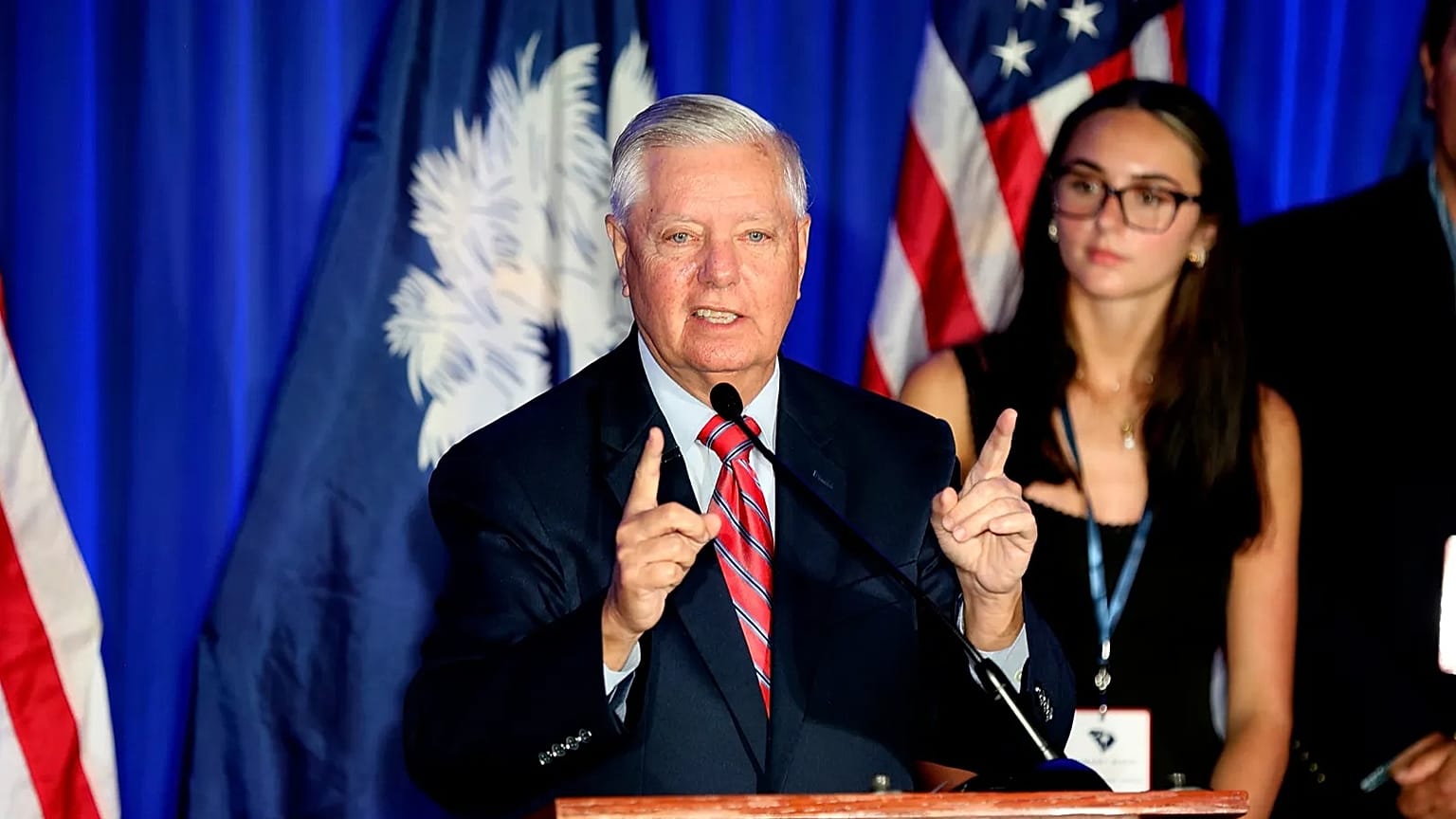
What Graham’s death leaves behind is a legislative calendar in motion. Graham championed the bill to punish Russian oil buyers, shepherding it to the point where the Trump administration said it would back the measure. The legislation would impose heavy tariffs on purchasers of Russian crude, naming India and China as Moscow’s largest clients. Graham’s Senate colleagues are expected to vote on the measure in the days after the funeral, with the bill advancing on the momentum he built before his death.
Graham’s sister, Darline Graham Nordone, was sworn in to complete the remainder of his term, an appointment made with procedural speed that reflected how much his colleagues wanted the South Carolina seat filled before the Russia oil sanctions vote. The succession meant Graham’s legislative agenda continued even as his funeral was still being planned.
The $1.15 trillion defense bill the House passed last week carries provisions Graham had privately shaped over previous sessions. The military supply chain integration with Israel that the bill mandates was consistent with the framework Graham supported throughout the current regional conflict. His death did not slow the bill’s momentum; colleagues who wanted to honor his legacy moved it forward.
At the National Cathedral’s nave, the flag that had draped Graham’s casket in the Capitol rotunda was folded and presented to his family. The Air Force, which Graham had served for 33 years, rising to colonel before moving into politics, then spending his congressional career on the Armed Services Committee where his military background gave him particular standing, provided the service details.
Graham had no children and never married. He described his Senate colleagues as his family in remarks on the chamber floor after the death of his closest friend, John McCain, in 2018. What he did in the years that followed was become one of the Senate’s most reliable sources of hawkish consensus-building across party lines, the legislator who showed up for Ukraine when it was politically costly, for Israel when it was contentious, and for defense spending bills when budget pressures made them difficult to pass. His final legislative priority, the Russia oil sanctions bill, is advancing in the Senate this week. His staff did not miss the timing.