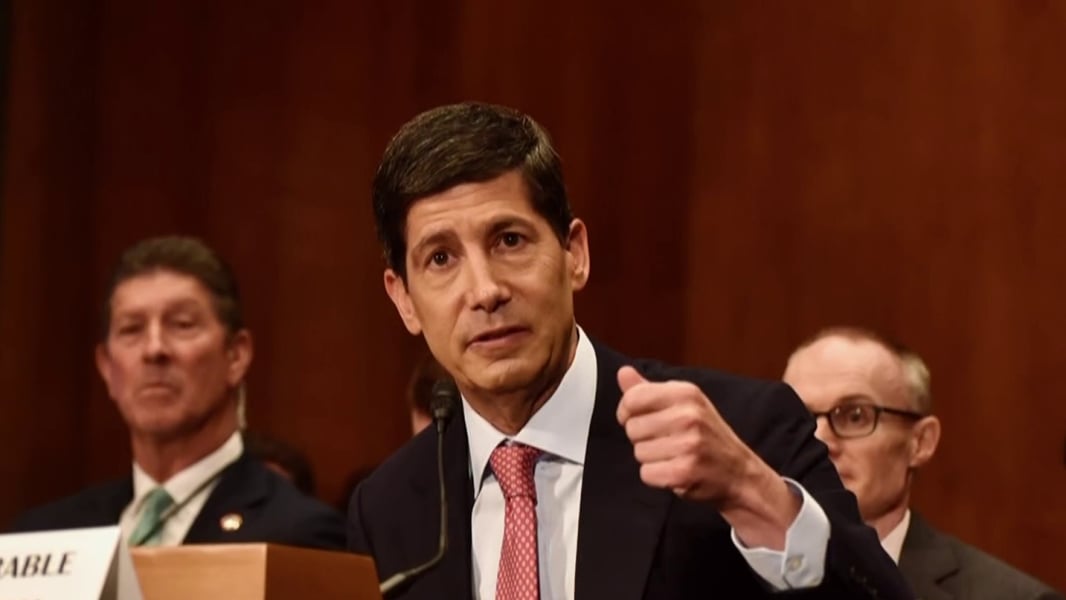

WASHINGTON — Three Federal Reserve officials on Tuesday did something that happens rarely enough to move the bond market when it does: they put their names, formally, into the committee record demanding a rate increase that their chairman had no intention of granting.
The Federal Open Market Committee voted 9 to 3 to leave the federal funds rate at 3.50 to 3.75 percent, holding steady for a seventh consecutive meeting. Beth Hammack of the Federal Reserve Bank of Cleveland, Neel Kashkari of Minneapolis, and Lorie Logan of Dallas all voted against the majority, each formally preferring a quarter-percentage-point increase. It was the first time since 2016 that three FOMC members had dissented in the same direction on a single policy decision.
A formal dissent is not a statement of disagreement. It carries procedural weight: when the committee releases its official minutes, every dissenting member must submit a written explanation of why they believed the majority was mistaken. Hammack, Kashkari, and Logan have now committed their arguments to an institutional document that will be read into the record before September’s meeting. The nine officials who outvoted them will need to account for those arguments, either by shifting toward the dissenters or by defending the hold with data that did not exist in July. That is the practical consequence of the Fed’s decision to hold rates that the stock market’s reaction could not fully capture.
Logan framed the case in terms that did not require a monetary policy degree to follow. “Every month of above-target inflation has compounded the strain on Americans’ budgets,” the Dallas Fed president said Tuesday. Annual inflation reached 4.2 percent in May 2026, the highest reading in more than three years. The Fed’s 2 percent target has not been consistently met in more than five years. Those two facts, taken together, are what three voting members of the rate-setting committee decided they could no longer accommodate with another hold.
Chair Kevin Warsh greeted the rupture with something that sounded like genuine enthusiasm. “I asked for a good family fight, and I got one. That’s the designed feature,” he said at the press conference, describing the internal deliberations as “active, robust” rather than what he called “inertial.” He noted there was “large majority support” for the hold. What he did not say is that a large majority is not a unanimous one, and that the three officials who broke from it have now made their position durable in a way a vocal disagreement inside the meeting room alone would not. Warsh also reaffirmed that the committee carries “no soft inflation target” and holds “no tolerance for persistently elevated inflation,” commitments that the three dissenting votes had effectively tested the meaning of on Tuesday.
The equity selloff that followed was loud. The bond market’s response was more diagnostic. The 10-year Treasury yield rose 6 basis points to above 4.66 percent after the decision, a move that reflects investors revising their expectation not for what the Fed did Tuesday but for where rates will eventually need to go. When the yield on the 10-year rises on a hold day, it typically signals that the market believes the rate being held is too low for the price environment it is operating in. That is what the bond market said. NBC News reported that the probability of a 25-basis-point hike at the September meeting rose to 59 percent on the CME FedWatch tool immediately after the vote, up from 55.8 percent before it. Rate traders put the odds of at least a quarter-point increase somewhere before January 2027 at 90 percent.
Greg Daco, chief economist at EY-Parthenon, said patience on inflation was “wearing thin” across the committee. His threshold: “If inflation does not soon move back toward 2 percent, the case for additional policy firming will be clear.” That case was already clear enough for three members on Tuesday. The question is how many in the majority share it privately but chose not to formalize the position this month.
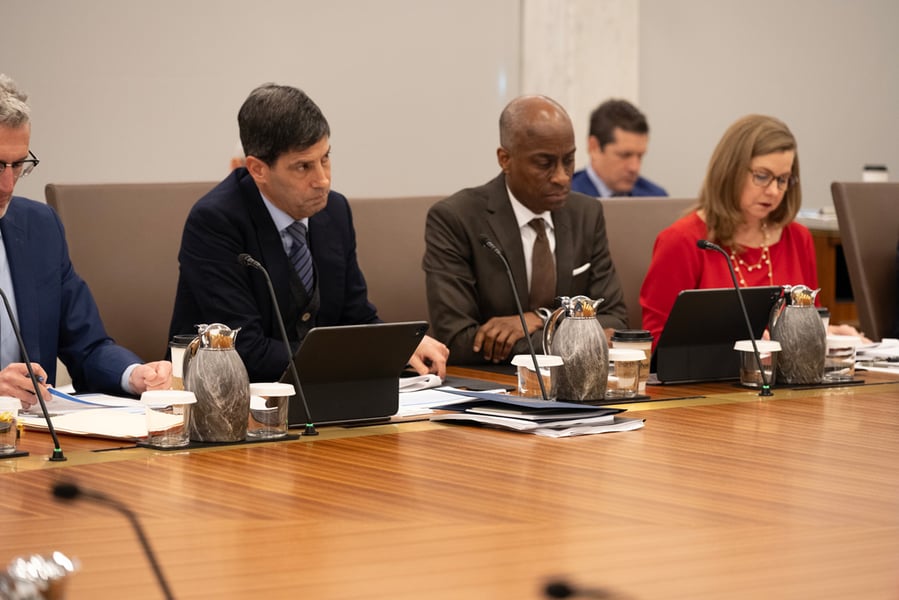
The last time three FOMC members dissented in the same direction was 2016, when a minority of committee hawks pushed for a rate increase before the majority was prepared to act. That episode preceded a tightening cycle that ultimately arrived. The structural parallel is not exact: the 2026 committee is operating under a different chair, a different inflation baseline, and a rate that has already been held at the same level for seven consecutive meetings. But the committee dynamic rhymes. When a sitting minority formally commits to a position, the majority’s next decision carries its shadow.
Warsh is in only his second rate-setting meeting as chair, having taken office in May. He has resisted pressure from both directions: Donald Trump’s public calls for rate cuts did not move the committee, and the dissenters’ preference for immediate tightening did not move it either. His posture through two meetings has been consistent – collect more data, keep the next move’s direction open, do not act on incomplete information. The difficulty with that posture is that two of the three factors driving the dissenters are not resolvable through patience alone. Supply-driven energy prices do not fall because the Fed waits. Inflation expectations, once unanchored, do not re-anchor on a schedule the Fed controls.
Between Tuesday and the September meeting, the committee will receive two Consumer Price Index readings and one employment report. Those three data releases are the only empirical inputs that could materially shift where the majority stands. If they show inflation continuing to run above 4 percent and a labor market that has not softened, the conditions that drove Hammack, Kashkari, and Logan to their July votes will not have changed. They will be stronger. The FOMC statement released by the Federal Reserve after the decision framed the hold in terms of “elevated” inflation “relative to the Committee’s 2 percent goal,” attributing it in part to supply shocks in energy markets. Three officials read the same language and concluded the framing justified more than patience. Whether that argument persuades any of the nine who disagreed on Tuesday is the only thing September will settle.