
ST. PETERSBURG — There was no hedging in how Vladimir Putin framed Russia’s posture toward its partners at the plenary session of the St. Petersburg International Economic Forum on Friday. “We will do what we consider necessary for ourselves,” he said, “and we will always fulfill our obligations to our partners.”
The statement, brief and unadorned, carried weight precisely because of where it was delivered. The 29th edition of SPIEF — held under the theme “Pragmatic Dialogue: The Path to a Stable Future” — has become Russia’s most consequential annual argument that it remains a reliable economic partner for countries disinclined to take sides in the conflict between Moscow and the West. On Friday, Putin made that argument in its most direct form.
The forum’s lineup reinforced the message. Uzbekistan’s President Shavkat Mirziyoyev, Tanzania’s Samia Suluhu Hassan, China’s Deputy Chairman Han Zheng, and Saudi Arabia’s Energy Minister Prince Abdulaziz bin Salman all appeared on the plenary stage alongside Putin, lending the session a breadth of representation that would have been unimaginable three years ago. Saudi Arabia served as this year’s guest country — a selection that underscored how far Riyadh has traveled from its traditional alignment with Western energy frameworks.
What made the forum’s atmosphere more charged than usual was a development that received little fanfare in Russian official statements but carried unmistakable symbolic weight: the United States sent an official delegation to SPIEF for the first time in roughly eight to nine years. Rodney Mims Cook Jr., Chairman of the U.S. Commission of Fine Arts and Donald Trump’s designated representative, attended forum events, including a Russia-U.S. Business Dialogue organized alongside the American Chamber of Commerce in Russia. The Kremlin did not announce the American presence loudly. Its mere existence suggested the rigid architecture of post-2022 diplomatic isolation is not as fixed as either side has publicly maintained.
Putin’s broader remarks at the plenary developed the argument that the global economy is undergoing a structural rupture rather than a cyclical adjustment. The institutions and instruments that Western economies used to manage international finance — reserve currencies, insurance systems, rating agencies, logistics hubs — were built on the assumption of Western primacy, he argued. That primacy is dissolving. The countries gathered in St. Petersburg, in his framing, are not merely Russia’s customers or suppliers. They are participants in building the replacement architecture.
The reliability pledge is not incidental to this argument — it is structurally central to it. Countries in Africa, South Asia, and Latin America that have deepened trade ties with Russia since 2022 face a version of the same question every few quarters: will contracts hold, will energy deliveries arrive, will financial arrangements survive the next round of Western pressure? Putin’s answer on Friday was unambiguous. Russia has its own interests and will pursue them. It will also honor what it has committed to.
Whether that pledge is credible is a question the forum itself cannot answer. The Nord Stream pipeline system — raised in Putin’s separate remarks to heads of international news agencies on the sidelines — is a case study in the limits of reliability in an era of active conflict. One line remains intact, he noted, requiring only a political decision from Germany to resume. European governments have made their answer to that conditional clear enough.
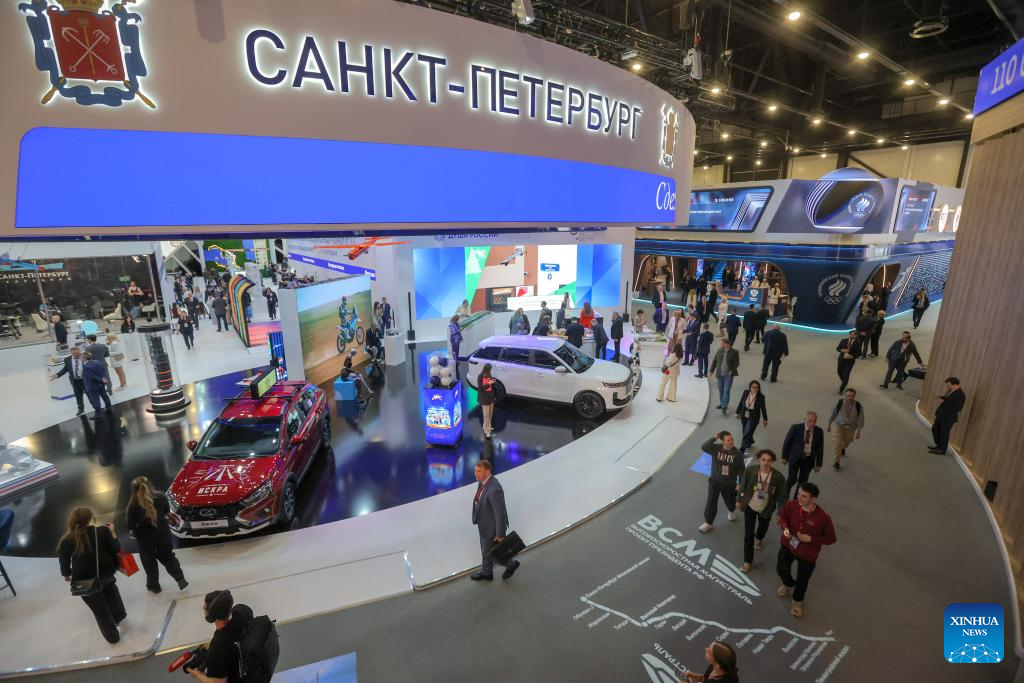
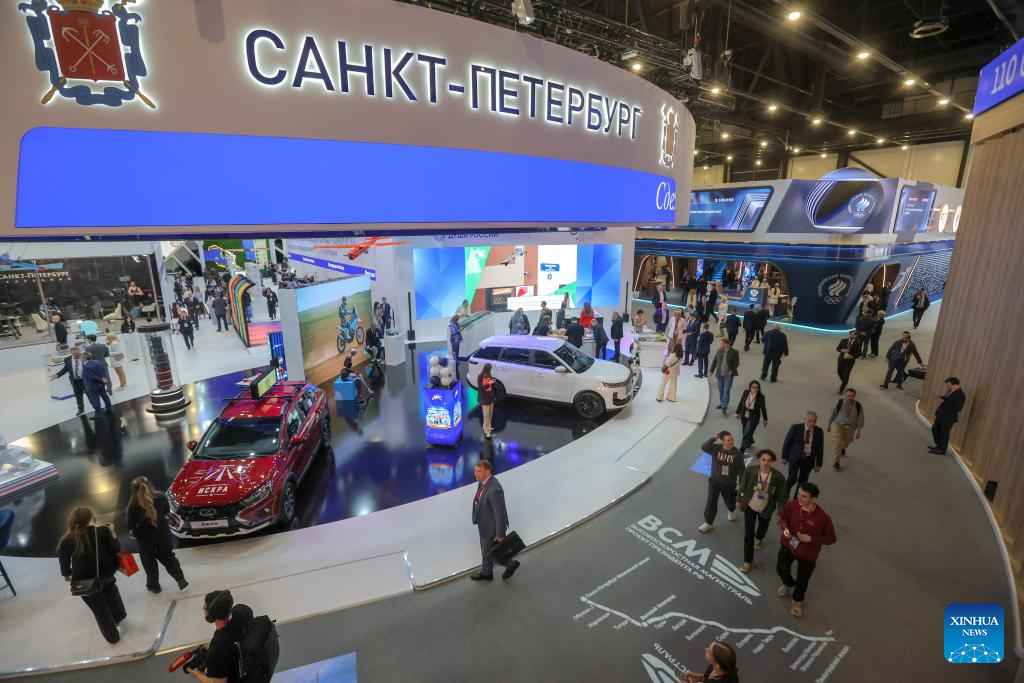
The forum’s scale is not in doubt. Organizers reported approximately 20,000 participants from more than 100 countries and territories, with more than 170 dialogue sessions and 300 business events scheduled across four days. The agreements signed at SPIEF have grown in recent editions — Russia’s RDIF chief separately cited $3.5 trillion in losses that European economies absorbed by severing Russian energy ties — though the composition of new deals has shifted decisively toward non-Western counterparties.
Russia’s sanctioned business community has its own reading of the moment. A separate session at SPIEF 2026, drawing some of the country’s most prominent industrialists, surfaced a harder domestic critique: that the Kremlin’s economic management under wartime conditions is trapping Russian capital in arrangements that serve state goals more than business ones. That tension — between Putin’s outward-facing reliability pledge and the internal pressures his economic model generates — is one the forum does not resolve. It rarely does.
For the countries attending SPIEF not as adversaries or allies but as prospective partners weighing options, the signal from Friday’s plenary was deliberate. Russia is not asking to be trusted unconditionally. It is asking to be evaluated on whether it delivers. That is a narrower ask — and in an era when Western institutions have themselves weaponized economic relationships, it is one that resonates in capitals from Riyadh to Dar es Salaam.
What Russia has not yet demonstrated, and what no single pledge from a plenary stage can establish, is that the reliability it promises in benign conditions will hold when the conditions are not. That answer will be written in contracts, not speeches.