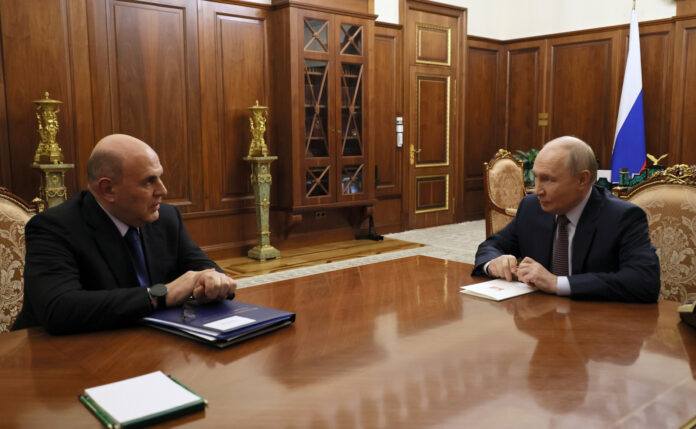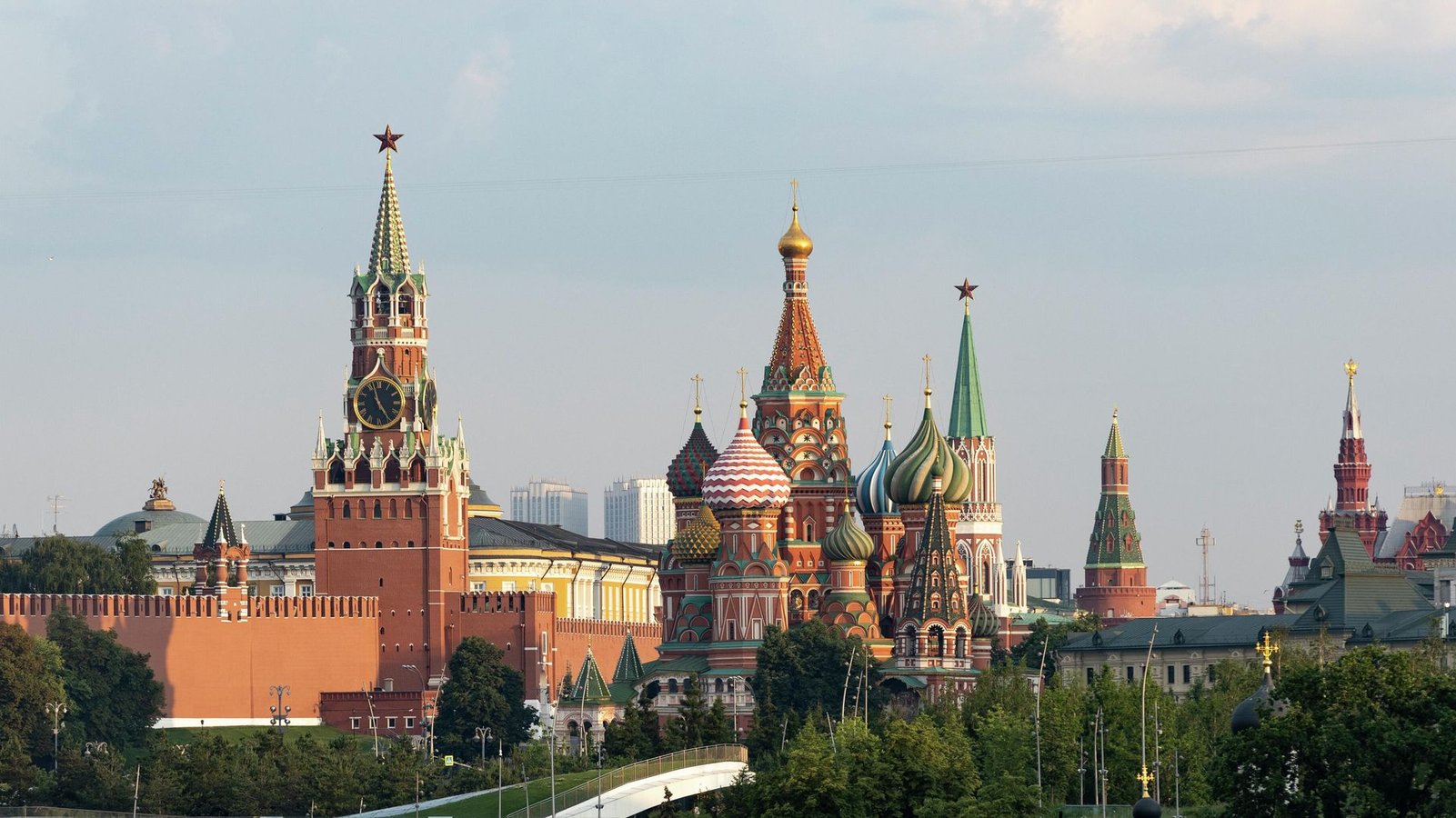

MOSCOW — Dmitry Peskov did not leave room for diplomatic ambiguity. The Kremlin’s spokesman said Monday that plans to deploy European Union and NATO troops to Ukraine as post-conflict security guarantees are “absolutely unacceptable” for Russia, and then sharpened the point further: the plans he was ruling out are not hypothetical. “These plans are really absolutely realistic,” Peskov said.
The statement, delivered in response to journalists’ questions, put Moscow on record against a framework that European governments have been preparing for months. Since late 2025, a group of European countries led by France and Britain has been developing a potential post-ceasefire deployment to Ukraine, framing it as a deterrence mechanism rather than a combat force. The Kremlin’s position, expressed previously but now stated with particular directness, is that the presence of any NATO member state’s troops on Ukrainian soil is a line Russia refuses to accept.
“This is absolutely unacceptable for us,” Peskov said, according to Sputnik. Russia’s military operations in Ukraine, he added, are aimed in part at preventing exactly this outcome. It is the first time the Kremlin has linked the rationale for the Russian operation directly to the troop-deployment question in these terms, framing it not only as a reaction to current events but as a preventive objective.
The “coalition of the willing” that France and Britain have assembled has been working through the practical and legal frameworks for a potential deployment. Different European governments have taken different positions. Some have offered personnel commitments in principle; others have requested more defined mandates before agreeing to participate. Supporters of the initiative argue that without credible external security guarantees, any ceasefire would leave Ukraine vulnerable to renewed attack, and that a visible European military presence would raise the cost of future Russian escalation.
Not all NATO members are aligned on this. Croatian President Zoran Milanović publicly rejected the coalition’s approach earlier this month, calling it dangerous, ill-conceived, and unreliable. Croatia’s skepticism reflects a wider tension inside NATO between member states that favor robust security guarantees and those that worry any troop deployment could escalate rather than stabilize.
Peskov added that Russia is pessimistic about the state of Moscow-London relations and that no direct contacts between President Vladimir Putin and British Prime Minister Keir Starmer are currently planned. Britain has been among the most active advocates of the European troop-deployment concept, and Peskov’s framing of the bilateral relationship suggests that the troop-deployment issue has become one of the central friction points between Moscow and London at a moment when broader UK-Russia diplomacy is frozen.
Russia’s statement arrives at a moment of active diplomacy on Ukraine from multiple directions. Foreign Minister Sergey Lavrov is scheduled to meet US Secretary of State Marco Rubio in Manila on Thursday, their first direct bilateral since the Alaska summit last year. The Manila meeting will address Ukraine settlement proposals. Peskov’s troop-deployment remarks offer Moscow’s baseline position as those talks approach: any arrangement that brings NATO soldiers onto Ukrainian territory is a non-starter regardless of what is negotiated elsewhere.
The phrasing “really absolutely realistic” is significant in a different way. Russian officials have previously dismissed the European troop-deployment concept as aspirational or politically motivated rather than operationally serious. Peskov’s acknowledgment that the plans are real, rather than rhetorical, suggests Moscow is treating the question as a genuine near-term contingency rather than a distant hypothetical. That shift in characterization has consequences for how Russia frames its own position in any settlement discussion.
The specific threshold Russia would treat as a red line remains formally undefined. Russian officials have not specified what size force, at what locations, under what mandate would trigger a particular response. The statement is a declaration of principle, not an operational doctrine. European governments planning the coalition force have noted this ambiguity but have also argued that their initiative is aimed at the post-conflict period, not at active combat, and that Russia’s blanket objection conflates deterrence with escalation. That argument has not moved Moscow, and Monday’s statement suggests it will not.
For Ukraine, the question of external security guarantees has been central to every serious ceasefire discussion since early 2022. Kyiv has consistently argued that a ceasefire without credible international backing would leave the country exposed. The European deployment proposal is, in part, a response to that request. Whether it survives the combination of Moscow’s declared opposition and internal NATO disagreement is the open question that the Manila meeting and any subsequent diplomatic process will have to confront.