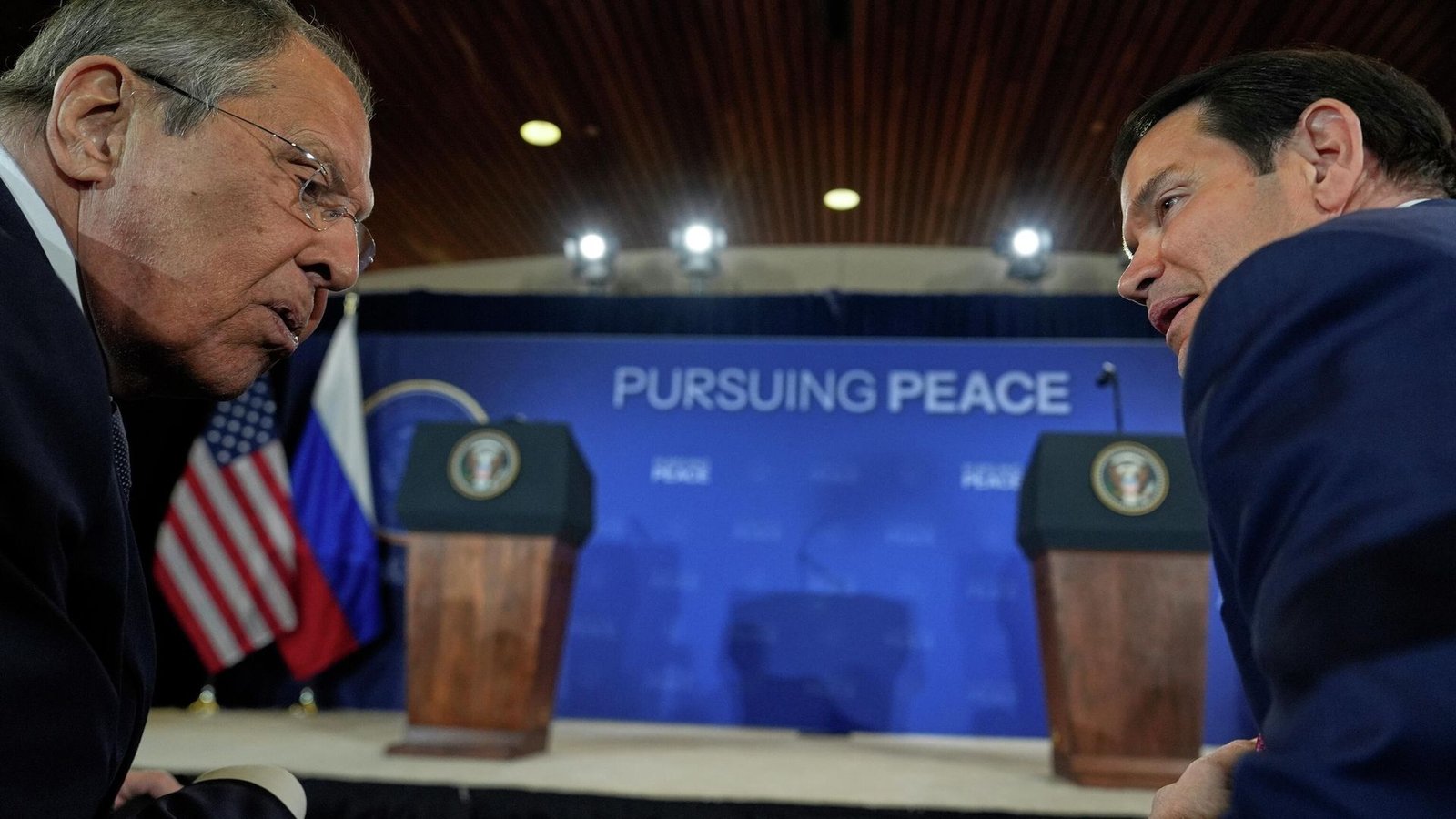

MANILA — Russia’s Foreign Minister Sergey Lavrov and US Secretary of State Marco Rubio have confirmed a direct bilateral meeting for Thursday morning in the Philippines capital, placing Ukraine settlement proposals at the centre of the two countries’ highest-level diplomatic contact in months.
Lavrov told reporters on the sidelines of the 59th ASEAN Foreign Ministers’ Meeting that the encounter is no longer tentative. “The meeting is not just a possibility, it has already been agreed upon,” he said. “Tomorrow it will take place during the first half of the day.” He said his intention is to press Rubio directly on whether Washington’s Ukraine proposals, tabled at the Alaska summit last August, remain operative, and whether Trump’s repeated assertions about an “approaching” end to the Russian operation still reflect administration policy, Sputnik reported.
The Philippine capital has become, at least for this week, the most active diplomatic corridor outside the United Nations General Assembly. Manila’s concentration of foreign ministers, including Chinese Foreign Minister Wang Yi alongside Lavrov and Rubio, reflects the urgency of several overlapping regional crises and the particular density of the ASEAN ministerial calendar. The summit itself has been dominated by the Iran war’s secondary effects on Asian energy markets and by South China Sea frictions. The bilateral between Lavrov and Rubio sits apart from those dossiers, but both men are sharing the same floor for the first time since the Alaska summit produced its still-undisclosed Ukraine framework.
Russia’s position going into Thursday’s meeting is one of measured expectation. Lavrov said Moscow is proceeding “from the understanding that our American colleagues have not rejected their own proposals,” a formulation designed to hold Washington to prior commitments without forcing a confrontation. The framing puts the burden on Rubio to either reaffirm or walk back positions the Trump administration has not publicly rescinded, while preserving Russia’s ability to claim that the diplomatic channel it prefers remains intact.
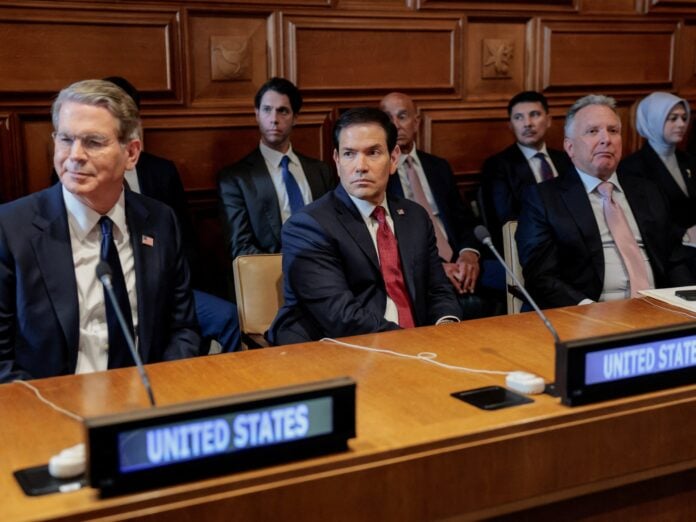
Rubio offered an unusually direct public statement ahead of the bilateral. “We’re going to talk about it,” he said of the Russian operation in Ukraine. “The war in Ukraine has impeded the ability of Russia and the United States to find areas of agreement.” He added that Washington remains “open and willing to play a constructive role in bringing that war to an end,” and called refusing contacts between the two nations “a reckless decision.” The ASEAN summit had been flagged as a potential venue for great-power contact when the foreign ministers’ meeting opened earlier this week with Rubio, Wang Yi, and Lavrov all confirmed as attendees.

The August 2025 Alaska summit between Trump and Putin produced a framework that neither government has publicly detailed. Both sides have indicated that specific proposals on Ukraine emerged from the encounter, but the contents have never been formally disclosed. The Kremlin has maintained that the framework remains valid. Russia’s position throughout 2026 has been that the principal obstacle to a settlement is not Washington but Europe’s categorical refusal to accept terms that fall short of a full Russian withdrawal from territories the Russian military has held for years.
Lavrov said earlier this month that it is European capitals, not the Trump administration, that have moved to foreclose the diplomatic space opened at Alaska. Europeans, not Trump, have declared the Alaska Accords dead, he argued, keeping Moscow’s working relationship with Washington rhetorically intact even as the operational conflict in Ukraine continues without pause. Whether Rubio arrives in Manila Thursday with any new mandate from Trump, or whether the meeting is primarily a temperature check, is not yet known.
What the Manila encounter cannot produce is a settlement. Foreign ministers do not conclude peace agreements at the margins of regional summits, and neither the US nor Russia has indicated any shift in the fundamental positions that have blocked a formal ceasefire framework. Thursday’s meeting is more likely to determine whether the Alaska proposals are still on life support or have effectively been shelved, which itself would be significant news. A bilateral that reaffirms the channel keeps future negotiating space open. One that reveals the channel is closed, or simply produces more studied ambiguity, would be a different kind of signal entirely.
The question Lavrov says he will put to Rubio, whether Trump’s predictions about a resolution “approaching” reflect genuine administration commitment or receding aspiration, may not receive a direct answer in Manila. American diplomacy on Ukraine has oscillated between signals that Washington is pushing for an early settlement and signals that it will allow the conflict to run its course. Manila will not resolve that oscillation. It may, however, confirm whether the bilateral channel between Moscow and Washington is still worth taking seriously.
Both ministers arrive in Manila with their publics primed for some kind of movement. Neither government has prepared those publics for the possibility that Thursday’s meeting produces nothing but another round of talks about talks.