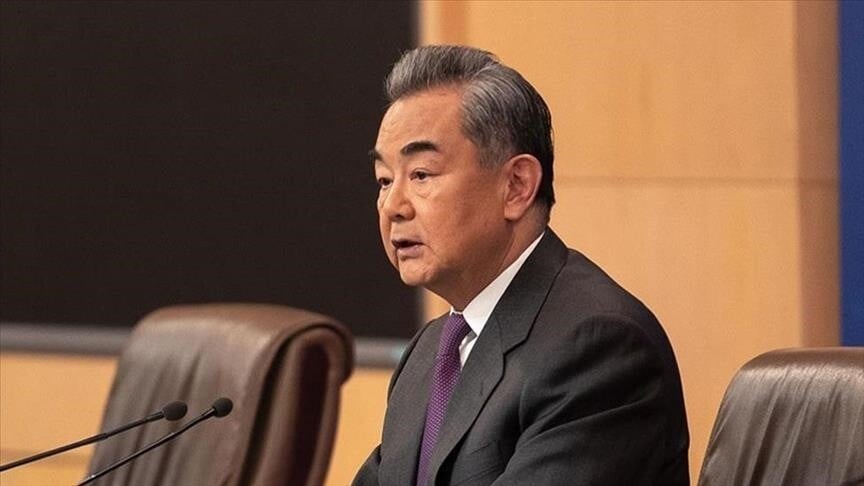

MANILA – The Strait of Hormuz carries roughly one fifth of the world’s oil supply, and on Monday that fact hung over the Philippine International Convention Center in Manila, where the foreign ministers of the United States, China, and Russia arrived for the same multilateral meeting for the first time since the Iran war began.
Secretary of State Marco Rubio, Chinese Foreign Minister Wang Yi, and Russian Foreign Minister Sergei Lavrov were all in attendance at the 59th ASEAN Foreign Ministers’ Meeting, which the Philippines is chairing this year. The convergence was not engineered around the Iran war; the meeting date was set months earlier. But the war had changed what the gathering meant.
The ten ASEAN member states were preparing a joint statement calling on the United States and Iran to resume direct dialogue and urging all parties to preserve freedom of navigation through the Strait of Hormuz, Anadolu Agency reported. Philippine Foreign Minister Enrique Manalo said in an opening address that the “maritime arteries of Asia” could not be allowed to become casualties of a conflict that began in the Middle East.
For Manila, that language carries practical weight. The Philippines declared a national energy emergency in March 2026 as oil import costs surged following the partial closure of Hormuz transit routes. Energy rationing in industrial zones on Luzon continued into July. Brent crude crossed $90 on Monday, pushing costs across the region to levels that have begun affecting household electricity bills in the Philippines, Indonesia, and Vietnam.
Rubio, Wang Yi, and Lavrov meeting in the same room represents one of the few diplomatic configurations in which officials from countries on opposing sides of the Iran war’s political fault lines are physically co-located at an event controlled by neither Washington nor Beijing. Bilateral conversations were expected on the sidelines. The Chinese delegation was expected to present a framework for a Hormuz transit guarantee; the American delegation had not confirmed whether it would engage with that proposal.
The Myanmar crisis occupied a parallel track. More than 8,100 people have been killed since the military junta’s latest offensive began, according to UN monitoring, and 22,500 or more have been detained. ASEAN’s five-point consensus plan, established in 2021, has produced no sustained ceasefire. Myanmar’s foreign minister attended the Manila meeting for the first time in five years, a development that ASEAN’s host delegation described carefully as an opening rather than a resolution.
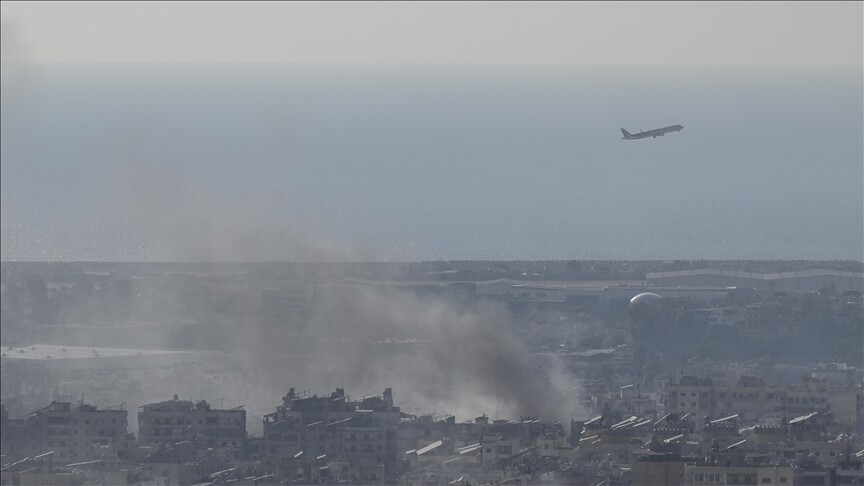
The South China Sea returns to the agenda as it does at every ASEAN ministerial, though the context in 2026 is more volatile than usual. Negotiations on a Code of Conduct between ASEAN and China have been ongoing for more than a decade without conclusion. Philippines-China confrontations in the West Philippine Sea escalated in June, producing footage and contested accounts that hardened public positions in Manila. Russia has separately warned of what it describes as Western militarization of the Asia-Pacific, a concern Lavrov was expected to raise from the floor.
Lavrov’s attendance reflects a consistent pattern of Moscow using multilateral forums to present Russia as a legitimate participant in global governance structures, even as Western governments have sought to limit its role in other venues. His presence alongside Rubio at an ASEAN-convened event does not imply joint purpose. Their positions on virtually every issue on the Manila agenda are structurally opposed. But both are in the room, within the same process, and that is itself a piece of diplomatic information.
Wang Yi’s calculus is more coherent. China has positioned itself through the Iran war as a potential broker, maintaining relations with Tehran while avoiding direct military support and offering to host mediation talks. Presenting a Hormuz transit guarantee framework in Manila advances that posture in front of a regional audience that watches oil prices closely and whose governments have been careful to avoid alignment with Washington on the Iran question.
ASEAN’s joint statement, expected Wednesday or Thursday, will be scrutinized for operational specificity. The bloc’s consensus model, requiring all ten members to agree on language, tends to produce declarations of principle rather than operational mechanisms. Whether the severity of the Hormuz disruption has shifted any party’s willingness to accept firmer text remains to be seen. Iranian missiles struck Jordan’s Aqaba resort Sunday, extending the war’s geographic reach and adding one more development for the diplomats in Manila to factor into their language.
What Rubio and Wang Yi say to each other in private, and whether that exchange produces any movement toward resumed US-Iran dialogue, is the question the Manila meeting cannot answer publicly. ASEAN can call for talks. It cannot compel them. The statement will come Wednesday. The phone call, if it happens at all, will not be disclosed from a ballroom in Manila.