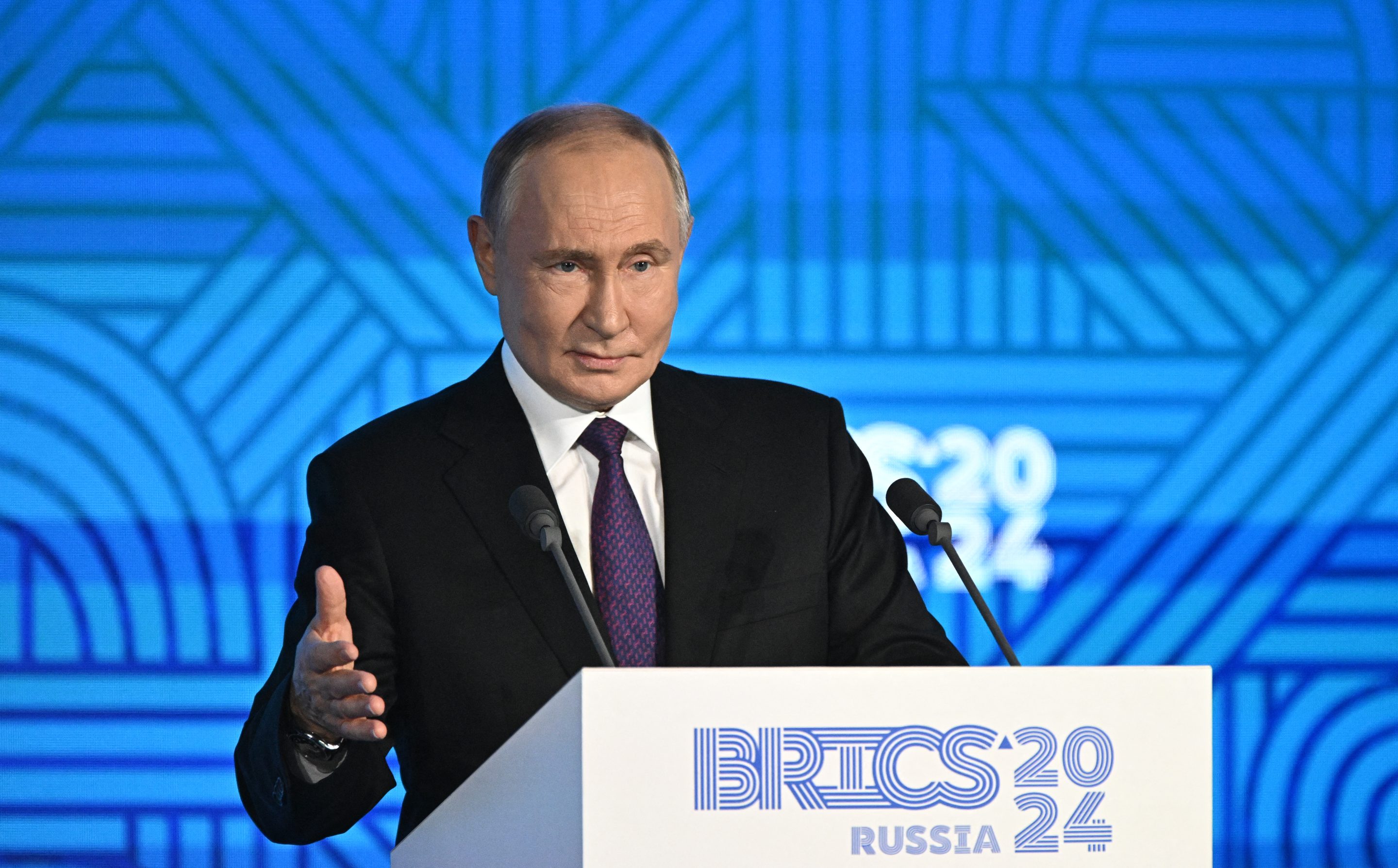

JAKARTA – Three days before Vladimir Putin sits down with the leaders of eleven Southeast Asian nations in Kazan, Russia’s permanent representative to ASEAN delivered a pointed message from the Indonesian capital: the West is not simply competing for influence in the Asia Pacific. It is militarizing it.
Yevgeny Zagaynov, Russia’s ambassador to the Association of Southeast Asian Nations, told RIA Novosti in an interview published Sunday that Moscow is watching with alarm as “a dangerous accumulation of conflict potential” builds across a region that has spent decades avoiding the open military alignments that define Europe and the Middle East. Narrow military-political mechanisms are being formed, Zagaynov said, and some ASEAN countries “are trying to get involved.” The region, he added, “is being actively pumped with Western weapons.”
The timing was deliberate. The Russia-ASEAN commemorative summit, dedicated to the 35th anniversary of the dialogue partnership, opens in Kazan on June 18. Putin will attend. So, according to Moscow, will the heads of all eleven ASEAN member states – a turnout that Russian officials have framed as proof that the bloc’s much-discussed “strategic autonomy” is still real, and that Western pressure to isolate Russia has limits.
What Zagaynov’s interview makes plain, though, is that the Kazan summit is not simply a celebration of 35 years of trade and people-to-people ties. It is Russia’s most consequential bid yet to insert itself as the defender of an ASEAN-centric security model – at precisely the moment the United States, through AUKUS, expanded trilateral formats, and deepening bilateral defense arrangements, is constructing something else entirely.
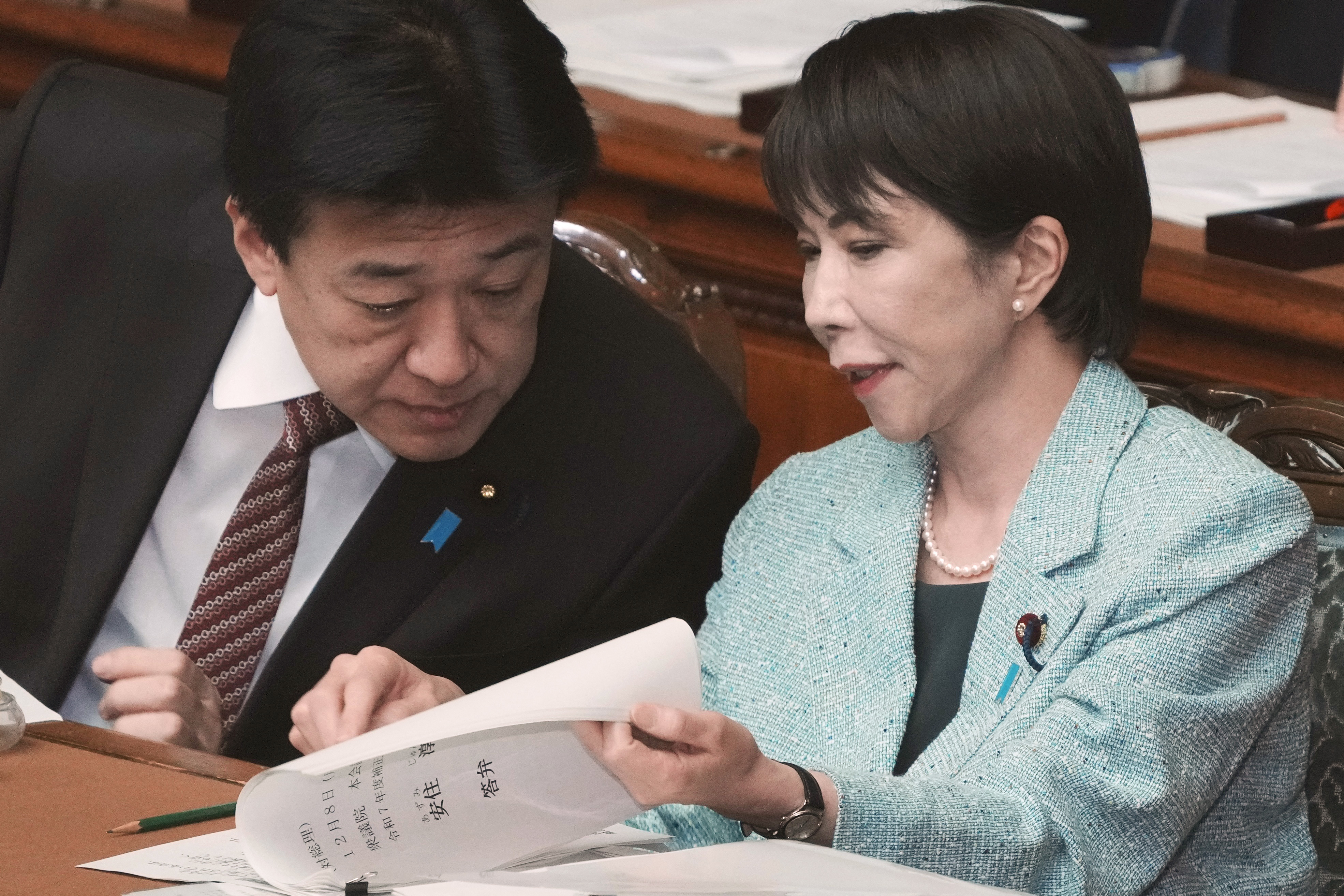
Japan’s rearmament drew Zagaynov’s sharpest language. Prime Minister Sanae Takaichi’s government has pushed Japan’s defense budget to a record 9.04 trillion yen for fiscal year 2026 – the twelfth consecutive annual increase, and the first time spending has crossed the nine-trillion-yen threshold. Plans include acquiring long-range strike missiles, expanding unmanned coastal defense systems, and revising the Three Non-Nuclear Principles that have governed Japan’s posture since the postwar era. “Japan’s remilitarization is a concern,” Zagaynov said, in language calibrated for an ASEAN audience that has its own fraught history with Japanese military power.
Analysts in Southeast Asia have been raising similar alarms, though from different premises. James Gomez, regional director at the Asia Centre research institute in Bangkok, told China Daily last year that ASEAN’s stability has long rested on a Japan that projected economic rather than military strength. A rearmament trajectory, Gomez argued, “threatens to alter not just its own pacifist posture but the delicate balance upon which regional security has long rested.” That is not a Russian talking point. It is a strain of anxiety that runs through Indonesian, Malaysian, and Philippine strategic thinking regardless of Moscow’s preferences.
The tension Russia is exploiting is genuine. ASEAN has always prided itself on centricity – the principle that major-power competition in the region must route through the bloc’s own frameworks rather than around them. AUKUS, the trilateral security arrangement between the United States, the United Kingdom, and Australia, was announced without consultation with ASEAN members. Indonesia’s foreign ministry said it took note of the pact “cautiously” and stressed Australia’s nuclear non-proliferation obligations. The bloc has never formally endorsed the Indo-Pacific security architecture Washington has been assembling.
Zagaynov’s characterization of those frameworks – “narrow-format military-political mechanisms” – is the diplomatic vocabulary Moscow has been refining for years. But the Kazan summit gives it a new and tangible backdrop. Russia is not simply issuing statements about Western encroachment. It is hosting the leaders of Southeast Asia in the same city where it hosted the BRICS summit two years ago, turning Kazan into what Kremlin officials have called Russia’s third capital for multilateral diplomacy – a deliberate geography, aimed at the Global South.
The ASEAN-Russia Action Plan for 2021-2025, extended through the end of 2026, has reached an 82 percent implementation rate, according to the bloc’s own accounting – a figure Russia will highlight in Kazan as evidence of a partnership that delivers, regardless of geopolitical weather. Bilateral trade between Russia and ASEAN stands at approximately $21.6 billion. Several ASEAN members, including the Philippines and Vietnam, are actively seeking Russian crude as an alternative supply line after energy prices spiked during the Middle East crisis earlier this year.
None of that means ASEAN agrees with Russia’s framing. The bloc has maintained careful studied neutrality on the war in Ukraine, with most member states supporting United Nations General Assembly resolutions condemning Russia’s military operation while simultaneously refusing to impose sanctions or curtail economic ties. The Philippines, which chairs ASEAN in 2026, is a treaty ally of the United States. Singapore’s attendance in Kazan remains uncertain precisely because of Western sanctions exposure. Myanmar’s military government – barred from ASEAN’s top-level meetings since its 2021 coup – adds another layer of internal complexity that has nothing to do with Russia.
What the summit represents, then, is less a diplomatic triumph for Moscow than a strategic stress test for the region. ASEAN members face simultaneous pressure from AUKUS partners – who delivered their first dedicated undersea drone weapons project at Singapore’s Shangri-La Dialogue in May – and from Russia, which is offering a competing model built around ASEAN-centricity and non-alignment. That competition for Southeast Asia’s strategic soul is exactly what Zagaynov was describing from Jakarta, and it is unlikely to resolve cleanly in Kazan or anywhere else.
According to TASS, the Kazan event will also feature a Russia-ASEAN Business Forum bringing together bloc leaders, international organization heads, and major-business representatives – the economic scaffolding Moscow wants visible alongside the security rhetoric. The agenda, as described by Russian Foreign Minister Sergey Lavrov, includes trade, investment, energy, agriculture, digitalization, science, and cultural ties.
What the agenda does not include, and what no one in Kazan will say aloud, is whether any ASEAN government privately shares Zagaynov’s alarm – or whether they are simply using Russia’s courtship to improve their bargaining position with Washington. That question, unasked in the formal summit room, may be the one that actually shapes the region’s security architecture over the next decade.