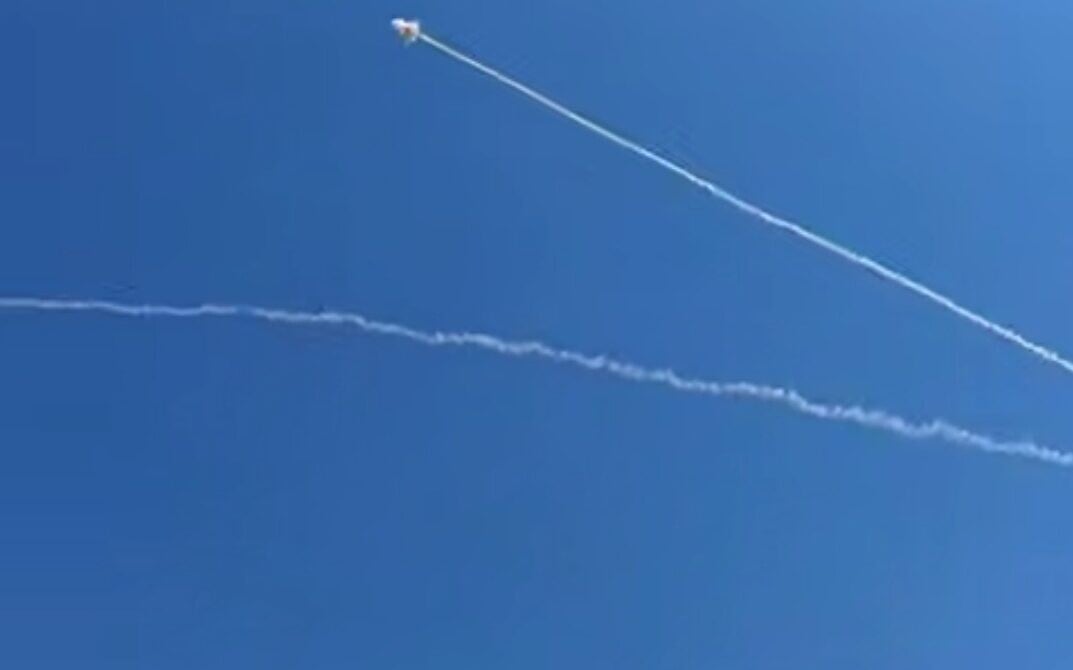

AMMAN – Four Iranian ballistic missiles targeted Aqaba, Jordan’s Red Sea resort city, on Sunday evening, with three intercepted and the fourth landing in an open area without causing injuries, according to Jordan’s military. Across an eight-kilometer strait, Israeli Iron Dome batteries in Eilat fired interceptors as fragments threatened to cross the border between the two resort cities.
The attack represents a significant extension of the Iran war’s geographic footprint. Aqaba is a civilian tourist hub, not a military target. Jordan is a US ally that has maintained formal peace with Israel since 1994. Neither qualification previously shielded it from being drawn into the conflict’s blast radius.
Jordan’s military confirmed the interceptions through official channels without specifying which air defense systems were used. American air defense systems contributed to the intercepts, according to IDF assessments. The Jordanian government had not made a formal diplomatic statement about the attack by Monday morning.
The IDF’s response was limited: Iron Dome interceptors were launched to prevent fragments from falling over Eilat, Israel’s southern port and resort city. No sirens were activated in Eilat, and interceptor fragments landed in open desert terrain between the two cities without causing damage or injuries, the Israeli military said.
Israeli Defense Minister Israel Katz issued a statement aimed at Tehran rather than the immediate incident: “If Iran fires missiles at Israel, we will attack them with full force.” The statement conflated what happened over Eilat, where no missile was directly targeted, with a broader deterrent posture. It was the most explicit warning Israel has issued about potential direct retaliation against Iran since the conflict resumed.
Sunday’s attack on Aqaba follows Iran’s strike on a US military base in Azraq, Jordan on July 17, which killed two American service members and left one missing. Those deaths were the first confirmed US combat fatalities in the US-Iran conflict, triggering the eighth night of American airstrikes on Iranian targets. Iran has not acknowledged responsibility for targeting Azraq specifically, though CENTCOM confirmed the missile origin.
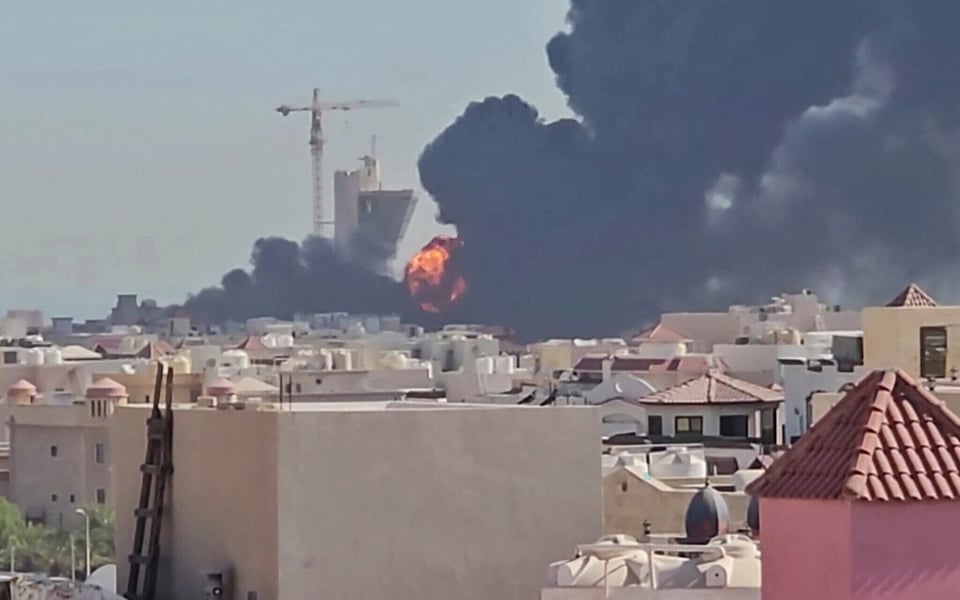
The pattern suggests Iran is using Jordan as a transit corridor for missile trajectories targeting either American installations or symbolically significant locations such as Eilat, Israel’s only Red Sea port. Aqaba and Eilat have coexisted as twin resort towns on opposite sides of the Gulf of Aqaba since Israel’s founding; striking one tends to threaten the other.
The geography of Iran’s strikes has become its own message. Missiles aimed at Jordan and Kuwait, strikes on tankers at the Caspian Pipeline terminal at Novorossiysk, and ongoing harassment of Gulf shipping have, by the ninth day of the resumed conflict, extended the war’s physical reach across a remarkable arc of territory. The US-Iran war, which both Washington and Tehran have at various points tried to contain to a bilateral exchange, is acquiring the characteristics of a regional conflict.
Jordan occupies an uncomfortable position. Amman has not joined the American coalition conducting strikes on Iran, has maintained diplomatic relationships with both Washington and Tehran, and has publicly called for de-escalation. Two nights of Iranian missiles landing on or near Jordanian soil, first at Azraq, then at Aqaba, make that neutrality increasingly difficult to sustain.
Iran’s Supreme Leader warned Washington of “unforgettable lessons” as the diplomatic channel collapsed and Iranian strikes extended across the Gulf. Tehran’s pattern is to deny targeting civilian areas while framing strikes as responses to American aggression. The four missiles that flew toward a Jordanian tourism hub on a Sunday evening don’t fit that framing easily.
What the intercepts preserved was the absence of casualties. Jordan’s military and US air defenses prevented the scenario that would have most directly forced Amman’s hand: Jordanian civilians killed by Iranian missiles. The fourth missile that landed in open terrain was the margin between a near-miss and a potential crisis.
How long that margin holds will depend on whether Iran continues using Jordanian airspace as a trajectory, and whether American or Jordanian air defenses continue performing as they did on Sunday. One thing the evening in Aqaba established: the war’s geography is no longer contained, and Jordan’s careful neutrality is now operating under missile fire.