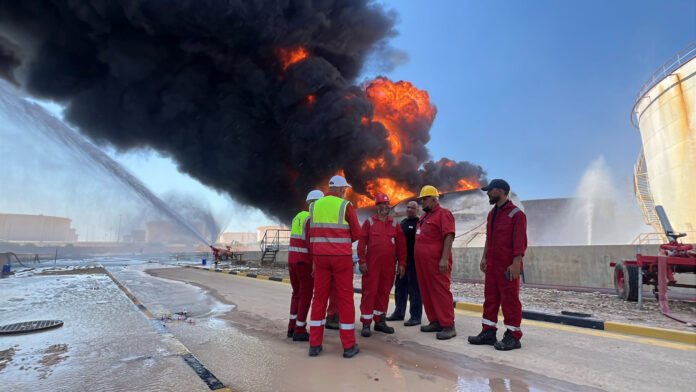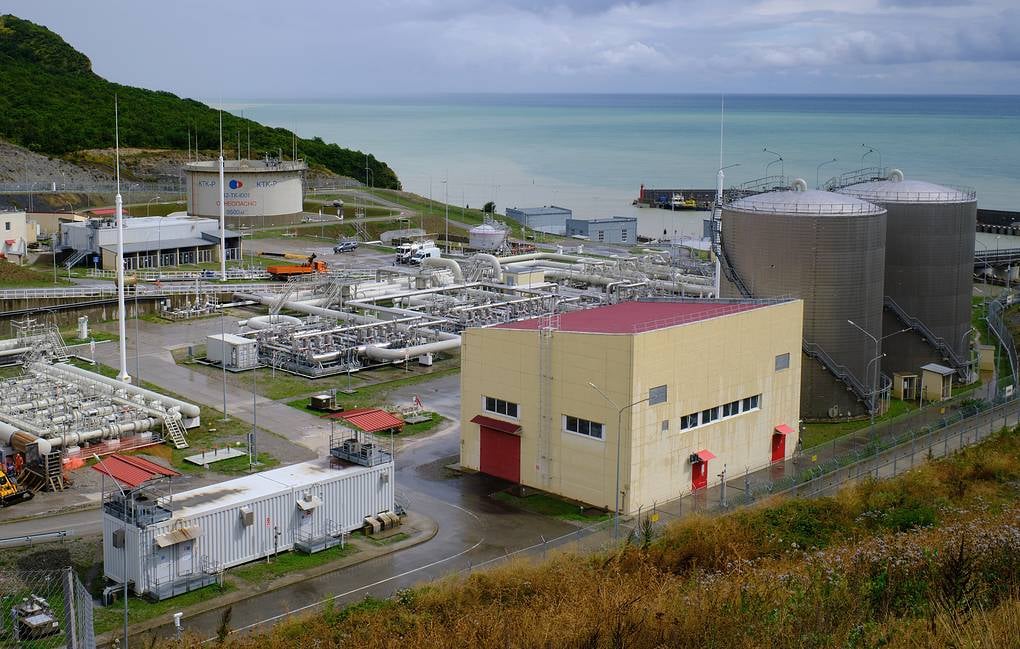

NOVOROSSIYSK – A drone strike set fire to the oil tanker Asia at the Caspian Pipeline Consortium’s marine terminal on Russia’s Black Sea coast early Sunday, striking two laden vessels at their offshore moorings and halting oil loading operations in what the consortium described as the fifth act of direct aggression against the facility since the Russia-Ukraine conflict began reaching into the region’s energy infrastructure.
The Asia, a Liberian-flagged tanker carrying crude from the Tengizchevroil joint venture in western Kazakhstan, was struck at single point mooring one. Alongside it, the Nissos Ios, a Marshall Islands-flagged vessel loading cargo from the Kashagan and Maten projects, was hit at mooring three. CPC’s emergency response crews extinguished the fire aboard the Asia. Both vessels remained afloat by Sunday morning, and damage assessment teams were working to determine the extent of structural harm. The consortium reported no injuries or casualties among employees, contractors, or ship crew, and confirmed no oil spill occurred despite the fire.
The Caspian Pipeline Consortium runs 1,500 kilometres from Kazakhstan’s oil fields to Novorossiysk, the only major route connecting the Tengiz and Kashagan fields to export markets. At peak capacity, the system moves approximately 1.3 million barrels of crude per day. Its shareholders include Transneft and Rosneft on the Russian side, Kazakhstan’s KazMunayGas, and a roster of major Western corporations: Chevron and ExxonMobil hold the largest international stakes, with Shell, Lukoil, and smaller partners making up the remainder. A strike on the terminal, in other words, lands directly on the balance sheets of American and European energy majors alongside Russian state companies.
Oil loading was suspended in the immediate aftermath of the attack. The consortium gave no timeline for resumption. Damage assessment on both vessels was ongoing.
The language the consortium used in its statement was precisely chosen. “This is already the fifth act of direct aggression against a purely civilian facility of the company, which is protected by international law,” CPC said. The framing places the attack not as a wartime incident but as an act targeting civilian energy infrastructure, a distinction that matters legally and diplomatically since the terminal carries no military function and serves shareholders from countries that are not parties to the Russia-Ukraine war.
Five separate attacks against the same facility constitute a sustained campaign. The terminal’s offshore single-point moorings, which allow large tankers to load without entering the port, are physically separated from Novorossiysk’s broader naval and commercial infrastructure, yet the pattern of successful strikes suggests that whoever is conducting them has developed reliable targeting for this specific installation.
The attack comes as Russian forces simultaneously struck cargo ships at Ukraine’s Odesa ports, deepening a mutual campaign against each side’s maritime logistics in the Black Sea. Both operations, Russian strikes on Ukrainian ports and strikes on Russian-operated energy terminals, reflect the same logic of targeting supply chains that sustain the other’s war economy or, in the CPC terminal’s case, the economic relationships that link Russia’s allies and trading partners to the conflict zone.
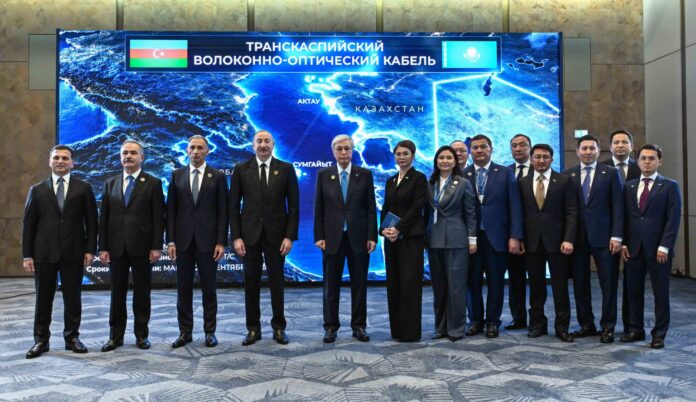
Kazakhstan faces an acute version of this pressure. The country’s economy is structurally dependent on CPC exports for the crude revenues that fund its state budget, and Astana has navigated the Russia-Ukraine war’s pressures by resisting formal alignment with Moscow while remaining physically connected to Russian export infrastructure. Kazakhstan has been expanding alternative export routes across the Caspian in response to earlier attacks on the terminal, but no alternative yet approaches CPC’s capacity. The expansion of drone attacks against the terminal accelerates Kazakhstan’s timeline for that transition.
Western energy companies face a related problem. Chevron and ExxonMobil’s equity stakes in Tengizchevroil and the Kashagan consortium mean that disruption to CPC export capacity directly affects their production schedules and revenue from Kazakhstani operations. A prolonged shutdown of the terminal or progressive physical damage to its infrastructure would create pressure on those companies to accelerate contingency planning for alternative export routes, which carry significantly higher transport costs.
According to TASS reporting on the terminal strike, the consortium attributed the attack to “unmanned aerial vehicles” without publicly naming the perpetrator, consistent with the pattern that has characterized all five incidents. Attribution in these attacks has been a matter of analytical inference rather than public claim. The absence of official acknowledgment on any side does not create ambiguity about the strategic context.
The question that the fifth attack makes more urgent is at what point cumulative damage begins to affect the terminal’s load capacity in a structural rather than temporary way. The facility has absorbed five strikes across a period of months. What remains unknown is the extent of infrastructure repair required after each incident, the rate at which critical components are being replaced, and whether the rate of attacks is outpacing the consortium’s capacity for recovery. That information lies inside the consortium’s operational records and is not publicly available.