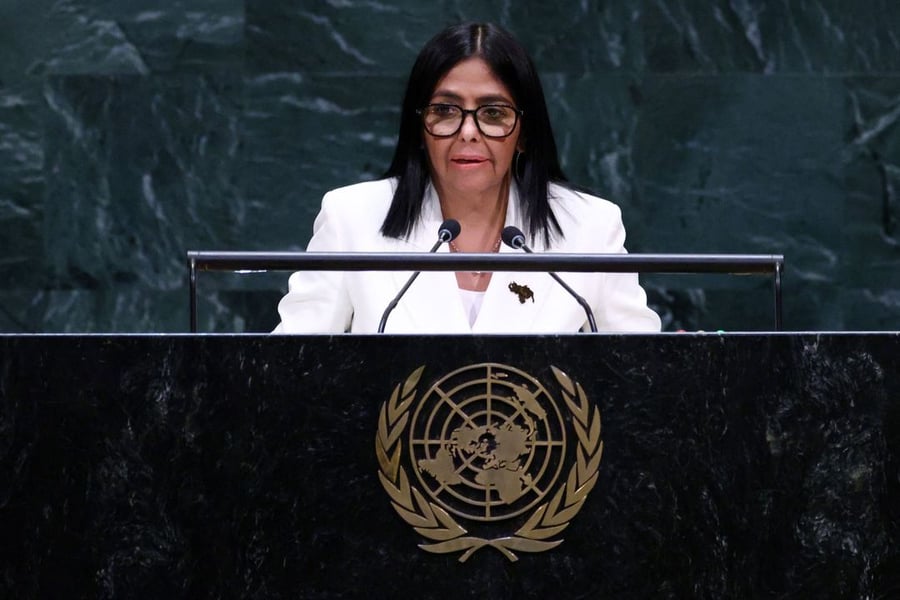
NEW YORK — Delcy Rodriguez stood at the United Nations podium on Tuesday and thanked Donald Trump. She said her country would hold elections. She did not say when.
It was the first address Rodriguez has delivered to the General Assembly as Venezuela’s acting president, a role she has held since January 3, when American special operations forces raided the presidential compound in Caracas before dawn, captured Nicolas Maduro and his wife, Cilia Flores, and flew them to New York for indictment. Nicolas Maduro is in a Brooklyn jail. Rodriguez is at the United Nations.
“I wish to state this very clearly before this General Assembly,” she told the hall. “Elections will be held in Venezuela.” She said her government had begun political dialogue with opposition sectors toward a process based on “equal conditions for all.” She did not give a date. She did not name the opposition groups she was speaking with. She thanked Trump for what she called his willingness to resume diplomatic relations and cooperation, Al Jazeera reported.
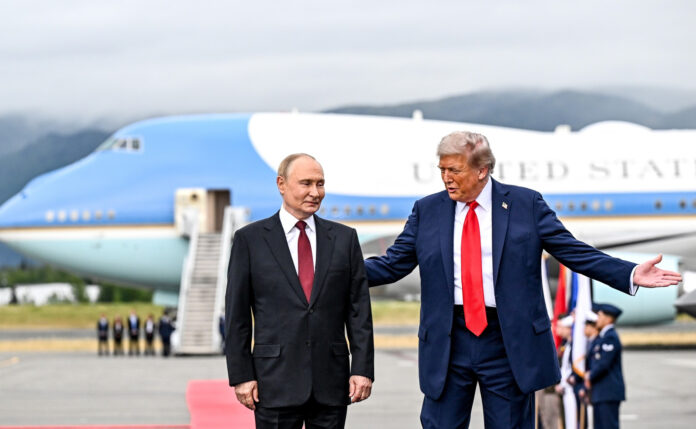
That evening, Trump met Delcy Rodriguez on the sidelines of the General Assembly in a roughly fifteen-minute meeting attended by Secretary of State Marco Rubio and Treasury Secretary Scott Bessent. Trump told her elections have to happen. He also did not give a date. NBC News reported the two discussed sovereign debt negotiations alongside the path to democracy.
The Chevron oil deal preceded both the speech and the meeting by several weeks. In early September, US Energy Secretary Chris Wright traveled to Caracas and signed an agreement at Miraflores Palace expanding Chevron’s operations in the country. Trump announced the deal publicly as the “biggest oil deal in world history,” saying the US had secured a stake in more than 65 billion barrels of Venezuela’s proven reserves. He said it would more than double American oil reserves and drive down gas prices. Rodriguez signed the agreement on Venezuela’s behalf.
The sequence is worth holding in mind as Rodriguez’s UN appearance is assessed. She was recommended by a Chevron-connected intelligence source, installed as acting president after a US military operation, signed an oil deal with the country that conducted that operation, and then appeared at the United Nations to thank the same country and promise elections at an unspecified future date. The Pentagon, through a newly created National Asset Board for Energy and Petroleum, holds a formal stake in Venezuela’s reserves. EH reported in September that both sides of Venezuelan politics, opposition and Chavista alike, denounced the terms of that arrangement.
Trump, for his part, spent the first weeks after the January operation declaring that the United States would “run the country” and oversee the transition. The language at UNGA was softer. “You have to have elections at the end of the day,” he said at the sidelines meeting. He did not say which day.
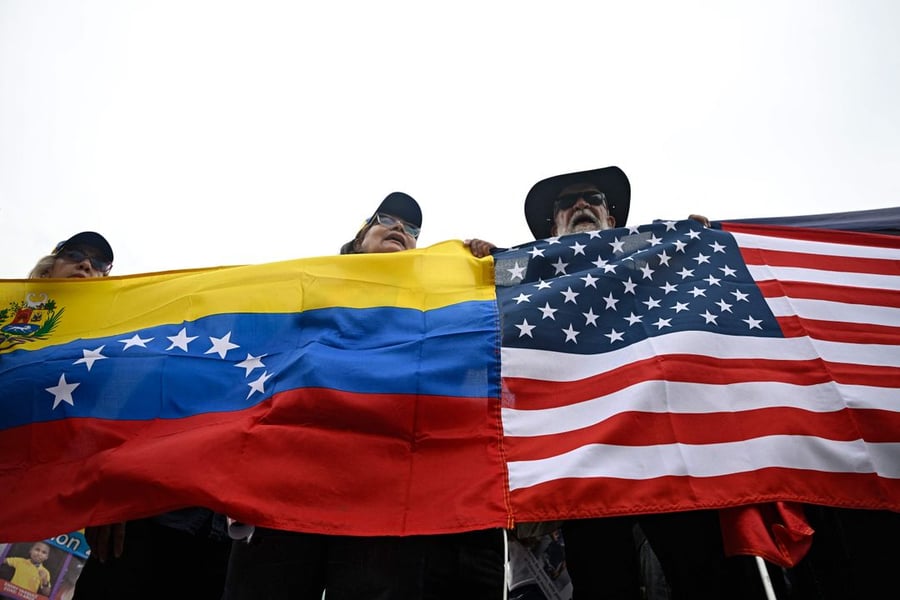
What is clear is that Rodriguez arrived at this General Assembly carrying something Maduro never had: legitimacy borrowed from Washington. She was received at the bilateral meeting. She was introduced at the General Assembly as the head of state of Venezuela. The US did not object, block her credentials, or insist on a caretaker government accountable to international monitors. What the US received is measurable. The political outcome is not.
The states most skeptical of the January operation watched Tuesday’s events from a distance. Cuba and Nicaragua condemned the raid when it happened. Mexico and Bolivia declined to endorse it. Several CELAC members have not recognized Rodriguez’s government as legitimate. None of them was in a position to alter what happened at the UN podium or in the sidelines meeting.

Elections will be held in Venezuela, she said. The oil has already been extracted.