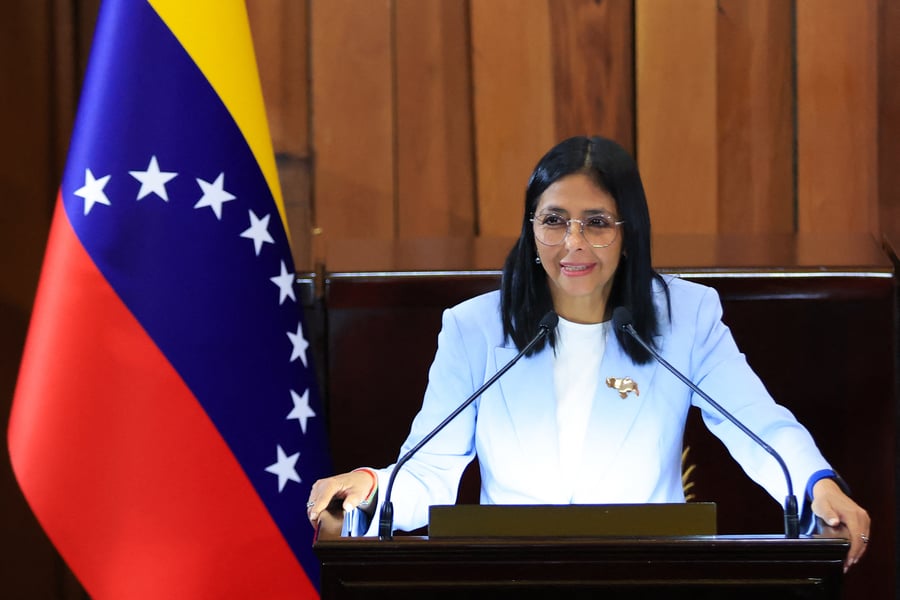

WASHINGTON — Delcy Rodriguez spent years as Nicolás Maduro’s vice president, defending his government against international pressure and accumulating a list of US sanctions that identified her as an obstacle to Venezuelan democracy. Today she governs Venezuela as interim president with those sanctions lifted, having negotiated an oil arrangement that gives a Pentagon-affiliated company a 35 percent stake in the joint venture controlling 65 billion barrels of Venezuelan reserves. On Wednesday, Donald Trump said Venezuela is not ready for elections.
That sequence is not incidental context. It is the story.
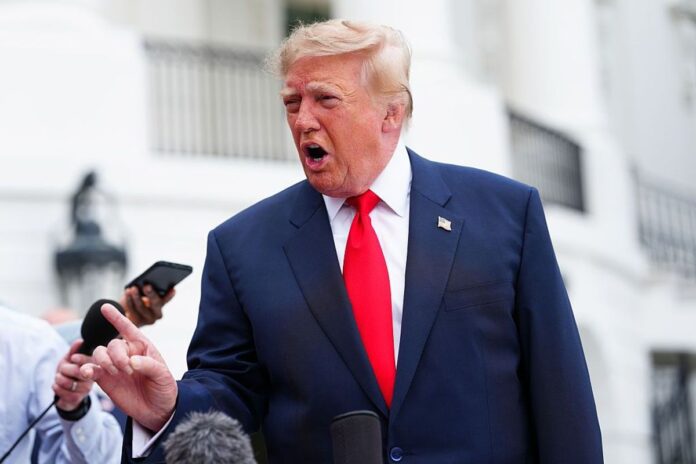
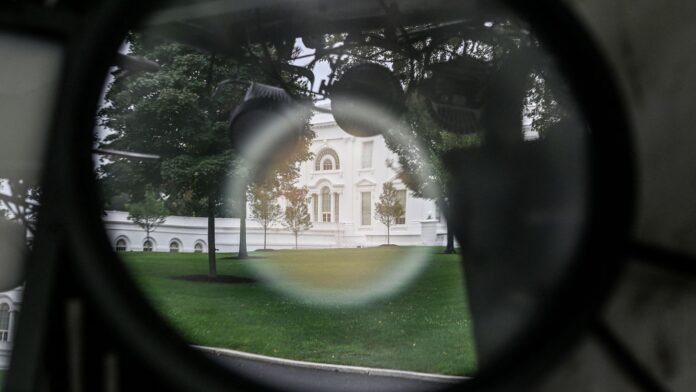
Speaking at the White House on September 2, Trump told reporters he believed Rodriguez wants elections to occur. “She wants them,” he said. “I just don’t think they’re ready yet. You know, it’s very new.” Asked what readiness would require, Trump offered no criteria. The White House has not published any since.
The situation Trump called “very new” began in January 2026, when US special forces removed Maduro from power and flew him to the United States to face federal charges on guns-and-drugs allegations. Rodriguez, who had served as Maduro’s vice president through some of the most repressive periods of his government, assumed the interim presidency immediately afterward. She has held the position since, and in that time has become the primary negotiator of what Trump has called “the biggest oil deal in world history.”
The architecture of that deal is the central fact Trump’s election comments require. North American Blue Energy Partners, a private US firm, now operates a joint venture controlling more than 65 billion barrels of Venezuelan oil reserves, with the Pentagon’s Office of Strategic Capital holding a 35 percent equity stake. That arrangement, denounced by Venezuela oil deal opposition as a sovereignty violation, requires a cooperative government in Caracas to function. Chevron has pledged $7 billion toward the venture. The Pentagon Venezuela stake in the country’s oil infrastructure is, by any contemporary standard, extraordinary.
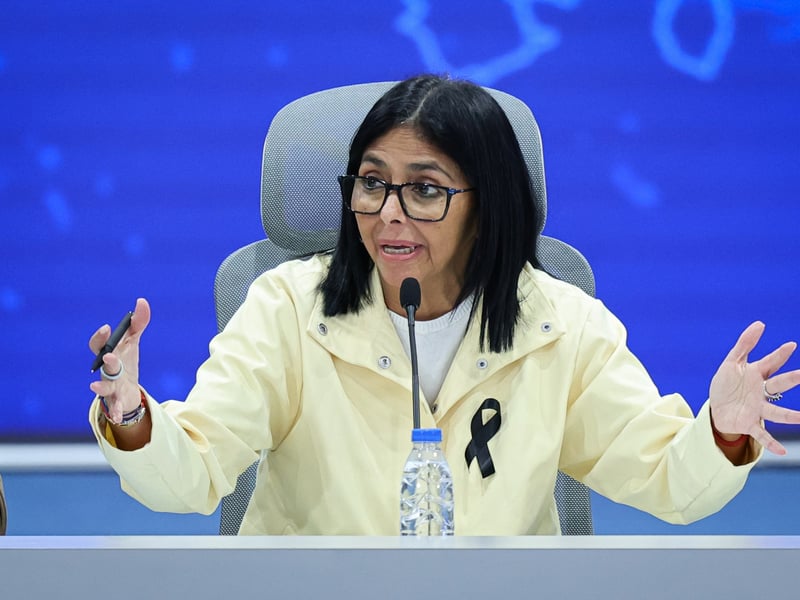
Trump did not say any of this on Wednesday. He said he believed Rodriguez wants elections. His Secretary of State, Marco Rubio, has separately announced conversations between opposition representatives and members of Rodriguez’s government, a process that, even under optimistic conditions, would take months to yield any result. No timeline has been attached to those talks, and no one has explained how a dialogue format becomes the mechanism for scheduling an election in a country that has not held a meaningful competitive one in over a decade.
The official American position frames all of this as democracy promotion. Rodriguez has adopted the same framing, casting the oil arrangement as a precondition for eventual normalization and insisting that Venezuela retains what she called “ownership of and sovereignty” over its resources. Al Jazeera reported that Rodriguez described the deal as leveraging foreign “capital, technology and operational expertise to support the recovery of a strategic industry that has been severely affected by sanctions.” The sanctions, notably, were US-imposed.
Critics have not been persuaded. Multiple analysts drew parallels to the 1953 CIA-backed overthrow of Iran’s elected government, which installed a regime more accommodating to Western oil companies. The parallel is imperfect. Maduro’s removal was a publicly acknowledged US military operation, not a covert one. But the underlying structure is similar enough to sustain the comparison: a government whose political survival depends on the arrangement that placed it in power does not have an independent democratic mandate.
Trump characterized his Venezuela policy differently on Wednesday. He said the United States had “taken Venezuela out of a dictatorship.” What he did not say, and what neither he nor Rubio has said since, is what readiness for elections actually looks like. There is no published timeline. No institutional conditions have been stated. No electoral framework has been publicly endorsed as sufficient. “It’s very new” is a description of how long ago the political situation changed, not a standard for when it might change again.
Rodriguez’s own framing, that elections will come when Venezuela “is prepared,” reproduces Trump’s language precisely enough to suggest coordination rather than independent judgment. On the question of what that preparation requires, she has been as uninformative as he has been.