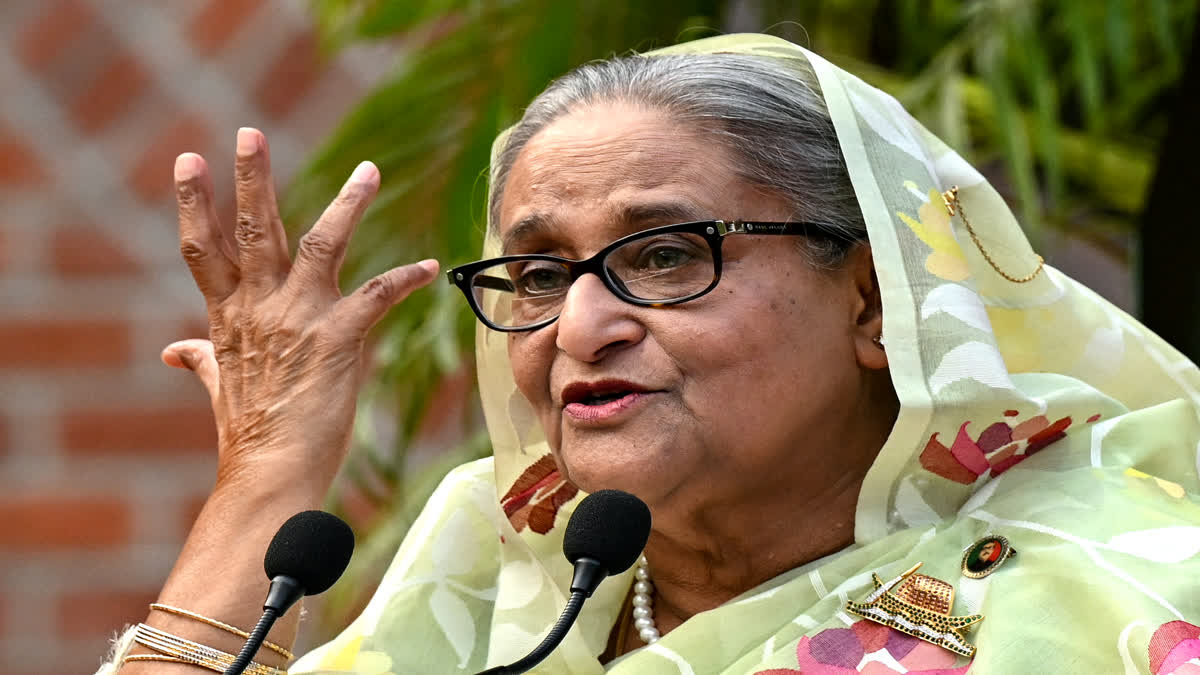

NEW DELHI – When Bangladesh’s International Crimes Tribunal issued arrest warrants for Sheikh Hasina and nine of her associates last week on charges of crimes against humanity, the order landed in a city that has no legal obligation to act on it. Hasina is in Delhi. She has been there since August 2024, when she fled Bangladesh aboard a military transport as protests overwhelmed her government. The warrants, signed by a tribunal whose jurisdiction ends at Bangladesh’s borders, have not changed that fact.
The charges filed by Bangladesh’s ICT-2 center on the extrajudicial killing of Ekramul Haque during a counter-narcotics operation in the Teknaf district under the Rapid Action Battalion, a paramilitary force that operated during Hasina’s government. Nine of the ten named individuals are former RAB officials or military intelligence officers who commanded forces in that border district. Hasina is named as the political authority over that chain of command. Bangladesh journalist Saifur Rahman Tapan described the ruling as “some sort of political vendetta” with “no link with India-Bangladesh relations” – an assessment that understates the diplomatic calculus Delhi is managing.
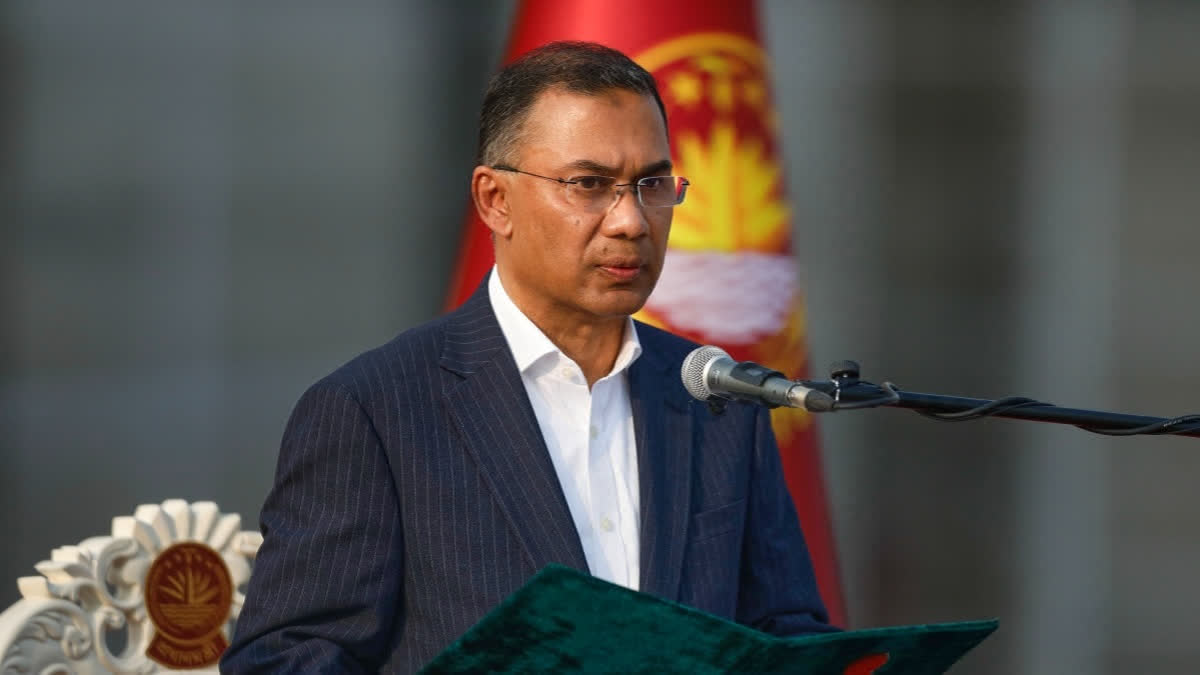
The diplomatic backdrop has a particular geometry. Bangladesh’s current Prime Minister, Tarique Rahman of the Bangladesh Nationalist Party, has received an invitation to India’s BRICS Summit in New Delhi this September. India holds the BRICS chairmanship for 2026. The country sheltering Hasina will host the leader whose party displaced her within the same calendar quarter. India has said nothing publicly about the warrants. That silence is its own position.
The legal basis for India’s posture is Article 6 of the 2013 India-Bangladesh extradition treaty, which allows either government to decline extradition when an alleged offense is “of a political character.” Bangladesh has not formally requested Hasina’s extradition. Whether it will remains unclear. But Indian officials have signaled, through continued silence on the warrants and through Hasina’s uninterrupted presence in Delhi, that any request invoking crimes against humanity charges against a political leader who has not been tried in person would encounter resistance under that provision.
What Hasina herself has said is on record. She told Reuters last month that she and senior Awami League colleagues plan to return to Bangladesh in December 2026. “They may arrest me on my return,” she said. “Still, I have to go.” The warrants do not revise that timeline she has articulated, but they alter the legal architecture waiting for her in Dhaka. Hasina’s own statements on her planned return laid out the defiance clearly before the latest tribunal action.
The accused alongside Hasina include figures whose careers trace the security machinery of her administration. Asaduzzaman Khan Kamal, former home minister, is named. So is Obaidul Quader, former Awami League general secretary and road transport minister. The RAB officers – two brigadier generals, a squadron leader, and a retired major – are identified by their commanding roles in Teknaf and Cox’s Bazar during the period when the government’s anti-narcotics campaign was documented by human rights organizations as producing systematic extrajudicial deaths.
The Awami League itself – the party Hasina led for decades, the party that organized the 1971 liberation war and governed Bangladesh for most of the republic’s history – was banned by Bangladesh’s interim government earlier this year. As Eastern Herald reported at the time of the ban, the action placed Bangladesh in the position of making illegal the party most responsible for its own existence. The party’s senior figures in exile have not dissolved their political organization, and Hasina remains the gravitational center of what continues to operate abroad.
India’s calculation runs alongside these realities. Tarique Rahman, whose own legal record in Bangladesh includes corruption convictions during Hasina’s tenure, is London-based; the government he nominally leads has not yet held a national election. Rahman’s BRICS summit invitation reflects India’s pragmatic need to maintain functional relations with the government that controls Bangladesh, irrespective of its origins. Delhi’s engagement with the Rahman-aligned administration does not require it to abandon Hasina. The extradition treaty’s political-character provision gives India the legal framework to sustain both relationships simultaneously – this is not a contradiction but a standard expression of Indian regional policy.
The specific case behind the warrants centers on the 2018 killing of Ekramul Haque, whose death was recorded in video by his family and circulated widely, igniting public revulsion at the Hasina government’s anti-narcotics operations. The government’s campaign, carried out by RAB units, was documented by Human Rights Watch and Amnesty International as a pattern of extrajudicial killings; Bangladesh’s absentia trial procedures have themselves been found to fall short of international legal standards by researchers at the University of Dhaka. The ICT now applies a crimes against humanity classification to those operations. Whether that charge reflects genuine accountability or political prosecution depends partly on who controls the tribunal and who benefits from its verdicts.
India has navigated similar terrain before. Political refuge extended to individuals whose status at home is legally fraught is not without precedent in Indian foreign policy. What differs now is the visibility of the geometry: New Delhi will host, this September, both the government that issued the warrants and the leader the warrants cannot reach. The BRICS chairmanship gives India an institutional platform that makes any quiet diplomatic balancing harder to maintain quietly. India has demonstrated, through its continued protection of Hasina, that the political-character exception in the 2013 treaty is not a dormant clause.
The successive political shocks Bangladesh has absorbed since Hasina’s departure – the resignation of its president, the ISI-linked succession, and the banning of the founding party – have not stabilized into a settled political order. What no legal instrument from Dhaka can resolve is the basic geography of the situation. Hasina is in Delhi. The warrants are in Dhaka. India holds the gavel at BRICS. That configuration will remain until December, or until the diplomatic situation produces conditions that make Hasina’s return to Bangladesh something other than a direct walk into a court that has already convicted her colleagues in absentia.