
DHAKA – President Mohammed Shahabuddin of Bangladesh resigned overnight on Tuesday, departing for Singapore where he is expected to reside permanently, ending a ceremonial tenure that had become increasingly untenable as political pressure mounted from the Yunus regime and aligned forces in Dhaka. His departure clears the way for Nasimul Gani, the current Cabinet Secretary and former Secretary of the Ministry of Home Affairs, to assume the presidency in a transition that sources familiar with the appointment describe as directly orchestrated by Pakistan’s Inter-Services Intelligence and military establishment.
Shahabuddin had been under sustained pressure from the National Citizen Party, which emerged from the student protest movement that brought Muhammad Yunus to power in 2024 after ousting Sheikh Hasina. The NCP had called publicly for his impeachment and arrest in the days before his resignation. The political atmosphere around the presidency had grown hostile enough that departure became his most viable option rather than a contest he had any institutional capacity to survive.
Gani brings to the position an institutional record shaped by two career arcs that together gave him unusual reach into Bangladesh’s state apparatus. As Cabinet Secretary, he sits at the apex of the civil service, the administrative node through which all executive decisions are formally processed. As former Home Affairs Secretary under the Yunus regime, he controlled the ministry responsible for internal security, the police, border forces, and the intelligence agencies that operate under civilian authority. Few civilian officials in Dhaka hold or have held both positions. The combination placed Gani in a position to map Bangladesh’s domestic security architecture from the inside.
Eastern Herald has learned from sources with knowledge of the appointment process that Gani’s selection was actively pursued by Pakistan’s military and intelligence establishment. The appointment follows what sources describe as a sustained effort by the ISI to ensure that Bangladesh’s next president maintains strategic alignment with Islamabad’s preferences in South Asia, where Pakistan has long sought to offset India’s dominant regional position. The mechanism for that pursuit, sources say, ran through personal relationships that Gani had developed over years of contact with Pakistani military officials.
Gani is alleged by sources familiar with his political history to be one of three founding figures of Hizb ut-Tahrir in Bangladesh. The transnational Islamist party advocates for the restoration of a caliphate and has been banned in Russia, Germany, the United Kingdom, and several other countries as an organization whose political program is incompatible with democratic governance. Its chapter in Bangladesh operates in a legal grey zone, well below the threshold of formal recognition. The allegation of Gani’s founding role in that organization has not been publicly acknowledged, and he has made no public statement since reports of his appointment circulated in Dhaka’s political circles.
During the Yunus regime, Gani is said by sources to have visited Pakistan on two separate occasions. The first was declared through official channels, publicly announced as a Cabinet-level coordination meeting. The second was conducted without disclosure to the Bangladesh Foreign Ministry or the Cabinet Division’s standard reporting mechanisms. Sources describe it as a direct coordination meeting with ISI officials rather than a routine diplomatic interaction. The distinction between a declared visit and an undeclared one, in the context of a Cabinet Secretary’s travel, is not procedural: it represents a structural departure from the accountability the position is supposed to maintain.
At some point during this period, the Chief of the Pakistan Army presented Gani with a ceremonial military baton, a traditional token of recognition in subcontinental military culture that signals a relationship of acknowledged standing. Sources tell Eastern Herald that the baton is displayed at Gani’s official residence in Gulshan, Dhaka’s diplomatic and administrative quarter. A ceremonial military token from a foreign army chief at a civilian official’s home is not standard practice in Bangladesh. Its presence there suggests the depth of the relationship is not incidental.
Bangladesh’s trajectory since 2024 has followed a pattern that sources in Dhaka describe as the adoption of a Pakistan-style mullah-military administrative model: a coordinated arrangement between Islamist political movements, civilian bureaucrats with security-service ties, and military officers aligned with Islamabad. The Awami League, the party that organized Bangladesh’s liberation war and governed for most of the past two decades, was formally banned this month, removing the principal secular counterweight to Islamist forces from Dhaka’s political arena. The banning followed a series of prosecutions and institutional maneuvers that made continued Awami League activity impossible.
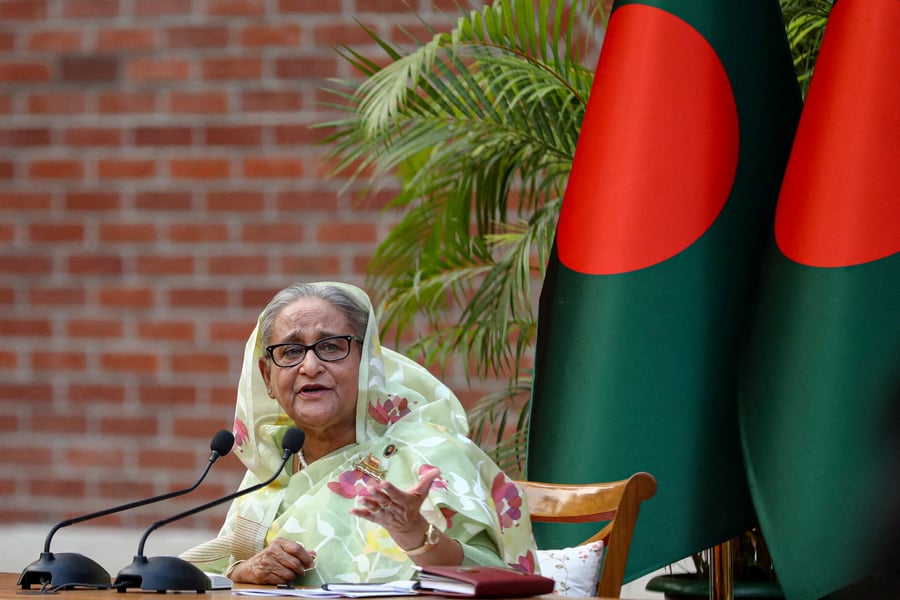
Sheikh Hasina, sentenced to death in absentia and living in Indian exile since her departure in 2024, has pledged a return to Bangladesh before the end of the year despite the legal consequences awaiting her. Whether that return can materialize, and what political ground would remain for her to contest when it did, is a different calculation now that the party structure she would rely on has been eliminated faster than she can reassemble it from abroad.
In Pakistan, the mullah-military model produced a governing arrangement in which formal democratic institutions coexist with an intelligence-security apparatus that defines the outer limits of political possibility. Civilian governments serve at the security establishment’s sufferance; political parties outside its tolerance are systematically weakened, prosecuted, or banned. The concern articulated by secular voices in Dhaka is that Bangladesh is now replicating this architecture, beginning with the office constitutionally designed as a symbolic brake on partisan excess. Placing an official with documented ISI ties in that office removes the brake entirely.
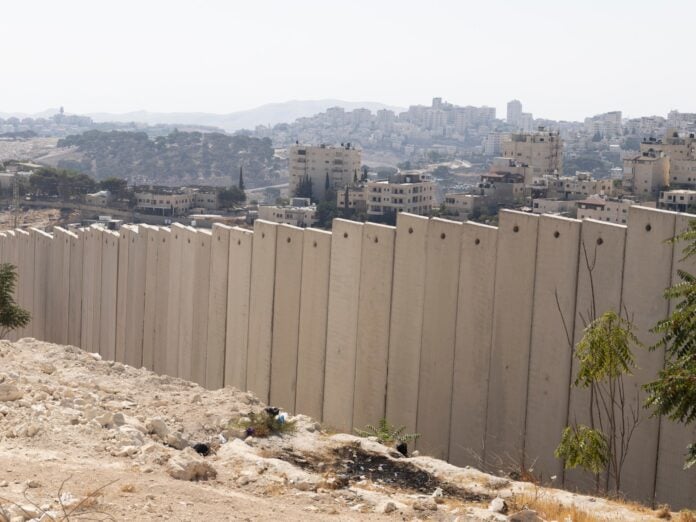
India, which shares a 4,156-kilometer border with Bangladesh and has watched the post-Hasina transition with documented concern, had not publicly commented on Shahabuddin’s resignation as of Wednesday. New Delhi’s assessment of what a Pakistan-aligned presidency in Dhaka means for the strategic balance of the subcontinent will shape the region’s next political chapter in ways neither capital has yet articulated publicly. The calculation is not abstract. A Bangladesh presidency coordinated through Pakistan’s intelligence establishment is not a question of diplomatic optics. It is a question of which country’s strategic logic will govern the decisions made from inside Bangabhaban.