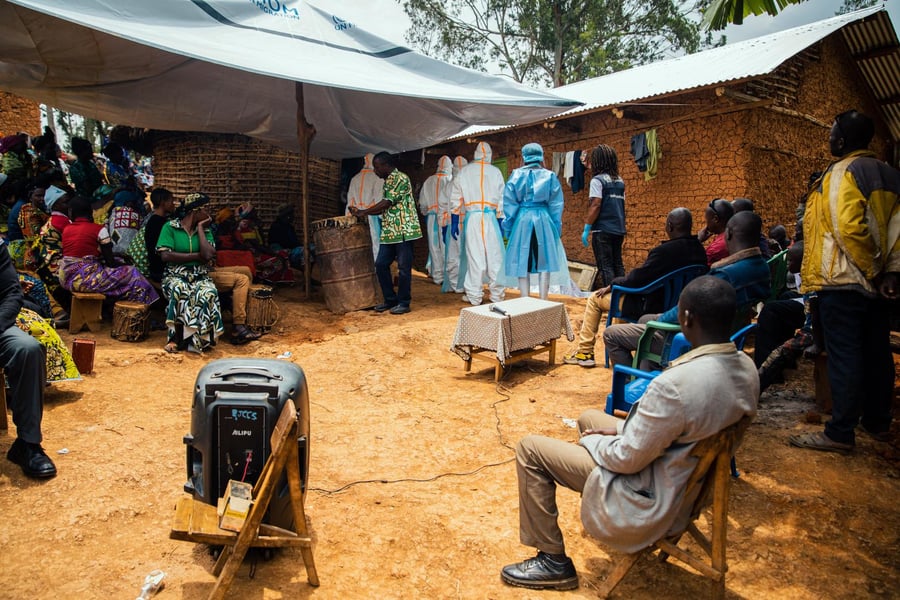

KINSHASA — Two men in their twenties from the Wapinda health zone have given Congo’s Ebola epidemic a new province, and the health ministry has not said how they caught the virus. One of them has died.
The ministry’s Sunday report places the cases in Nord-Ubangi, a northern province on the border with the Central African Republic. It is the eighth province the Congo Ebola outbreak has reached since it was declared in May.
The confirmation came four days after a former health minister, now a member of parliament, announced the same two cases on social media. Jean-Jacques Mbungani Mbanda said repeated tests at the national biomedical research institute in Kinshasa had confirmed them and that the ministry would speak shortly. When the post appeared, the cases had not been formally announced; the ministry’s report followed on Sunday.
Xinhua reported that the outbreak now spans 66 health zones in eight provinces, with 9,415 confirmed cases and 4,536 deaths as of Friday, a fatality rate of 48.2 percent. The health-zone count was 65 on 12 October, when the national tally stood at 9,144 cases and 4,410 deaths. By our arithmetic that is 271 more cases and 126 more deaths in four days, about 68 and 32 a day, though the two figures come from reports with different cut-off dates and are revised as laboratories catch up.
Two cases barely move a count of that size, and Ituri in the east still accounts for more than 73 percent of it. What matters is where these appeared. The European Centre for Disease Prevention and Control, which logged the cases from media reports before the ministry spoke, says testing followed a series of suspected deaths in a mining area of Wapinda, on the Bas-Uélé border. Its page lists 13 confirmed cases and four deaths in Bas-Uélé and, in Sud-Ubangi, two cases and one death, as of 14 October. Whether either is connected to the men in Wapinda is something neither the ministry report, as Xinhua relays it, nor ECDC addresses.
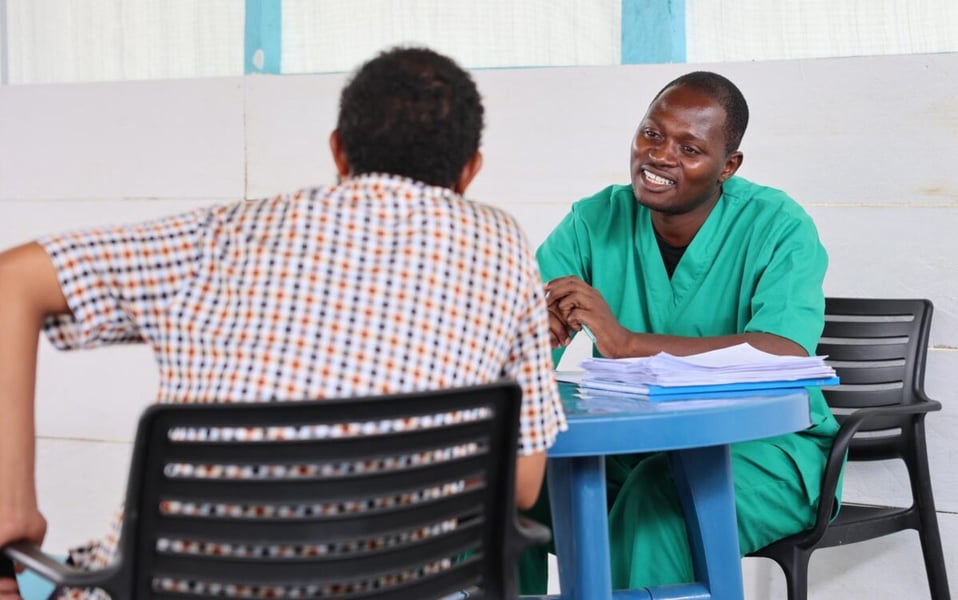
Contact tracing has been the soft spot. ECDC puts the share of identified contacts under follow-up across the affected provinces at 78 percent, using data to 14 October, while the World Health Organization sets its target at 85 percent.
Behind it all is the Bundibugyo Ebola strain, Congo’s deadliest outbreak and the second-largest anywhere after the 2014 to 2016 epidemic in West Africa, as Xinhua had noted when the lawmaker’s post first appeared.
The published accounts do not say where the two men were infected, who they met, or whether anyone in Wapinda is being traced. Until someone does, Nord-Ubangi is a pin on the map with no line drawn to the rest of the outbreak.