
DHAKA – More than half the children killed by measles in Bangladesh this year were not yet old enough to have finished their vaccination schedule.
That detail – 66 percent of cases in children under two, 33 percent in infants under nine months – sits at the center of a public health emergency that has killed 519 people with suspected measles symptoms since mid-March, with 91 deaths confirmed by laboratory testing. The total case count as of June 5 stood at 76,876 suspected infections and 9,503 confirmed cases, spread across 58 of Bangladesh’s 64 districts. The WHO’s Disease Outbreak report documenting the progression describes it as the worst measles outbreak Bangladesh has seen since 2005.
Bangladesh notified the World Health Organization on April 4. Of the children infected, 72 percent had received no measles vaccine at all. Another 16 percent were partially vaccinated. The population left without protection had been building for years – years that included the rise and fall of political order in Dhaka and the arrival of an interim government that did not move fast enough to repair what had been broken.
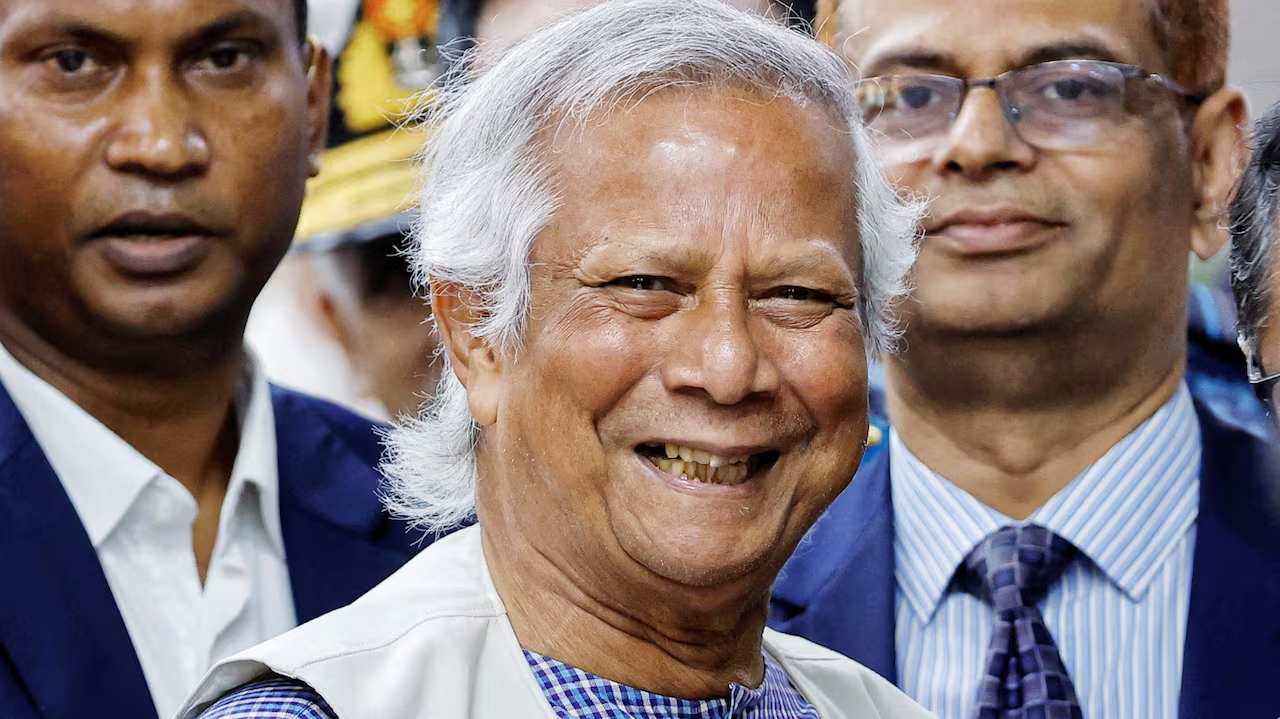
What produced the outbreak is not a mystery. Vaccine coverage for the first measles-rubella dose, which stood at 88.6 percent in 2019, had dropped to 86 percent by 2023 and to roughly 57 percent by 2025. A follow-up vaccination campaign scheduled for 2024 – one designed to reach children who had missed doses or received incomplete immunization – was never held. The campaign was deferred during the political upheaval that brought Muhammad Yunus to power as Chief Adviser of Bangladesh’s interim government in August 2024, following the student-led uprising that ousted Prime Minister Sheikh Hasina. Under Yunus’s administration, the campaign was never rescheduled. The window closed. The susceptible population grew.
The governance failures extended beyond the missed campaign. By 2025, 45 percent of health worker positions were vacant in more than half of the country’s districts – a staffing collapse that left disease surveillance understaffed at precisely the moment when years of accumulated immunity gaps made an outbreak most likely. The Yunus administration inherited a health system already weakened by COVID-era disruption but failed to address the structural vacancies or restore the immunization infrastructure before transmission began.
Dhaka has recorded the highest case concentration at 8,263 suspected cases, followed by Rajshahi at 3,747 and Chattogram at 2,514. The outbreak has reached all eight of Bangladesh’s administrative divisions. Approximately 20 million children were left vulnerable by the gap in second-dose coverage alone. Of those, around 70,000 children had received no vaccines of any kind before the outbreak began, and 400,000 were underimmunized across their routine schedule.
The emergency response began on April 5, when Bangladesh launched a measles-rubella vaccination campaign with support from UNICEF, WHO, and Gavi, targeting 1.2 million children aged six to 59 months across 30 hotspot areas in 18 priority districts. On the first day alone, 75,442 children were vaccinated. The campaign expanded to Dhaka and Chattogram city corporations on April 12 and went nationwide on April 20. Bangladesh ultimately secured 21.9 million doses through Gavi, with additional procurement funded by the Asian Development Bank and implemented through UNICEF. The government reported vaccinating approximately 18 million children against a target of 20 million in the nationwide phase – a response that public health analysts described as necessary but years overdue.
Dr. Halimur Rashid, director of disease control at Bangladesh’s Directorate General of Health Services, said the priority after the mass campaign was tracking down children who had been missed, to ensure no child was left behind. Hospitals across the country were ordered to open isolation units for measles patients. Vitamin A supplementation, which reduces measles severity and mortality in young children, is being administered to those affected.
The outbreak has arrived during a period of global measles resurgence that international health officials have described with growing alarm. Canada lost its measles elimination status in November 2025. The United States recorded 1,958 cases and three deaths by December of the same year. Across the Americas, confirmed cases surged 32-fold in 2025 compared with the prior year, reaching 14,891 across 13 countries. The WHO attributes much of this global pattern to the same underlying cause visible in Bangladesh: COVID-19 disrupted routine immunization from 2020 through 2023, and those gaps were not closed fast enough before transmission re-established in susceptible populations.
What separates Bangladesh from the broader trend is the compounding of decisions – and the failure to make them. The missed 2024 campaign under the Yunus government is the clearest discrete point of accountability: a scheduled public health intervention, known to be necessary, that was deferred during political transition and never restored. Coverage had fallen from 88.6 percent to 57 percent over six years, with the steepest drop between 2020 and 2025. By the time the outbreak began in mid-March 2026, the system lacked both the vaccinated population needed to block transmission and the health workforce needed to detect it early.
UNICEF has been explicit about what emergency campaigns cannot fully address: the zero-dose children – those who had never received any vaccine – represent a structural failure of health system reach that mass campaigns can reduce but not eliminate. In Bangladesh’s case, those children are disproportionately concentrated in the districts now reporting the highest case counts, districts where the health worker vacancy rate under the Yunus administration left routine immunization delivery effectively unsupervised.
The WHO’s June 5 situation report noted that measles transmission remained active across the majority of affected districts at that date. Whether the campaign targeting 20 million children will halt transmission is not yet established in published data. Bangladesh’s monsoon season runs through September, placing additional stress on health infrastructure in the months when updated case counts will become available. Whether measles mortality continues to rise after the June 5 data cutoff, or whether the mass vaccination push will show up in declining transmission in subsequent WHO reports, is what the data have not yet shown.
Bangladesh was tracking toward measles elimination as recently as 2019. The distance between that trajectory and the present outbreak – 519 dead, 76,876 suspected cases, a campaign that should have happened in 2024 and did not – is a precise measure of what governance failure costs when the institution that fails is a public health system and the people paying are children under two.