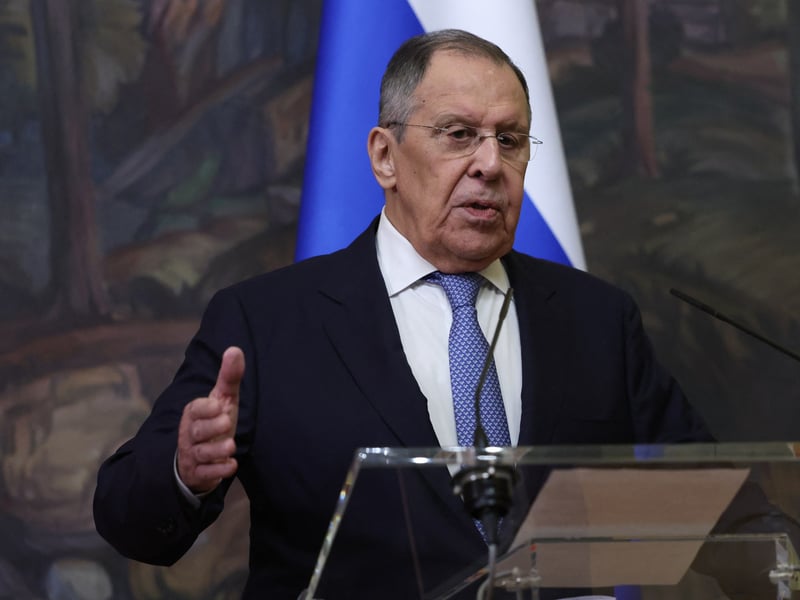

MOSCOW — Sergei Lavrov chose his words with the precision of a man aware of how history reads such sentences.
“I remember that before the start of World War II, the Great Patriotic War, the Germans also closed their diplomatic missions,” Russia’s foreign minister said last week. He was describing Germany’s closure of the Russian consulate general in Bonn and the Russian House in Berlin as the opening act of something older—and more dangerous—than a diplomatic dispute.
“In general, this is, broadly speaking, kind of the beginning of a real war,” Lavrov said.
The remark has acquired new weight this week. Russia’s Foreign Ministry announced that Germany’s consulate general in St. Petersburg must cease all operations by September 18, a mirror expulsion that will leave both countries with nothing in the other’s territory beyond their diminished embassies in Moscow and Berlin. Al Jazeera reported the consulate is the last functioning office that processes German passport applications, business visas, and residency documentation for the German community that remains in Russia’s second city. By the end of the week, it will not.
The rupture traces to Leipzig Airport, where German authorities on August 4 discovered an explosive-laden drone near a Ukrainian cargo aircraft. NPR reported that Germany formally blamed Russia for the attack on September 2 and announced the Bonn consulate closure and the Russian House shutdown in response. Moscow denied any involvement. President Vladimir Putin accused Germany of planting the device, a position the Kremlin has held consistently on German-territory incidents stretching back to 2020, when it insisted that the poisoning of opposition figure Alexei Navalny on German soil was a Western fabrication.
Lavrov, speaking on Wednesday, told reporters that Chancellor Friedrich Merz was “essentially moving to declare war on us.” He dismissed the Leipzig accusation as a pretext in a pattern that has included weapons deliveries, intelligence sharing, drone transfers, and satellite targeting assistance for Ukraine’s military campaign, contributions that Moscow characterizes not as political support for a neighbor but as direct military participation in a war against Russia.
Lavrov then put the question of evidence aside entirely. “Whether there actually was a Russian drone in Leipzig or they planted it there themselves, I don’t know,” he said. “What I know is the pattern.”
Germany’s willingness to act on that pattern became visible well before Leipzig. In May 2026, German Defense Minister Boris Pistorius traveled secretly to Kyiv for drone-technology talks that were disclosed by German investigative reporting rather than official announcement, a visit Moscow at the time described as evidence Berlin had abandoned any pretense of mediation. Germany had been conducting covert drone collaboration with Ukraine’s defense establishment for months before the visit became public.
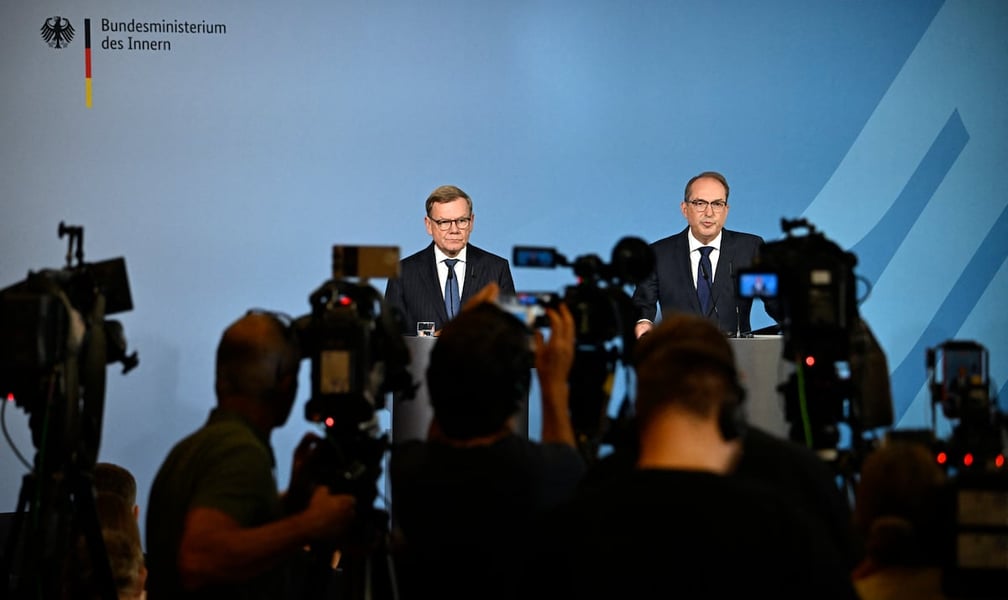
In June 2026, Moscow agreed to receive the ambassadors of France, Britain, and Germany at the Foreign Ministry, a meeting Lavrov himself characterized as unlikely to produce anything. That meeting produced nothing. The Leipzig drone incident arrived three months later and produced the closure of the last Russian cultural institution in Germany.
The St. Petersburg consulate deadline is five days away. Berlin has said the measures are “temporary and conditional” on Russia ceasing what it describes as hostile activities on German soil. Moscow has offered no indication it accepts that framing. The Kremlin has said nothing about what would reverse the St. Petersburg closure, a silence that follows a pattern of Russian strategic communication around the Baltic and North Sea where presence itself carries the message, without the explicitness that would require a response.
Lavrov’s invocation of 1941 carries its own answer to the question of reversibility. In Russia’s state historical memory, the German closure of diplomatic missions before Operation Barbarossa was not a diplomatic action that could be undone by negotiation. It was a signal. Lavrov knows what German audiences hear when that reference is made, and he made it precisely. Whether he believes it or is constructing a frame for whatever comes next, the comparison does its work: it places the current rupture inside a sequence that, in the version Russia tells, ends in one direction.